
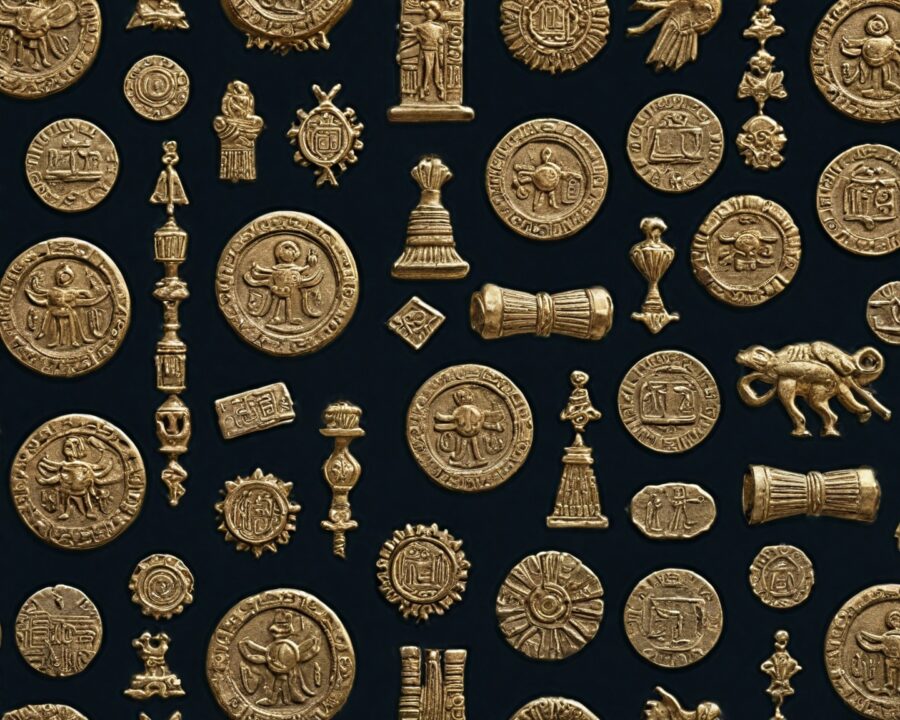
Gold has always held an iridescent allure that has captivated humans throughout history. From the moment ancient civilizations discovered this gleaming metal, it became a fundamental part of their economies, spiritual lives, and artistic endeavors. The many cultures of the ancient world attributed profound meanings to gold, seeing it as more than just a mere metal. Its luminescent quality, resistance to tarnish, and rarity made gold a symbol of opulence, power, and divine influence. As we delve into the cultural significance of gold in ancient civilizations, we uncover how it shaped societies and left an enduring legacy that continues to resonate today.
The lure of gold transcends time and geography, reflecting its pivotal role in various ancient societies. For instance, cultures across Africa, Asia, Europe, and the Americas independently recognized and exploited gold’s intrinsic beauty and value. In some ancient societies, gold was so revered that it was believed to contain magical properties, offering protection and spiritual enlightenment to its owners. These intrinsic beliefs and practices influenced leaders’ decisions, shaped economies, and structured societies around the possession and control of this powerful metal.
Throughout history, gold’s cultural significance has represented more than wealth and prestige. It was interwoven into society’s spiritual and religious fabric, serving as a medium between mortals and the divine in many cultures. Ceremonial objects, religious artifacts, and ritualistic practices often heavily featured gold, highlighting its connection to the gods and the heavens. This cultural intertwining bridged the material and the transcendental, making gold an essential facet of religious experiences.
As we journey through the annals of history, exploring civilizations such as Ancient Egypt, Mesopotamia, China, and the empires of the Aztecs and Incas, we discover a mosaic of cultural narratives surrounding gold. This exploration allows us to appreciate not only the historical significance of gold but also its lasting impact on modern society. Join us as we unearth the stories of how gold shaped ancient civilizations, its role in their societies, and its enduring legacy.
Introduction to Gold’s Role in Ancient Societies
Gold’s significance in ancient societies cannot be understated. It served as a currency, a symbol of social standing, and a connection to the divine. Its distinct characteristics, such as its immutability and brilliance, set gold apart from other metals. With no fear of corrosion, gold maintained its shine and luster indefinitely, making it the perfect medium for artifacts, jewelry, and even currency.
In ancient Egypt, one of the earliest civilizations to harness the power of gold, it played a pivotal role in cultural practices and beliefs. Gold was associated with immortality and the godlike qualities of the Pharaohs, leading to its abundant use in burials and tomb artifacts. The belief that gold could bridge the gap between the human and the divine worlds reflects gold’s deep spiritual significance.
Across the seas in Mesopotamia, gold was extensively used in trade and ornamental arts. Mesopotamian cultures employed gold in crafting lavish jewelry, ceremonial costumes, and religious idols. This civilization, known for its sophisticated mercantile and trade systems, also used gold as a medium of exchange, enhancing its position as a central element in sociopolitical structures.
Gold’s allure transcended cultural boundaries, seeping into the economic and social fabric of Greece, Rome, and beyond. Its value as a trade commodity and currency facilitated interactions between disparate societies, paving the way for cultural exchanges and the spread of ideas. In this regard, gold not only served as a symbol of wealth but also as a driver of historical progress and cultural integration.
Gold in Ancient Egypt: Symbolism and Use
In the context of ancient Egyptian society, gold held immense cultural and spiritual significance. Egyptians viewed gold as the flesh of their gods, particularly the sun god Ra, embodying perfection and eternity. This belief imbued the metal with divine characteristics, leading to its extensive use in religious artifacts and ceremonial objects.
The burial practices of the Egyptians prominently featured gold, evident in the intricate death masks and sarcophagi of the pharaohs. The most famous of these, the mask of Tutankhamun, exemplifies the Egyptians’ skillful craftsmanship and their belief in the power of gold to provide eternal protection in the afterlife. Gold adornments within tombs were not merely for aesthetic appeal; they symbolized the pharaoh’s divine status and ensured a transition to the afterlife befitting a god.
The open-pit mines of Nubia supplied much of the gold used in ancient Egypt, making Nubian gold an integral part of Egypt’s economy and military conquests. This abundance of gold was pivotal in establishing Egypt’s power and wealth among neighboring civilizations. The exchange of gold in trade fostered diplomatic relations and solidified alliances, further enhancing Egypt’s influence.
In everyday Egyptian society, gold played a role beyond religion and royal decor. It was used as currency, a symbol of status, and as decorative art showcasing wealth and power. Pharaohs and high-ranking officials donned gold jewelry and ornaments to demonstrate their social rank and divine favor, further embedding gold’s role as a marker of social hierarchy.
The Influence of Gold in Mesopotamian Culture
Mesopotamia, often hailed as the cradle of civilization, recognized gold’s intrinsic value early on. This land between the Tigris and Euphrates was rich in trade and cultural exchange, and gold was at the heart of its economic system. Used extensively in trade, gold facilitated commerce within Mesopotamia and with neighboring regions, including ancient Persia and Anatolia.
Gold’s cultural significance in Mesopotamia extended to religious ceremonies and artworks, with temples adorned in gold to please the gods. The elaborate gold daggers, masks, and jewelry uncovered in archaeological sites demonstrate the importance placed on the metal not only for its beauty but also as a representation of divine protection and power.
In societal norms, gold was a significant indicator of wealth and status. It was common for rulers to lavishly decorate themselves and their palaces with gold, reinforcing their supreme status. Gold’s scarcity added to its desirability, and acquiring it was often an assertion of dominance and power.
The craftsmanship seen in Mesopotamian artifacts highlights the civilization’s advanced metalworking skills. Collaboratively with other metals and gemstones, Mesopotamian goldsmiths created intricate designs that have withstood the test of time, offering insights into the sophistication and cultural priorities of the period.
Gold in Ancient Greece: Mythology and Economy
The significance of gold in ancient Greek culture blends mythology and economic utility. Gold was often tied to divine myths, such as the tale of King Midas, whose touch could turn everything into gold. This myth highlights a crucial aspect of Greek views on gold: its representation of prosperity, wealth, and sometimes, the folly of greed.
Economically, ancient Greece utilized gold in its currency system, establishing the metal as a backbone of its economy. Gold coins facilitated trade throughout the Mediterranean, enabling Athens, Sparta, and other city-states to prosper. The wealth amassed through gold trade underpinned the rise of powerful Greek dynasties and facilitated monumental advancements in art, philosophy, and science.
Political and social stratification also saw clear ties to gold possession. Nobles and aristocrats wore gold jewelry as emblems of their high status and cultural refinement. Greek artisans—renowned for their artistry—crafted exquisite gold jewelry and ornaments that were not only objects of beauty but statements of power and influence.
Gold’s role in religious contexts was significant as well. Temples and shrines featured gold in their architecture and statuary, including the famed statue of Zeus at Olympia, once adorned with gold and ivory. This use of gold served to affirm the sanctity and magnificence of the gods in mortal realms, showcasing the transcendental properties Greeks attributed to the metal.
The Role of Gold in the Roman Empire
The Roman Empire exemplified the pinnacle of gold’s utilization in ancient societies, with gold being a cornerstone of Roman economic strength and political power. Here, the metal’s use extended beyond currency; it was a tool of propaganda and military conquests.
Roman emperors issued gold coins, known as Aureus, stamped with their images to solidify their rule and project power. These coins circulated widely, representing not only wealth but the reach and influence of Rome. Gold-funded military campaigns and public works, such as the construction of roads, aqueducts, and monumental architecture, underscoring Rome’s supremacy.
Social and cultural values placed on gold in Rome mirrored its utility across different aspects of life. The Roman elite indulged in lavish displays of wealth through gold jewelry, banquets, and gladiatorial games. Owning gold was an assertion of one’s status and allegiance to the empire’s ideals of strength and power.
In religious practices, gold’s prominence was seen in the lavish decorations of temples and the creation of deities’ statues. These golden idols were seen as living manifestations of the gods, and individuals would present gold offerings to seek favor or forgiveness, further entrenching gold’s role as a bridge to the sacred.
Gold in Pre-Columbian Civilizations: The Aztecs and Incas
Pre-Columbian civilizations such as the Aztecs and Incas held gold in similar esteem as other ancient cultures. For these societies, gold was predominantly a spiritual and ceremonial element rather than a currency or part of daily commerce.
The Aztecs associated gold with their sun god, Huitzilopochtli, believing it to represent the sun’s eternal cycle. Gold objects adorned temples and altars to honor the gods, and Aztec rulers decorated themselves with gold to showcase divine legitimacy and earthly power. The Spanish conquest marked a turning point, exploiting this reverence for gold and dismantling Aztec society in pursuit of the metal.
In the Inca Empire, gold symbolized the Sun God Inti, regarded as the spiritual ancestor of the Inca people. The precious metal was used to create vast ceremonial complexes, including the famed Coricancha temple in Cusco, which reflected the Incas’ deep spiritual connection to gold and its symbolic representation of divine light.
Here’s an overview of gold usage in different pre-Columbian civilizations:
| Civilization | Primary Deity Associated | Primary Use | Key Artifact |
|---|---|---|---|
| Aztecs | Huitzilopochtli | Ceremonial | Temple ornaments |
| Incas | Inti | Religious rites | Coricancha Temple |
| Mayans | Kukulkan | Ritualistic | Jewelry and masks |
| Muisca (El Dorado) | Sun God | Offers to deities | Rafts and figures |
Gold’s impact on these pre-Columbian cultures underscores its role in ritual and governance, ultimately fueling European quests and conquests in the New World, driven by legends like El Dorado.
Gold as a Symbol of Power and Wealth in Ancient China
In ancient China, gold represented power and prosperity, integrated into the lives of the elite and utilized in trade and diplomacy. The Chinese concept of gold extended beyond mere wealth; it was a symbol of balance and harmony, reflecting the philosophical ideals inculcated in Confucianism and Daoism.
Elaborate gold ornaments and artifacts have been found from the tombs of emperors and nobles, revealing the delicate artistry that characterized Chinese goldsmithing. These items demonstrated the owner’s status and served as offerings to deities, encapsulating the intertwined nature of spirituality and temporal power.
Trade through the Silk Road expanded gold’s influence in China, fostering connections with the West and increasing the availability of this precious metal. Gold was incrementally used in currency alongside silk and spices, facilitating foreign trade and solidifying China’s economic clout.
In the political sphere, Chinese emperors would often present gold as gifts to foreign dignitaries to solidify alliances and establish diplomatic relations. This practice not only displayed China’s wealth and sophistication but also reinforced its political power and influence across Asia.
Religious and Ritualistic Uses of Gold in Ancient Cultures
The use of gold in religious and ritualistic contexts is a consistent thread throughout many ancient civilizations. Across diverse cultures, gold featured prominently in ceremonies meant to connect the earthly with the divine, embodying purity, eternity, and divine favor.
In ancient Egypt, gold was considered the flesh of the gods and used extensively in religious artifacts. The construction of amulets and idols reflected the belief that gold could protect and grant favor in the afterlife, making it central to burial rites and religious offerings.
Similarly, in Hindu culture, gold played a crucial role in religious ceremonies, symbolizing prosperity and divine blessing. Religious figures and families alike adorned deities with gold jewelry during festivals and rituals, showcasing the metal’s revered place within Hindu devotional practices.
The Mesopotamian ziggurats and Greek temples often adorned themselves with gold leaf and gilded idols, serving as tangible connections to their pantheons. These artifacts demonstrated the cultures’ beliefs about the sacred nature of gold, viewing it as a channel to appease the gods and ensure terrestrial success.
Gold’s religious usage was not limited to major religions; indigenous cultures of the Americas, such as the Muisca confederation, used gold for offerings during rituals like the famous El Dorado ceremony. Such practices underscore gold’s universal status as a symbol of the divine across disparate cultures and epochs.
The Impact of Gold on Ancient Trade Routes
Gold greatly influenced the development and flourishing of ancient trade routes. As a universally recognized symbol of value and a widely accepted currency, gold facilitated commerce between distant civilizations and catalyzed cultural exchanges.
The Silk Road, spanning Asia to Europe, saw gold traversing thousands of miles as a major traded commodity. This route enabled the exchange of precious metals, silk, spices, and culture between East and West, with gold acting as both a medium of exchange and a traded good in its own right.
In the Mediterranean, gold underpinned the trade in the ancient world, with cities like Athens and Carthage accounting vast riches and facilitating cultural dissemination across Europe and North Africa. The distribution of gold coins encouraged economic stability and enabled the exchange of ideas, technology, and goods.
Africa’s gold trade, especially that of the Mali Empire and the kingdoms of Sudan, also had far-reaching impacts on the ancient world. Trans-Saharan trade routes moved large quantities of gold across deserts to the Mediterranean and the Middle East, contributing to economic and cultural interactions between diverse societies.
Gold in Ancient Art and Architecture
Ancient art and architecture reveal a world infused with gold’s luminous qualities, reflecting both aesthetic exuberance and cultural significance. The artistry in gold ranged from functional items such as coins and jewelry to exaggerated artistic expressions in sculpture, architecture, and mortuary artifacts.
The Egyptian goldsmiths excelled in creating intricate filigree work and exquisite inlays seen in objects like Tutankhamun’s death mask and the luxurious golden scarabs placed within mummies’ wrappings. These artifacts underscored the integration of gold into the sociocultural and spiritual fabric of Egyptian life.
In Mesopotamia, gold found its way into the creation of ornate statuettes and lavishly decorated armor, indicating both a focus on craftsmanship and an association with divine protection. Artisans skillfully combined gold with lapis lazuli and other precious materials, resulting in resplendent objects that signified wealth and status.
Greek and Roman architecture frequently incorporated gold into temples and public buildings, emphasizing grandeur and divine favor. The Parthenon’s chryselephantine statues, for example, highlighted both artistic skill and the symbolic role gold played in glorifying the gods and the state.
Gold’s incorporation into art was not solely for decoration—each piece chronicled societal values, religious beliefs, and power dynamics, offering modern historians a lens through which to view the cultural narratives of these ancient worlds.
Conclusion: The Enduring Legacy of Gold in Human History
The cultural voyage of gold from antiquity to modernity is a tapestry woven with tales of wealth, power, mythology, and divine sanctity. This precious metal’s significance extended beyond material wealth; it symbolized divine favor, power, and the pursuit of immortality. Through gold, we see the interplay of cultural ideologies, religious zeal, and economic advancements shaping ancient societies.
The twin roles of gold in asserting both temporal and spiritual power highlight a complex dichotomy where material wealth and divine consciousness intertwined in the cultural fabric. Gold funded monumental empires and religious edifices, played its part in historical trade windfalls, and became an artistic muse, guiding the hands that crafted civilization’s most treasured artifacts.
The shifting status of gold, from its religious importance in Egypt to its role in commerce along the Silk Road, is illustrative of society’s evolving needs and aspirations. Each era adapted gold’s value to suit its unique cultural, spiritual, and economic contexts, demonstrating its universal appeal and adaptability.
Today, gold endures as a symbol of wealth and prestige, but it also remains a relic of humankind’s storied past. Its journey through ancient civilizations teaches us about the universal values of beauty, endurance, and power—a legacy that persists in shaping modern ideology and global economic practices.
FAQ
What role did gold play in the religion of ancient Egypt?
Gold was seen as the flesh of the gods, especially the sun god Ra, symbolizing immortality and divine power. It was extensively used in religious artifacts and royal tombs, serving as a bridge between the earthly and divine realms.
How was gold used in ancient Greece’s economy?
Gold was crucial in ancient Greece’s economy as it was used for currency. Gold coins facilitated trade within the Mediterranean and helped city-states prosper economically, paving the way for Greek advancements in art, philosophy, and science.
Did the Romans use gold for anything other than currency?
Yes, besides currency, Romans used gold as a tool for propaganda and military conquests. Emperors issued gold coins to project power and solidify rule. Additionally, gold adorned social events, jewelry, and religious temples, reinforcing status and political influence.
How did gold impact ancient trade routes?
Gold significantly impacted ancient trade routes by acting as a universal currency that facilitated commerce between distant civilizations. It was a major traded commodity on routes like the Silk Road and across the Mediterranean, enabling economic and cultural exchanges.
Why was gold important in pre-Columbian civilizations?
For pre-Columbian civilizations like the Aztecs and Incas, gold held spiritual and ceremonial importance rather than economic. It symbolized the divine and was used in religious rites to honor gods, showcasing a deep spiritual connection to the metal.
Were there any philosophical ideas associated with gold in ancient China?
Yes, in ancient China, gold symbolized balance and harmony, reflecting the philosophical ideals of Confucianism and Daoism. Gold was not just a material of wealth but held a deeper significance related to the cosmic balance.
What is the legacy of gold in modern times?
Gold continues to symbolize wealth and prestige while reflecting historical narratives. Its legacy includes enduring economic influence, artistic inspiration, and its role as a universal symbol of beauty, power, and indestructibility from ancient to modern times.
Recap
- Gold was essential in ancient societies for its symbolism and economic utility.
- In Egypt, it was associated with immortality and deities.
- Mesopotamia used gold for trade, religious artifacts, and societal status.
- Greek culture tied gold to mythology and used it in their economy.
- The Romans used gold for currency, power assertions, and religious practices.
- Pre-Columbian civilizations held gold in spiritual and ceremonial regard.
- Ancient China’s use of gold linked it to balance and harmony in philosophy.
- Gold influenced ancient trade routes, acting as a common currency.
- In art, gold symbolized status and divine connectivity across cultures.
Gold’s legacy from ancient to modern times highlights its cultural, spiritual, and economic significance, underscoring an enduring human fascination with this precious metal.