
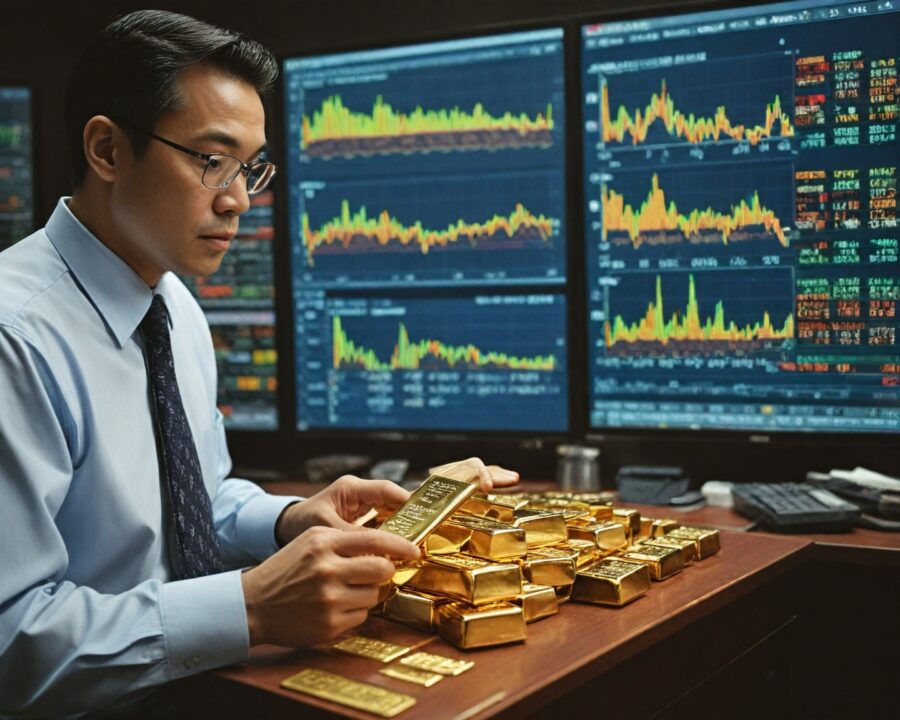
Introduction to Gold as a Financial Asset
In the realm of global finance, few assets can lay claim to the timeless allure and universal acceptance of gold. Throughout history, gold has captivated emperors, inspired conquests, and served as the bedrock for economic systems. Its tangible, intrinsic value extends beyond its shimmering beauty, positioning it as a critical component in modern financial systems and investment portfolios. Today, as markets become increasingly volatile and economic uncertainty prevails, investors remain drawn to gold as a safe haven and a symbol of stability.
Gold’s appeal lies not only in its physical properties but also in its distinctive characteristics as a financial asset. It is highly liquid yet scarce, offering a blend of stability and potential for capital appreciation. Unlike printed currency and volatile digital assets, gold maintains its intrinsic value over time. This enduring value is a key reason why gold retains its status as a reliable investment choice for diversifying and safeguarding wealth.
In recent decades, gold’s role in the global financial system has evolved in tandem with economic shifts and technological advancements. Investors seek gold not just for its defensive qualities but also for opportunities within trading platforms and digital exchanges. As a consequence, gold has become an essential strategic component for savvy investors looking to balance risks, maximize returns, and secure long-term financial resilience.
This article delves into gold’s strategic role within modern financial systems and investment portfolios. We will explore its historical significance, examine market trends, and compare it with other precious metals. Additionally, we will analyze gold’s impact as a hedge against inflation, the influence of central banks, and the future outlook of gold investments. Ultimately, we aim to illuminate how gold continues to shape the landscape of global finance.
Historical Significance of Gold in Global Economies
Gold’s historical significance as a financial asset cannot be overstated. It has played a pivotal role in shaping economies since ancient civilizations, often seen as the ultimate standard of currency and wealth. The allure of gold fueled early trade routes and settlements and served as the backbone of powerful empires. In these early economies, gold was not just a luxury; it was a vital instrument for trade and a reliable measure of value.
The era of the Gold Standard in the 19th and early 20th centuries stands out as a defining period in global finance. Under the Gold Standard, nations pegged their currencies to gold, enforcing strict monetary discipline and enhancing economic predictability. It established a fixed exchange rate system whereby countries agreed to convert paper money into a specified amount of gold. This system played a crucial role in global economic stability, facilitating international trade and investment.
However, the Gold Standard came under strain during the economic upheavals of the World Wars and subsequent global recessions. Its dismantling marked a shift towards fiat currencies, yet even today, gold’s legacy persists. In the modern context, countries continue to hold gold reserves as a testament to its value and stability, reinforcing its ongoing relevance. The historical importance of gold underpins its role as a trusted asset within contemporary investment strategies.
Gold’s Role in Modern Financial Systems
In today’s multifaceted financial systems, gold retains a critical role as both a traditional asset and a modern investment vehicle. Central banks around the world store substantial gold reserves as part of their holdings, underscoring its importance as a hedge against currency risk and a stabilizer in times of financial distress. The strategic purchase and sale of gold by these institutions can influence international monetary policies and currency valuations, reflecting its enduring impact.
Private investors also consider gold a key component of a diversified portfolio. It often serves as a risk mitigation tool, protecting against market volatility and economic downturns. Unlike stocks and bonds, which can be susceptible to unpredictable influences, gold is viewed as a tangible asset that holds inherent value. This perception bolsters investor confidence and contributes to gold’s sustained demand across global markets.
In addition, technological innovations have transformed how investors access and trade gold. Digital platforms and the advent of exchange-traded funds (ETFs) allow individual investors to participate in the gold market with ease and convenience. These new financial products provide exposure to gold’s price movements without the need for physical ownership. As a result, gold remains a versatile and adaptable investment, integrating seamlessly into the dynamics of the modern financial landscape.
Understanding Gold Market Trends and Influences
Unraveling the complexities of the gold market requires a nuanced understanding of the multitude of factors that influence its trends. Unlike other commodities, gold’s market dynamics are shaped by a wide array of variables, both macroeconomic and geopolitical in nature. Currency fluctuations, global economic conditions, and interest rates are among the primary drivers impacting gold prices.
Investors closely monitor global economic indicators such as inflation rates and GDP growth. Typically, gold prices rise when inflation increases or economic growth slows, as gold is perceived as a hedge against the erosion of purchasing power and economic uncertainty. Conversely, when economies are robust and interest rates are high, gold may face downward pressure due to the relative appeal of yield-bearing investments.
Geopolitical turmoil can also propel gold prices dramatically. Political instability, diplomatic tensions, and conflicts often trigger demand for safe-haven assets, with gold leading the charge. During times of crisis, investors seek refuge in the stability and liquidity of gold, pushing its demand and prices upward. Understanding these influences is crucial for investors looking to capitalize on gold market dynamics.
Gold as a Hedge Against Inflation and Economic Uncertainty
One of the most compelling reasons for gold investment is its renowned status as a hedge against inflation and economic uncertainty. As fiat currencies lose value due to inflation, gold typically maintains or even increases its purchasing power. This enduring quality makes gold particularly attractive during periods of fiscal instability and rising consumer prices.
Numerous historical examples demonstrate gold’s resilience as an inflation hedge. In the 1970s, when the United States experienced high inflation rates, gold prices soared, reflecting its importance as a store of value. In more recent years, during economic downturns and global financial crises, gold has often outperformed other asset classes, underscoring its protective qualities.
Additionally, gold’s role as a hedge extends beyond inflation. It acts as a safeguard during economic uncertainty, providing security in a diversified portfolio. In times when economists predict potential recessions or market disruptions, gold’s stability and historical performance offer peace of mind to investors seeking to protect their wealth against unforeseen economic challenges.
Comparing Gold with Other Precious Metals for Investment
When exploring precious metals for investment, gold often stands out, but it is important to weigh its merits against other valuable options, such as silver, platinum, and palladium. Each of these metals has unique characteristics that appeal to different investor preferences and strategies.
Gold is lauded for its stability and safe-haven status, particularly during financial crises. It is less volatile compared to silver, which is more sensitive to industrial demand fluctuations. While silver shares gold’s role as a precious metal and inflation hedge, its industrial applications in technology and manufacturing contribute to its price variability.
Platinum and palladium, while also worthy of consideration, have different market drivers. Both are crucial in automotive production, specifically in catalytic converters, which affects their demand relative to economic growth and environmental policies. Their prices can be more cyclical, linked closely to industrial demand and production costs.
| Metal | Stability | Industrial Use | Volatility |
|---|---|---|---|
| Gold | High | Low | Low |
| Silver | Medium | High | Medium |
| Platinum | Medium | High | High |
| Palladium | Medium | Medium | High |
Ultimately, the choice between gold and other precious metals hinges on individual investment goals and market conditions. A well-balanced portfolio may include a combination of these metals to optimize both hedging potential and growth opportunities.
The Impact of Central Banks on Gold Prices
Central banks wield significant influence over global financial markets, and their policies directly affect gold prices. These institutions hold large reserves of gold, which they may buy or sell to adjust their foreign exchange balances, manage currency valuations, and stabilize their economies. Central bank actions and statements are closely monitored by investors as indicators of economic trends and monetary policy shifts.
Gold purchases by central banks are often interpreted as a lack of confidence in fiat currencies, signaling potential inflationary environments or economic instability. Conversely, when central banks sell gold reserves, it may indicate improved economic confidence. These transactions impact gold supply and demand, influencing prices across international markets.
Furthermore, central banks’ interest rate decisions and quantitative easing measures are critical in shaping gold markets. Low interest rates diminish the opportunity cost of holding non-yielding assets like gold, encouraging investment in the metal. During times of expansive monetary policies, gold acts as a counterbalance to potential fiat currency depreciation, leading to heightened demand and price increases.
Gold in Investment Portfolios: Strategies and Benefits
The strategic integration of gold into investment portfolios offers a myriad of benefits that contribute to long-term financial success. Investors often utilize gold as part of a diversification strategy, reducing overall portfolio risk while enhancing stability. The performance of gold typically exhibits a low correlation with traditional asset classes such as equities and bonds, providing critical protection against market volatility.
For investors seeking to capitalize on gold’s strengths, several strategies are commonly employed:
-
Strategic Allocation: Incorporating a fixed percentage of gold into the portfolio, often between 5% to 10%, depending on risk tolerance and investment objectives.
-
Tactical Gold Allocation: Adjusting the allocation based on market conditions, increasing gold holdings during periods of anticipated market stress or inflation.
-
Gold ETFs and Futures: Engaging in gold-linked financial products that offer liquidity and flexibility without the need for physical gold storage.
Investors reaping the benefits of gold integration often enjoy reduced portfolio risk, enhanced performance in turbulence, and a credible inflation hedge. These strategies empower investors to navigate economic cycles more effectively while maintaining confidence in their financial resilience.
Technological Advancements in Gold Trading and Investment
With the advent of technology, the landscape of gold trading and investment has been revolutionized, making it more accessible and efficient. Digital platforms and online trading have democratized gold investing, allowing a wider audience to participate in the market from the comfort of their homes. This ease of access has expanded the investor base, increasing liquidity and market dynamics.
Exchange-traded funds (ETFs) represent a major technological advancement, offering exposure to gold prices without necessitating physical ownership. These innovative instruments provide diversification, liquidity, and cost-effective management, further enhancing gold’s appeal to modern investors. Additionally, digital gold, a new concept, allows investors to buy and sell gold in fractional quantities and store it securely online, blending traditional commodity investment with digital convenience.
Moreover, blockchain technology holds potential to transform gold trading by enhancing transparency and traceability. Blockchain-based gold trading platforms offer immutable records of transactions, enabling secure and efficient trade settlement. This advancement reduces counterparty risks and improves trust in gold transactions, setting the stage for innovative opportunities and future growth in gold investment.
Environmental and Ethical Considerations in Gold Mining
As the demand for gold continues to rise, so does the scrutiny on environmental and ethical practices within the gold mining industry. Gold mining can have significant environmental impacts, including deforestation, habitat destruction, and water pollution. The reckless disposal of toxic waste and the use of harmful chemicals, such as cyanide and mercury, pose risks to ecosystems and human health.
In response to these concerns, there is increasing pressure on the industry to adopt sustainable and ethical mining practices. Many companies are committing to responsible sourcing initiatives, such as the Initiative for Responsible Mining Assurance (IRMA) and the Responsible Gold Mining Principles (RGMP). These frameworks promote transparency, community engagement, and the reduction of environmental impacts through sustainable operational practices.
Ethical considerations also extend to the human rights aspects of gold mining. Protecting the rights and safety of workers, preventing child labor, and respecting the local communities’ rights are essential components of sustainable mining. Consumers and investors are becoming more conscious of the ethical implications of their investments, driving the demand for gold that is produced under fair and responsible conditions.
Future Outlook: The Evolving Role of Gold in Global Finance
As global economies navigate uncharted waters, the strategic role of gold in financial systems is poised for continued evolution. Several key trends and factors will shape the future of gold investments, influencing both markets and investor strategies. Understanding these dynamics is essential for anyone seeking to capitalize on gold’s enduring value.
Firstly, ongoing geopolitical unrest and economic uncertainties will likely reinforce gold’s status as a safe haven asset. As political tensions and climate-related disruptions intensify, investors are expected to remain reliant on gold to protect their wealth against potential crises.
Secondly, advancements in technology will continue to transform how gold is traded and accessed. The growth of blockchain, digital currencies, and new financial technologies will open avenues for innovative gold investment products and services. These developments will expand the market base and create more robust mechanisms for trading and investing in gold.
Lastly, environmental sustainability and ethical concerns will become increasingly critical in shaping gold’s role in finance. Investors, regulators, and consumers will demand higher accountability and transparency, pushing the industry towards more responsible mining practices. As these trends converge, gold will not only maintain its historical significance but also adapt to the emerging needs and expectations of a changing world.
FAQ
What is the primary reason investors include gold in their investment portfolios?
Investors include gold in their portfolios primarily as a hedge against inflation and economic uncertainty. Gold often retains its value or even appreciates when fiat currencies suffer from inflation, providing a safeguard for purchasing power. It also serves as a safe-haven asset during market volatility and financial crises.
How do central banks affect gold prices?
Central banks influence gold prices through their monetary policies and reserve management. When central banks purchase gold, it suggests a lack of confidence in fiat currencies, which can boost gold prices. Conversely, selling gold reserves or altering interest rates can lead to fluctuations in the metal’s demand and price.
How does gold compare to silver as an investment?
Gold is generally more stable and widely considered a safe-haven asset, while silver has a larger industrial demand, leading to higher price volatility. Both serve as hedges against inflation, but their market dynamics differ, with silver being more affected by industrial cycles and economic conditions.
What technological advancements are influencing gold trading?
Technological advancements such as digital trading platforms, exchange-traded funds (ETFs), and blockchain technology are transforming gold trading. These technologies enhance accessibility, liquidity, and transparency, allowing investors to participate in the gold market efficiently and securely.
Are there ethical issues associated with gold mining?
Yes, gold mining can raise ethical concerns, including environmental degradation, human rights violations, and exploitation of labor. To address these, there is a growing emphasis on responsible mining practices, sustainable operations, and ethical sourcing standards, such as the Responsible Gold Mining Principles (RGMP).
Recap
- Gold’s enduring appeal as a financial asset is rooted in its historical and intrinsic value.
- Its role in modern financial systems is characterized by stability and liquid market dynamics.
- Gold serves as a hedge against inflation and economic uncertainty, complementing other assets.
- Comparisons with other precious metals highlight its unique market position.
- Central banks wield significant influence over gold through monetary policies.
- Investment strategies incorporating gold enhance portfolio diversification and resilience.
- Technological advancements are reshaping the accessibility and transparency of gold investments.
- Environmental and ethical challenges in gold mining are prompting shifts toward responsible practices.
- Gold’s future will be influenced by geopolitical factors, technological innovations, and sustainable demands.
Conclusion
Gold remains an irreplaceable asset in the global financial framework, valued for its rarity, liquidity, and resilience against economic perturbations. Its historical significance as a stable store of wealth transcends time, making it an attractive choice for individual and institutional investors alike. Through strategic integration into investment portfolios, gold provides a hedge against inflation while enhancing diversification.
As financial systems continue to evolve, so does the role of gold. Technological innovations present new opportunities and efficiencies, allowing investors unprecedented access to gold markets through digital platforms and blockchain-based solutions. Meanwhile, the pressing need for sustainability and ethical mining practices is reshaping industry standards, aligning gold investment with broader societal values.
Looking ahead, gold’s ability to adapt to changing economic landscapes and regulatory environments will ensure its continued relevance. As geopolitical uncertainties and technological advancements persist, gold remains a cornerstone of financial strategy, poised to meet the needs of a dynamic and unpredictable world.