
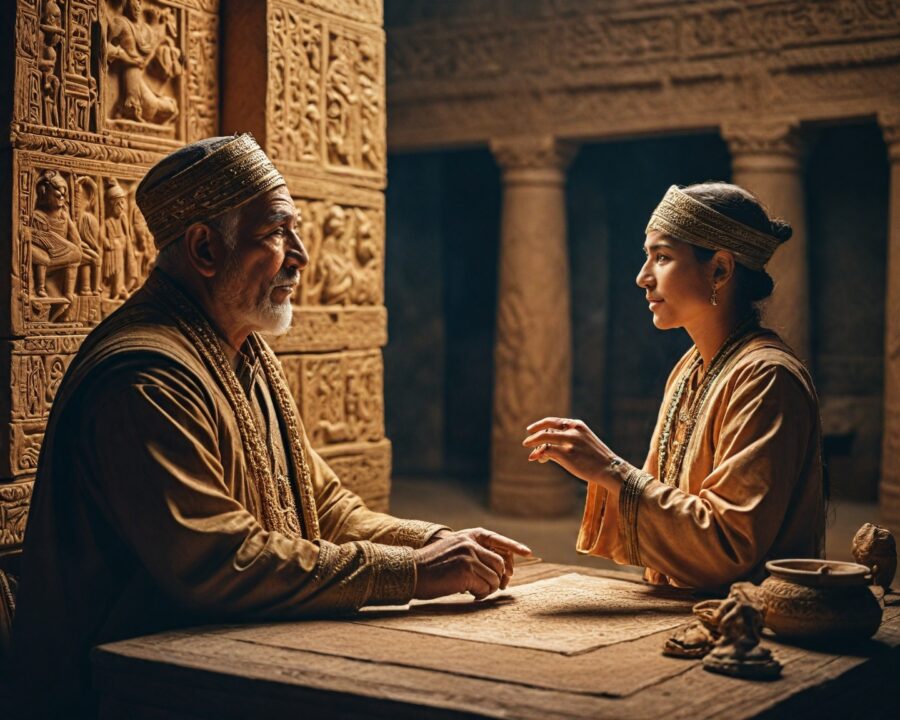
Introduction to Ancient Mesopotamian Mythology
Ancient Mesopotamian mythology, one of the earliest mythological canon discovered, provides a fascinating window into the beliefs, customs, and life of the cultures that flourished between the Tigris and Euphrates rivers thousands of years ago. The legends and myths from this era are not just stories; they reflect the complex societal values and the relationship between humans and the divine. As one studies these myths, it becomes evident how much they have shaped cultural narratives and religious ideologies throughout history.
In ancient Mesopotamia, myth and reality were intricately intertwined within the framework of daily life. The mythology served as a tool to explain the mysteries of the universe, delineate moral values, and establish societal norms. Deities were depicted with human attributes, and their interactions with humans were central to mythological tales. Elements such as the unpredictable flooding of the rivers or the change of seasons were personified into divine actions.
Among the various themes found in this mythological tradition, the symbolism of certain elements stands out. Gold, in particular, played a crucial role not only in the economy and craftsmanship but also in the theological frameworks of the Mesopotamians. It was often employed to highlight divinity, majesty, and other superlative qualities. Through the prism of gold, Mesopotamian myths allow us to understand the intricate dynamics of power and divinity that shaped these ancient societies.
Gold in Mesopotamian mythology represents far more than mere ornamental value; it serves as a conduit for a deeper understanding of these ancient people’s worldview. By exploring myths, religious practices, and the material culture of antiquity, this article seeks to unravel the symbolic potentate of gold, showcasing its significance beyond mere material wealth.
The Historical Context of Gold in Mesopotamia
The discovery and use of gold in ancient Mesopotamia can be traced back to approximately the third millennium BCE. As Mesopotamia was located at the crossroads of major trading routes, it naturally became a hub for the exchange of goods, among which gold was particularly prominent. Historical records and archaeological evidence point to the wide availability and use of gold across various Mesopotamian empires such as the Sumerians, Akkadians, Babylonians, and Assyrians.
The plentiful river systems and fertile lands allowed the Mesopotamians to create surplus agricultural resources, which they traded for essential and luxury items, including metals and precious stones. Gold, unlike other materials, was not native to this region and was considered an exotic import. The trade routes channeled gold from other regions such as Anatolia, Egypt, and the Indus Valley into the heartlands of Mesopotamia, thus making it an item of high status and desirability.
The legal and economic documentation from this era, including the Code of Hammurabi, frequently references gold in the context of trade, loan, penalties, and property ownership. Gold’s ability to retain value over time rendered it a reliable measure in economic transactions. Its enduring luster and resistance to tarnish symbolically paralleled its perceived ability to confer eternal power and divine legitimacy to those who possessed it.
By examining the historical context of gold’s role in Mesopotamia, we understand not only its economic import but also how it became interwoven into the fabric of social hierarchies and political power. This precious metal transcended mere economic function to embody the aspirations, grandeur, and divine mandates of Mesopotamian rulers and gods alike.
Gold as a Symbol of Divinity and Power
In Mesopotamian myth, gold was intrinsically related to concepts of divinity and supreme authority. This association finds its roots in the ancient belief that the gods possessed an ethereal quality which gold, with its untarnished brilliance, aptly captured. This notion is fervently reflected in the religious texts and iconographies unearthed from Mesopotamian ruins.
Gold often adorned statues of gods and goddesses, temple furnishings, and ceremonial artifacts, enhancing the divine aura that surrounded these objects. The dazzling shine of gold was seen as a physical manifestation of the light and benevolent power bestowed by the deities. To Mesopotamians, gold was not merely decorative; it was imbued with sacred significance, providing a tangible connection between the human and the divine.
Royal authority, too, was frequently expressed through the acquisition and display of gold. Kings were often depicted or entombed with lavish gold items, symbolizing their close ties to the divine and their rightful rule over the earthly realm. Gold was also prominently featured in regalia and the construction of palatial and temple structures, thus reinforcing the conception of the king as both a ruler and a god’s earthly appointee.
Furthermore, specific legends often describe how gold was used by gods themselves or bestowed upon mortals as tokens of divine favor. Possessing gold could mean divine protection, endorsement, or anointing. Thus, in Mesopotamian ideology, gold was far more than a material substance; it was the bridge to the divine, a representation of unimaginable power, and a symbol of one’s prestige and favor in the eyes of gods.
Mythological Stories Featuring Gold
The mythology of Mesopotamia is replete with stories that involve gold, offering insight into its symbolic power. These narratives often portray gold as a magical or divine element that influences gods and humans alike.
One prominent myth is that of the “Epic of Gilgamesh,” an ancient poem that is among the earliest known works of literary fiction. In this epic, gold appears in the construction of structures dedicated to gods and is also prominently featured in the lavish lifestyle of the hero, Gilgamesh, symbolizing his semi-divine status. Gold’s presence emphasizes the extraordinary stature and the divine nature of Gilgamesh’s endeavors, setting him apart from ordinary men.
In the myth of “Inanna’s Descent to the Underworld,” gold is a crucial element in the tale of the goddess Inanna, who was the Queen of Heaven and Earth. Before her descent, Inanna dons herself in shimmering golden jewelry and garments, highlighting her divine nature and preparing her for the perilous venture into the realm of the dead. The use of gold in this myth underscores themes of power, beauty, allure, and vulnerability in the face of immortality.
Another enthralling myth involves the god Anu, the sky deity, who fashioned a gold tablet containing the dynastic rules for kings. This myth illustrates how gold was seen as a vessel of divine knowledge and power, capable of bestowing supreme legitimacy to the earthly rulers.
These stories accentuate the multifaceted roles that gold played within the mythological narrative. Gold served as a narrative device that accentuated themes of divine intervention, heroism, and authoritarian grace. By analyzing these myths, we can better understand how ancient Mesopotamians viewed gold as both a source of fascination and as a necessary intermediary between humanity and their gods.
The Role of Gold in Mesopotamian Religious Practices
Gold played a significant role in the religious ceremonies and temple rituals of Mesopotamia. Temples, considered the abode of gods on earth, were important centers of religious life where gold symbolized purity and sanctity.
Religious artifacts made from or embellished with gold were instrumental in the worship practices at Mesopotamian temples. From golden idols and consecrated vessels to ceremonial robes lined with gold thread, these items were thought to please the gods, who might bestow blessings upon the worshipers in return. Temples dedicated to deities such as Marduk, Ishtar, and Shamash were often opulent, structured to demonstrate the glory of the divine and foster a deeper spiritual connection.
Priests, who acted as intermediaries between the gods and the people, adorned themselves with gold jewelry during rituals to denote their elevated status and divine favor. Sacred texts and inscriptions often depict these gold-laden rituals, underlining their centrality to religious observance.
During festivals such as the Akitu, the New Year festival, gold also played a part in the performance of grand offerings. Sacrifices and offerings made to gods were generously bestowed with precious items, including gold, to ensure the prosperity of both the land and the rulers. Here, gold functioned as a medium of exchange—not in a commercial sense but as an offering to secure divine benevolence and auspicious beginnings for the ensuing year.
Hence, gold in religious rituals was not merely ornamental; it was deeply tied to the spiritual ethos and the theological structure of Mesopotamian society. The use of this precious metal in sacred settings underscores its felt importance in maintaining a harmonious balance between the earthly and the divine.
Gold in Mesopotamian Art and Iconography
Art in Mesopotamian culture underwent significant evolution from the early ages of civilization to the empires that came to dominate the region. Gold, as an artistic medium, was especially cherished for its malleability and everlasting luster, enabling craftsmen to create intricate designs that reflected both artistic ingenuity and theological allegiance.
Sculptures, reliefs, and seals often incorporated gold to highlight figures of gods, kings, and mythological creatures, endowing them with a divine aura. The use of gold in these works was symbolic of the subject’s eternal and incorruptible nature, as well as their paramount place within the cultural legacy.
One of the most famous artifacts from ancient Mesopotamia is the golden “Ram in a Thicket” from the ancient city of Ur. This statue, believed to represent an offering to the god of fertility, showcases the fine craftsmanship of the period and the rich symbolism of gold as a representation of life and prosperity. This artifact, along with various others, demonstrates the intertwined nature of art, religion, and economy through the prism of gold.
Similarly, narrative reliefs and bas-reliefs depicted scenes from mythological tales where gods were illustrated in spectacular golden regalia or brandishing golden tools and weapons, echoing their supernatural authority and splendor. These artistic representations served not just aesthetic functions but as visual narratives reinforcing the divine and kingly ideologies.
Thus, gold occupied a central place in Mesopotamian art, where it functioned as a deliberate choice of material that communicated enduring values of power, divinity, and cultural eminence. By exploring the artistic dimensions of gold, we glean insights into the aesthetic values and ideological currents that shaped Mesopotamian civilization.
Comparative Analysis: Gold in Mesopotamian vs. Other Ancient Cultures
While the significance of gold in Mesopotamia is profound, it is interesting to compare this with its roles in other contemporary cultures, such as ancient Egypt, the Indus Valley civilization, and the Mesoamerican societies.
Wholly distinct yet emblematic in each civilization, gold consistently holds a similar role as a symbol of purity, power, and connection to the divine. In ancient Egypt, gold was intimately linked with the gods, believed to be the flesh of the deities, making it omnipresent in temples, funerary objects, and regalia of the pharaohs. Egyptian priests wore emblems and amulets of gold to channel divine protection and favor, akin to practices in Mesopotamia.
| Civilization | Gold Source | Cultural Role | Religious Significance |
|---|---|---|---|
| Mesopotamia | Imported via trade from Anatolia, Egypt, and Indus Valley | Symbol of power, authority, and divine favor | Used in temples, religious artifacts, and regalia |
| Egypt | Native sources, Nubia | Divine flesh, pharaoh’s divine right | Central in burial practices and temple worship |
| Indus Valley | Local findings | Craftsmanship and trade | Less overt religious association |
| Mesoamerica | Native sources | Status symbol, power imbuement | Offerings to gods, central to belief systems |
The Indus Valley civilization placed emphasis on gold’s utilitarian and trade significance, focusing on craftsmanship, and although religious artifacts have been found, they are less explicitly tied to their mythological depictions compared to Mesopotamia and Egypt.
In Mesoamerican cultures, gold was considered a bridge to the afterlife and imbued with spiritual significance. The Aztecs and Incas, in particular, made use of gold in ceremonial contexts akin to Mesopotamian practices, seeing it as belonging to the sun god.
This cross-cultural analysis reveals a shared understanding across ancient civilizations of gold as a transcendent material, connecting temporal authority with divine realms. Here, gold represents not just material wealth, but symbolic righteousness and divine endorsement.
The Influence of Gold on Mesopotamian Economy and Society
Gold compared to other commodities exhibited several roles in shaping Mesopotamian economic and societal structures. Its influence extended beyond a mere medium of wealth retention, playing a crucial role in trade, craftsmanship, artisanal sophistication, and social stratification.
Although not used as currency, gold facilitated high-level transactions and underpinned extensive trade networks connecting Mesopotamia to distant regions. Its scarcity and allure made it a highly desirable commodity, driving the influx of wealth and fostering economic complexity.
Goldsmiths held esteemed positions within Mesopotamian society, often operating from temple precincts, crafting intricate jewelry, ceremonial items, and inlays for royal and divine usage. This craftsmanship not only generated economic value but also reinforced social hierarchies, where ownership and display of gold denoted prestige, divinity association, and social standing.
In societal terms, gold featuring prominently in dowries and inheritance symbolized familial alliances and continuity of lineage. Legal cunei from various Mesopotamian cities document transactions involving gold, reflecting its embeddedness within daily societal operations and illustrating the increased wealth gap often associated with it.
Thus, gold’s influence was permeative, affecting economic practices, social structures, and cultural articulation in ancient Mesopotamian society. Its magnetic allure and myriad applications echo an era where convergence between material and mythological realms manifested prominently.
Archaeological Discoveries of Gold Artifacts in Mesopotamia
The unearthing of gold artifacts in ancient Mesopotamian sites has provided significant insight into the culture and its inveterate fascination with this precious metal. Notable archaeological discoveries have spotlighted the craftsmanship, religious practices, and cultural hierarchies of Mesopotamia.
The Royal Cemetery of Ur, excavated by Sir Leonard Woolley in the 1920s, yielded numerous gold artifacts, including the famous “Standard of Ur” with gold and lapis lazuli inlays and the golden headdress worn by Queen Puabi. These findings underline the ubiquity and varied use of gold in both secular and sacred domains.
At Khorsabad, the capital of the Assyrian king Sargon II, archaeologists uncovered spectacular golden figurines and adornments, strengthening earlier connections of gold not just with royalty but as a pervasive symbol across Assyrian imperial iconography.
Gold bowls, jewelry, and ceremonial objects have also been found at various temples dedicated to Mesopotamian deities, further affirming the religious significance of gold. These relics, meaning-rich, validate written sources, providing tangible connections to the past religion, economy, and artistry.
The meticulous documentation and preservation of these artifacts enrich our comprehension of Mesopotamian social orders, economy, and their perception of the metaphysical world—highlighting gold’s enduring legacy, illuminating one of human history’s foundational civilizations.
The Legacy of Gold in Mesopotamian Mythology Today
The symbolic legacy of gold in Mesopotamian mythology continues to resonate through contemporary culture and scholarship. In modern times, gold remains a universal emblem of wealth, power, and purity, driven by its historical associations established millennia ago in civilizations like Mesopotamia.
Scholars and historians frequently revisit Mesopotamian myths and artifacts to better grasp early human spirituality and social evolution, revealing enduring legacies of mythological motifs where gold signifies transcendental ties between human and divine realms. These themes persist in modern literature and pop culture, reflecting ancient narrative structures within contemporary lenses.
Modern artistic expressions continue to draw from Mesopotamian symbolism, often incorporating golden elements to denote honor, importance, or divine inspiration—a testament to the timeless efficacy of its original cultural connotations.
Gold’s mythological associations from Mesopotamia thus remain embedded in our collective consciousness, serving as a foundational archetype through which notions of power, privilege, and sacredness are understood both historically and in today’s society. This enduring legacy marks gold as a timeless element linking past human experience with present cultural expressions.
Frequently Asked Questions
What was the significance of gold in Mesopotamian religion?
Gold was considered a sacred material in Mesopotamian religion, frequently used to adorn temples and religious objects. It was believed to possess divine qualities, connecting humans with the gods and symbolizing purity, power, and the enduring nature of the divine.
How did gold influence Mesopotamian economy?
Gold was a valuable trade commodity in Mesopotamia, driving significant economic development. It facilitated extensive trade networks with regions such as Anatolia and Egypt, contributing to the growth of Mesopotamian cities and shaping social hierarchies through wealth accumulation.
Are there famous artifacts discovered that highlight gold’s importance?
Yes, notable discoveries include the artifacts from the Royal Cemetery of Ur, such as the “Standard of Ur” and Queen Puabi’s headdress. These artifacts demonstrate the skilled craftsmanship and cultural importance of gold in royal and religious contexts.
How did gold symbolize power and authority in Mesopotamia?
In Mesopotamia, gold was a symbol of divine sanction and royal authority. Kings and high-ranking individuals used gold to signify their closeness to the gods, their elevated status, and legitimate power over earthly realms.
Did Mesopotamians use gold as currency?
Gold wasn’t used as a currency in Mesopotamia; instead, it functioned as a high-value commodity used in trade, loans, and legal transactions. Its rarity and beauty made it a measure of wealth and a medium for economic exchange in complex trade dealings.
How does Mesopotamian use of gold compare to other ancient cultures?
Similar to ancient Egypt, Mesopotamia valued gold for its divine associations and economic significance. Unlike the Indus Valley, where gold played a smaller role in religion, Mesopotamia and Mesoamerican cultures used gold prominently in religious and political settings, symbolizing power and divinity.
What role does gold play in Mesopotamian mythology today?
Gold continues to embody themes initially established in Mesopotamian mythology, representing wealth and divine influence in both historical and cultural contexts. These enduring associations manifest in modern literature, art, and cultural narratives drawing from ancient mythological symbolism.
Recap of Main Points
- Mesopotamian mythology reveals a significant integration of gold in religious and cultural narratives, portraying it as a divine and unifying symbol.
- Gold had critical economic, religious, and societal roles in ancient Mesopotamia, influencing trade, craftsmanship, and social dynamics.
- Comparative studies show consistent foundational roles of gold across different ancient civilizations as a marker of divinity and power.
- Archaeological finds offer concrete evidence of gold’s pivotal role, while modern utilizations of these myths continue to influence cultural and literary perspectives.
Conclusion
The symbolic power of gold within ancient Mesopotamian myths extends beyond simple material wealth, revealing a profound relationship between humanity, divine authority, and existential purpose. Its shiny allure was an emblem of divinity, secure power, and social stratification, laying a vivid groundwork for how future societies would come to conceptualize opulence, sovereignty, and spirituality.
Through myths, artistic depictions, and religious practice, gold offered a lens through which Mesopotamians viewed their universe and the afterlife. The roles it played in linking corporeal power with divine approval remain potent symbols in today’s world. The story of gold in Mesopotamian culture highlights the intricate weave of economy, faith, and societal progress, casting its influence through history.
Ultimately, gold’s lasting legacy within Mesopotamian mythology is an illuminating testament to the vibrant tapestry of human civilization. By exploring and preserving these narratives and artifacts, we continue to unlock the mysteries of our past, critically engaging with the elemental forces that shaped early human consciousness and continue to influence modern socio-cultural landscapes.