
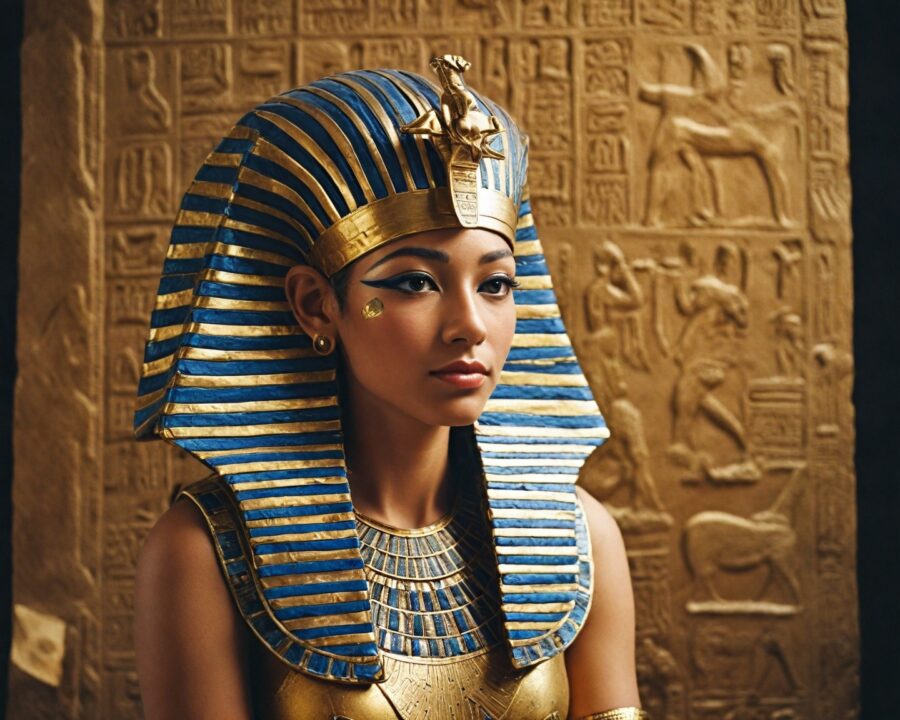
Introduction to Ancient Egyptian Religion and Deities
Ancient Egypt, known for its towering pyramids and expressive hieroglyphs, was a civilization deeply rooted in spirituality and religious practices. At its core was a pantheon of gods that represented the forces of nature and the complexities of human life. This pantheon comprised more than two thousand deities, with a structured mythology that explained the universe and humankind’s place within it. The Egyptian belief system offered a profound understanding of the cosmos, where every aspect of life, death, and rebirth was interconnected with the divine.
Religiously, the ancient Egyptians adhered to a polytheistic belief structure, where gods and goddesses took on roles related to natural and social phenomena. From Ra, the sun god, to Osiris, the god of the afterlife, each deity played a specific role that influenced the daily activities and long-term life aspirations of the people. Temples dedicated to these deities were central to both community and religious life, serving as physical spaces where divine presence was acknowledged and respected.
The religion of ancient Egypt was not just a set of spiritual beliefs; it was a binding force that maintained societal order and legitimized the rule of pharaohs, who were often regarded as semi-divine beings themselves. The intertwining of governance and religion underscored the importance of divine favor and guidance in maintaining the Ma’at, or cosmic order, which was paramount in Egyptian society.
The Role of Gold in Ancient Egyptian Society
Gold, known in ancient Egypt as “nbw,” meaning “shining, precious metal,” was a symbol of much more than just wealth. It was revered as an earthly embodiment of the divine, reflecting the brilliance and endurance of the gods themselves. Gold’s rarity and aesthetic were perceived as signs of its purity and imperishability, making it an ideal material for religious artifacts and symbols of power.
In the social hierarchy of ancient Egypt, gold was intrinsically linked to the divine and was used extensively by the pharaohs, who were seen as earthly representatives of the gods. These rulers adorned themselves with gold to signify their divine connection and legitimate rule. Gold jewelry, regalia, and emblems were worn both in everyday life and in elaborate ceremonies, symbolizing the wearer’s status and proximity to the divine.
Economically, gold was also a critical resource, playing a crucial role in trade and diplomacy. Egypt’s rich resources in Nubia allowed them to mine substantial amounts of gold, which they then used to trade with neighboring regions for resources not readily available in their own lands. This trade not only enriched Egypt but also spread its influence across Africa and into the Near East.
Symbolic Meaning of Gold in Egyptian Mythology
In Egyptian mythology, gold’s radiance was often associated with the sun and its life-giving properties. To the ancient Egyptians, the sun was the most powerful of all celestial bodies, and gold, with its bright luster, was seen as a material manifestation of solar power. This connection made gold a symbol of life, regeneration, and divinity.
Consider the myth of Ra, the sun god, who journeyed across the sky each day, bringing light and warmth to the world. Gold was considered his flesh, and this association made it a symbol of Ra’s eternal power and presence. Ra’s daily rebirth at dawn and his journey through the underworld at night symbolized the cycle of life and death, themes central to Egyptian beliefs.
The metaphoric link between gold and divine attributes was not limited to Ra. Other gods, such as Osiris, the god of the afterlife and resurrection, were also associated with gold. Osiris’s role in judging the dead and his promise of eternal life to the righteous were often depicted using gold, underscoring its importance in religious iconography as a symbol of eternal purity and undying life.
Gold as a Representation of the Sun God Ra
Gold’s symbolism was deeply intertwined with the sun god Ra, who was one of the most important deities in the Egyptian pantheon. Ra was believed to represent life itself, and his connection with gold underscored this divine significance. Gold’s incorruptible nature and unending brilliance represented the eternal nature of Ra’s power, establishing a physical connection between the earthly and the divine.
Art and literature from ancient Egypt frequently depict Ra in various forms, often associated with the sun and gold. Iconography of Ra shows him with a falcon’s head crowned with a solar disk—a symbol often gold in color, representing his dominion over all earthly realms. The temples dedicated to Ra were adorned with materials that glimmered in the sunlight, reflecting his influence and the worship’s grandeur.
Furthermore, the daily journey of the sun across the Egyptian sky, both a natural and spiritual journey, was symbolized by gold. This precious metal served as a reminder of the sun’s vital role in sustaining life and the interconnectedness of all things under the gaze of Ra. In rituals, gold offerings were made to honor the sun god, highlighting its important role in religious and daily practices.
The Use of Gold in Religious Artifacts and Temples
Gold was a predominant feature in the religious architecture and artifacts of ancient Egypt, serving as the foremost symbol of divine presence and authority. Temples, which were considered the earthly homes of Gods, were decorated with gold to reflect divinity and awe-inspiring beauty. The inner sanctum of these temples, where the idols of the gods resided, were often richly adorned with gold leaf and other precious materials, creating a space that mirrored the idea of a celestial realm.
Additionally, gold was used extensively in creating religious artifacts such as statues, amulets, and jewelry. These items often displayed intricate designs and craftsmanship, showcasing the ingenuity and skill involved in working with such a precious metal. Gods’ statues were gilded to reflect their immortality and divine nature, serving both as objects of worship and as extensions of the deities’ power in the earthly realm.
The ceremonial objects and tools used by priests in the temple rituals also featured gold, used for their symbolic significance and their ability to evoke the divine. From chalices to scepters, gold was the metal of choice to ensure that these items embodied the spiritual essence of the rituals carried out in their religious observances.
Gold in the Afterlife: Tombs and Burial Practices
Gold had a profound importance in the burial practices and the conception of the afterlife in ancient Egypt. The Egyptians held a strong belief in life after death, where the dead lived on in a realm similar to earthly existence. To ensure a successful passage into the afterlife, the dead were buried with items that demonstrated their status and ease their transition into the world beyond.
Pharaohs, in particular, were accompanied in their tombs by an array of gold items, which ranged from jewelry and weapons to intricate death masks that covered their faces. The famous burial mask of Tutankhamun, constructed predominantly from gold, exemplifies this practice. Such items were meant to protect their spirits and provide them with the power of the sun and gods due to gold’s magical properties.
The use of gold in mortuary artifacts wasn’t limited to the elite. High-ranking individuals such as nobles and priests were also buried with gold items that illustrated their earthly wealth, social status, and closeness to the divine. This wealth in burial customs was considered a testimony of one’s piety and alignment with the gods, often seen as vital for ensuring a favorable place in the afterlife.
The Connection Between Gold and Immortality
Gold, with its permanent luster and resistance to corrosion or tarnish, was seen as a fitting symbol for immortality in ancient Egypt. This permanence was especially appealing in a culture where the afterlife was as crucial, if not more so, as earthly life. To the Egyptians, gold was not just valuable; it was eternal, mirroring the immortal nature promised by the gods to the faithful.
Texts such as the Book of the Dead outline rituals and spells hoped to secure a journey to the eternal afterlife, and many of these include references to golden accessories or offerings. The belief was that gold could “carry” magical properties due to its divine connections, aiding the deceased in their journey through the afterlife’s trials and tribulations.
The resurrection and renewal of the soul were core tenets of ancient Egyptian religion. Gold’s ability to withstand the elements made it a powerful symbol for such beliefs. It was thought to be an earthly mirror of an eternal spirit, and its inclusion in burial accouterments intended that the soul would be rejuvenated and shine in the afterlife just as gold sparkled in the earthly sun.
Goldsmithing Techniques in Ancient Egypt
The art of working with gold in ancient Egypt was as much a display of craftsmanship as it was of wealth and religious piety. Egyptian goldsmiths were highly skilled artisans, able to transform raw gold into beautiful objects that served religious, decorative, and practical functions. Their techniques employed methods that were both innovative and sophisticated, given the period and the tools available to them.
Goldsmiths in ancient Egypt utilized a variety of techniques, including cold hammering, soldering, and inlaying, to create intricate jewelry, statues, and decorations. The process often began with the mining of gold, primarily carried out in Nubia, followed by melting and further refining in workshops located near temples and royal palaces.
A deeper understanding of their craftsmanship can be observed in how they incorporated semi-precious stones and colored glass in gold settings, creating pieces that also harbored symbolic meanings and protective functions. Goldsmiths along the banks of the Nile were at the forefront of jewelry design, producing items such as necklaces, bracelets, and elaborate headdresses that were not only artistic but also spiritual in nature.
| Technique | Description | Significance |
|---|---|---|
| Cold hammering | Shaping gold without heat | Enabled fine detailing |
| Soldering | Joining pieces using heat | Allowed for complex designs |
| Inlaying | Setting stones within gold | Added color and symbolism |
Influence of Gold on Egyptian Economy and Trade
Gold was a cornerstone of Egypt’s economy, providing a stable financial foundation that allowed the civilization to flourish over millennia. The wealth generated from gold mining and its control over significant gold reserves were instrumental in both local and international trade networks. Egyptian gold was a currency of sorts that facilitated exchanges across the Mediterranean and the Near East.
The procurement and refinement of gold supported an entire industry, from miners and smiths to traders and merchants. Gold was not merely limited to adornments and religious pieces; it was exchanged for essential goods, like timber from Lebanon and lapis lazuli from Afghanistan, which were not naturally abundant in Egypt. This exchange not only enriched Egyptian society but also fortified its relationships with neighboring cultures.
Additionally, gold underpinned diplomatic relations as it played a central role in establishing and maintaining alliances. Pharaohs often gifted golden artifacts to foreign dignitaries and rulers as part of treaties and marriages among monarchies, cementing Egypt’s economic and political influence throughout the region.
Comparison with Other Cultures: Gold and Divinity
The use of gold as a divine symbol was not unique to ancient Egypt, as many cultures around the world have historically shared these associations. However, each culture attributed different meanings and values to gold based on their own religious beliefs, social structures, and geographical contexts.
In Mesopotamia, for instance, gold was also associated with divinity and royalty, being used in the adornment of temples and by the elite, similar to its applications in Egypt. The Sumerians crafted intricate jewelry and lavish decorations for sacred spaces, showing reverence for their pantheon of gods.
Conversely, in Inca civilization, gold was considered the “sweat of the sun” and was used extensively in worship rituals. Like the Egyptians, Incas revered the sun as a critical source of life and power, which is mirrored in their craftsmanship and communal mythology. Both cultures utilized gold crafts not merely for opulence but for the spiritual emblematic meaning tied to their cosmic beliefs.
Meanwhile, in the far reaches of Asia, gold was likewise valued for its purity and rarity. In India, gold was, and still is, a symbol of prosperity and purity, embodying key aspects of the spiritual and material world that align with Hindu beliefs about wealth, health, and good fortune. The cross-cultural appreciation of gold underscores its universal appeal and multifaceted significance across times and territories.
Conclusion: The Legacy of Gold in Egyptian Culture
Gold’s lasting legacy in Egyptian culture lies not only in its remarkable craftsmanship but also in its embodiment of divine power and eternal life. Egyptians’ pioneering work with gold set a precedent for how subsequent societies across the world would view and use this precious metal. Even today, the artifacts uncovered from ancient tombs and temple ruins continue to captivate with their beauty and historical significance.
Gold was the universal thread that linked the ancient Egyptians’ religious beliefs, societal hierarchy, and economic strength. Its integration into everything from daily life to complex burial rites showcased the depth of its meaning beyond mere material value. Through the passage of time, this precious metal maintained its position as an object of fascination, illuminating the past in ways that other historical artifacts cannot.
The endurance of gold in Egypt’s cultural memory is evident in modern appreciation for ancient Egyptian arts and religious practices. Gold continues to hold significant financial and symbolic value across the world, yet its relationship with divinity and immortality, as fashioned by the ancient Egyptians, remains a unique aspect that highlights humanity’s enduring quest for eternal life and order.
Frequently Asked Questions
What role did gold play in ancient Egyptian religion?
Gold played a crucial role in ancient Egyptian religion as a physical embodiment of the divine. It was associated with gods, particularly the sun god Ra, and symbolized eternity, power, and purity. Gold was used extensively in religious artifacts, temple decorations, and was included in practices aimed at securing a favorable position in the afterlife.
How was gold sourced and processed in ancient Egypt?
Gold in ancient Egypt was primarily sourced from mines in Nubia. Once extracted, it was refined and worked in workshops near temples and palaces. Techniques such as cold hammering, soldering, and inlaying were used to create intricate religious symbols, jewelry, and ceremonial items, displaying skill and craftsmanship.
Why was gold used in burial practices in ancient Egypt?
Gold was used in burial practices due to its symbolic associations with the divine and immortality. It adorned the deceased in the form of jewelry, masks, and amulets to provide protection in the afterlife, reflecting the belief in eternal life and divine favor.
How did gold influence trade in ancient Egypt?
Gold greatly influenced trade by acting as a currency and an object of exchange with other cultures. Its abundance in Egypt helped secure essential goods and establish strong trade relationships with neighboring regions, such as the Levant and the Near East, enhancing Egypt’s economic and political influence.
What is the connection between gold and the sun god Ra?
Gold’s luster and durability made it the perfect symbol of the sun god Ra’s eternal life-giving power. Gold was considered his skin, representing the sun’s unyielding light and presence. This connection was reflected in temple decorations and religious artifacts linked to Ra.
How does the perception of gold in Egyptian culture compare to other ancient cultures?
While other ancient cultures also revered gold for its beauty and rarity, the specific religious and cultural meanings varied. In ancient Egypt, gold symbolized eternity and divinity. In cultures such as the Incas, gold was tied to the sun, while in Mesopotamia, it denoted royal and divine associations, highlighting both universal and unique aspects of gold’s symbolic power.
Recap
The article explored the multifaceted role of gold in ancient Egyptian culture, emphasizing its religious, economic, and symbolic significance. In Egyptian mythology, gold was associated with divinity and immortality, particularly linked to the sun god Ra. The text discussed gold’s uses in religious artifacts and burial practices, its economic influence through trade, and compared its importance in Egypt with other cultures. It also highlighted the techniques Egyptian goldsmiths employed to create intricate gold items that reflected the wealth and spiritual life of the ancient civilization.
Conclusion
In conclusion, gold’s significance in ancient Egyptian culture highlighted a deep connection between the material and spiritual worlds. Its use as a symbol of divinity and immortality set ancient Egypt apart as a civilization remarkably advanced in both ideation and craftsmanship. The Egyptians’ understanding of gold as a medium of the divine finds its place in modern archaeological marvels and cultural heritage, offering us meaningful insights into how one of the world’s greatest civilizations viewed life and the universe.
The article underscored how gold played a central role not only in religious worship and societal status but also in the economic and political realms. This precious metal, through its enduring beauty and indestructibility, shaped Egypt’s culture and left a lasting legacy felt globally today. Through both tangible artifacts and intangible influence, gold continues to sparkle bright with the ideas and beliefs of an ancient time, reminding us of humanity’s never-ending quest for enduring legacy and heavenly connection.