
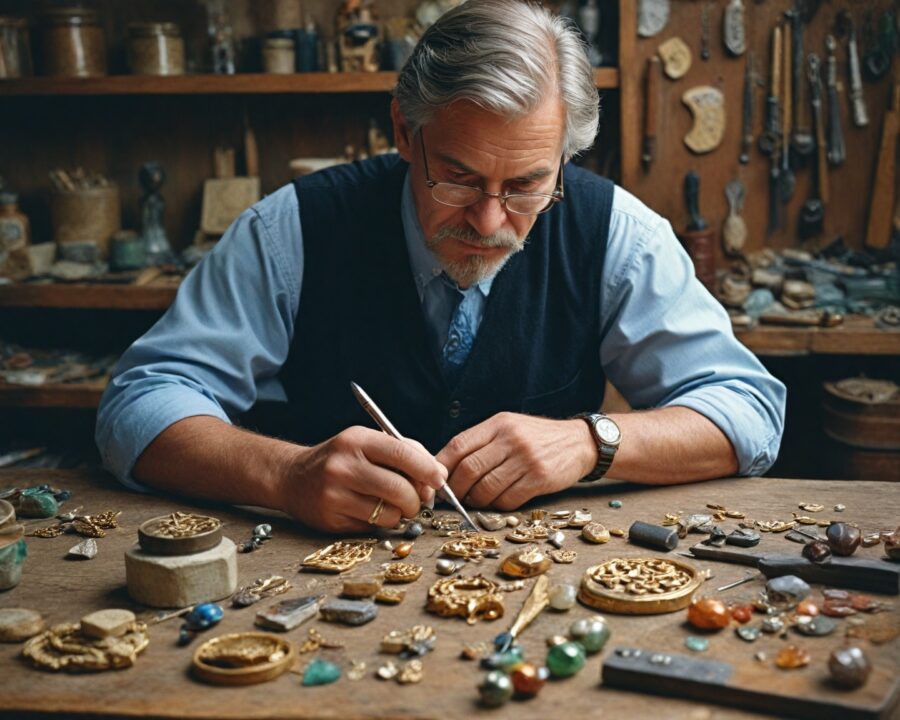
Introduction to Custom Gold Jewelry
In the world of jewelry design, custom gold jewelry stands as a timeless emblem of luxury, class, and personal expression. This bespoke form of art allows individuals to personify their taste and style through unique accessories crafted specifically for them. Unlike mass-produced pieces, custom gold jewelry is an exquisite blend of creativity and craftsmanship, making every piece a cherished keepsake. As more people seek distinctive and personalized expressions of their identities, the popularity and demand for custom gold jewelry continue to rise.
Personalization is key when it comes to custom gold jewelry. It offers a significant opportunity for the wearer to infuse personal meaning into a piece, making it more than just a decorative accessory. Whether it’s a necklace engraved with meaningful dates, a ring featuring a unique design, or a pair of earrings inspired by a cultural motif, each piece tells a story. This narrative-driven approach to jewelry design is one of the reasons why custom gold pieces are not only favored by jewelry lovers but also make remarkable gifts for special occasions.
Designing and crafting custom gold jewelry is no ordinary feat. It requires a profound understanding of materials, sophisticated techniques, and a keen eye for detail. From conceptualization to casting and polishing, each stage of the design process must be meticulously executed to achieve the desired outcome. For amateurs and seasoned jewelers alike, mastering the art of custom gold jewelry design involves ongoing learning and practice.
In this comprehensive guide, we’ll delve into the intricate process of crafting custom gold jewelry. Starting with an exploration of gold purity and types, we’ll uncover the essential tools needed for jewelry making. From there, we’ll navigate through the design process, look at prototype creation, and explore the techniques and skills involved in goldsmithing. We’ll discuss the significance of casting and molding, the art of stone setting, and how to ensure quality control before we wrap up with tips on caring for your handcrafted treasures.
Understanding Gold Purity and Types
The first step in creating custom gold jewelry is understanding the material itself. Gold, known for its malleability and luster, has been used in jewelry making for centuries. However, not all gold is created equal; various factors determine its quality and suitability for different types of jewelry.
-
Gold Purity: Gold purity is measured in karats, with 24-karat gold being the purest form available. However, 24-karat gold, while beautiful, is often too soft for everyday jewelry, making it more suitable for pure investment pieces rather than practical accessories. Commonly used purities for jewelry include 18-karat and 14-karat gold, with 18-karat being composed of 75% pure gold and 25% alloyed metals. These mixtures create a more durable form that retains the desirable characteristics of gold.
-
Types of Gold: Gold can be categorized not only by purity but also by its color — an aspect determined by the type of metals used in the alloy. The most popular variations are:
- Yellow Gold: Classic and timeless, yellow gold maintains the natural brilliance of pure gold, often mixed with copper and silver.
- White Gold: Achieved by alloying gold with metals like palladium, nickel, or platinum, white gold offers a modern and sophisticated look, often coated with rhodium for an additional shine.
- Rose Gold: A romantic choice, rose gold is created by adding copper to the gold alloy, resulting in a warm, pink hue.
Understanding these variations in purity and types allows designers to select the ideal material that suits the envisioned design aesthetics and functional aspects of the jewelry piece.
-
Gold Alloys Comparison Table:
Gold Type Karat Composition Characteristics Yellow Gold 14K Gold, copper, silver Warm color, classic appeal White Gold 14K Gold, palladium/nickel Modern look, versatile Rose Gold 18K Gold, copper Romantic, unique style Green Gold 18K Gold, silver Subtle green tint, rare
Choosing the right type and purity of gold is crucial in ensuring that the custom piece not only meets aesthetic preferences but also satisfies durability requirements.
Essential Tools and Materials for Jewelry Making
Creating a piece of custom gold jewelry requires not just skill and creativity but also the right tools and materials. A well-equipped workspace is pivotal in transforming raw materials into a beautiful piece of bling.
- Basic Tools: The foundational tools for any jeweler include:
- Jeweler’s Saw: Essential for cutting precise shapes and intricate patterns.
- Files: Different sizes and shapes aid in smoothing the rough edges of cut metal.
- Pliers: Used for bending, shaping, and manipulating metal.
- Hammers: Variety of hammers like ball-peen or planishing are used for shaping and texturing metal.
- Soldering Kit: This includes a torch, flux, and solder to join pieces of metal together seamlessly.
- Advanced Tools: For those looking to delve deeper into the craft, advanced tools such as:
- Rolling Mill: Used to flatten and shape metal.
- Polishing Machine: Provides a professional finish to the completed pieces.
- Drills and Burs: Essential for engraving or setting stones.
- Casting Equipment: For melting and forming the metal into specific designs.
- Materials: Besides gold, a host of other materials come into play during the crafting process:
- Alloys and Other Metals: Like silver and platinum, used for creating desired gold colors and strengthening the jewelry.
- Stones and Gems: Incorporating precious or semiprecious stones can add color and elegance to the design.
- Consumables: Items like sandpaper, cutting blades, and polishing compounds necessary for finishing and detailing.
Equipping oneself with the correct tools and understanding their application forms the backbone of successful custom gold jewelry crafting.
Designing Your Custom Gold Piece: Tips and Techniques
Designing custom gold jewelry is an art that begins with a concept and escalates into an intricate dance of creativity and precision. The design phase is where personal expression meets technical feasibility, as each idea is translated into a tangible framework.
- Conceptualization: The first step is to brainstorm ideas based on personal preferences, occasions, or the intended wearer. Inspiration can come from various sources such as:
- Historical artifacts or motifs of cultural significance.
- Nature, including flora, fauna, and geological formations.
- Personal stories or milestones in one’s life.
-
Sketching and Prototyping: After deciding on a concept, the design transitions to a detailed sketch. Hand-drawing remains a favorite for many designers due to its tactile nature; however, modern technology enables the use of CAD (Computer-Aided Design) software for more precise and modifiable designs.
-
Design Principles: It’s essential to adhere to principles of design while conceptualizing:
- Balance: Achieving symmetry or asymmetrical balance for aesthetic appeal.
- Proportion and Scale: Ensuring design elements are in harmony with each other and functional as wearable items.
- Contrast and Emphasis: Utilizing differences in color, texture, or size to highlight focal areas of the jewelry piece.
Critically, the chosen design must align with the technical abilities and tools available, as complex designs require more advanced techniques and tools.
Creating a Prototype: From Sketch to Model
In jewelry making, moving from concept to reality involves prototyping, where initial designs are tested and refined. This phase is integral in ensuring that the vision translates well into three-dimensional reality.
-
Wax Models: Traditionally, jewelers use wax to model intricate designs before casting them in gold. This allows testing for proportionality and structural feasibility. Different waxes, based on their melting point and hardness, serve various prototyping purposes.
-
3D Printing: Modern advancements have integrated 3D printing into the jewelry prototyping process. Using digital designs, 3D printers create precise models that allow designers to visualize the end result with incredible accuracy. This method saves time and reduces material waste.
-
Testing and Refining: After creating the model, it is crucial to test for wearability and durability. A prototype may need adjustments to align with both ergonomic considerations and aesthetic goals. Issues like sharp edges or incorrect dimensions can be addressed before the piece reaches the casting phase.
This phase ensures that the final product meets the functional and stylistic expectations laid out during the design process.
The Art of Goldsmithing: Techniques and Skills
Goldsmithing is the core skill in jewelry design, transforming raw gold into wearable art. Mastery of various techniques and tools defines a goldsmith’s ability to realize complex designs.
- Joining Techniques: One of the primary skills a goldsmith must master is joining separate pieces of metal. This often involves:
- Soldering: Using heat to join two pieces of metal with melted solder. Acquiring finesse in soldering is crucial for achieving invisible joins.
- Fusing: An advanced technique involving melting edges of metals at high temperatures to bond without filler materials.
- Shaping and Forming: Goldsmiths must have a command over shaping gold to match the intended design. Techniques include:
- Forging: Hammering gold to thin it and create different shapes.
- Repoussé and Chasing: Creating intricate patterns and textures by shaping metal from the front and back.
- Texturing: Employing tools and processes to add surface texture to the gold, enhancing its aesthetic appeal.
- Engraving and Detailing: Adding fine details through engraving requires precision tools and steady hands. This can personalize a piece further by incorporating initials, dates, or decorative elements.
Mastering these techniques enables a goldsmith to craft custom pieces with the proficiency and artistry expected in high-quality jewelry.
Casting and Molding Gold Jewelry
Once a design is finalized and a prototype is perfected, the actual creation of the gold piece begins. Casting and molding are crucial parts of this phase, forming the foundation of the final piece.
-
Lost-Wax Casting: This age-old technique involves creating a wax model that is encased in a plaster-like material. Once hardened, the wax is melted and drained, leaving a cavity that is filled with molten gold. This process is particularly favored for its ability to reproduce intricate designs with precision.
-
Centrifugal and Vacuum Casting: For professional settings, centrifugal and vacuum casting machines help to ensure even flow and solidification of the molten gold. This helps in achieving fine details and reducing defects in the casting process.
-
Clean-up and Assembly: Post-casting, the piece usually requires extensive cleaning to remove the investment material. Further, any assembled parts are connected, and the piece is inspected for any imperfections.
Casting is a craftsman’s opportunity to bring the conceptual framework into a tangible, almost finished product. Utilizing these methods effectively reduces waste and errors while preserving design intricacies.
Polishing and Finishing Touches
The difference between a basic piece of jewelry and a piece of high-end custom gold jewelry often lies in the polish and finish. These steps are transformative, elevating the piece to a level of luxury and finesse.
-
Initial Cleaning: After casting, the jewelry piece must undergo cleaning to remove surface impurities and investment remnants. This stage might involve ultrasonic cleaning or chemical baths.
-
Polishing Stages: Polishing typically involves several stages, using different abrasives and compounds to achieve an immaculate finish:
- Rough Polishing: Using coarse compounds to remove larger imperfections.
- Fine Polishing: Gradually softer compounds smooth out the surface.
- Buffing and Burnishing: Achieving the final, high-gloss finish required for gold jewelry.
- Surface Treatments: Depending on the desired effect, surface treatments such as satin finishes or rhodium plating (common in white gold) can be applied to enhance the piece’s appearance.
Proper polishing and detailing ensure that the custom jewelry reflects light beautifully, showcasing its craftsmanship and increasing its aesthetic and market value.
Setting Stones and Adding Embellishments
Stone setting is an intricate part of custom jewelry making that adds dimension and beauty through the inclusion of gems or additional metalwork. The process requires precision and a steady hand to ensure the stones are secure and aligned with the design motif.
- Choosing the Right Setting: Depending on the type, size, and shape of the stone, various settings can be used such as prong settings, bezel settings, or pavé settings. Each has its merit in terms of security and display:
- Prong Setting: Allows maximum light to pass through the stone, enhancing its brilliance.
- Bezel Setting: Encases the stone with a band of metal, offering added protection.
- Channel and Bar Settings: Ideal for rows of stones, providing a seamless flow.
- Stone Setting Techniques: The actual technique of setting stones involves:
- Measurement and Alignment: Ensuring stones fit snugly and are properly aligned.
- Secure Placement: Techniques like burnishing and gripping must be employed to ensure stones stay in place.
- Additional Embellishments: Once the stones are set, other embellishments like engraving or filigree can further enhance the piece’s appeal and uniqueness.
The ability to expertly set stones and add embellishments is a testament to a jeweler’s skill, directly impacting the piece’s visual appeal and durability.
Quality Control and Final Adjustments
The journey from design to reality reaches its final hurdle in quality control and adjustment. Ensuring that every piece of custom gold jewelry meets the highest standards is essential for customer satisfaction and reputation.
- Inspection Process: Each piece undergoes rigorous inspection to check for defects or inconsistencies in design, structural integrity, and finish. Common aspects scrutinized include:
- Structural Durability: Ensuring settings and joins are secure.
- Surface Quality: Checking for scratches, dents, or uneven finishes.
- Stone Alignment: Ensuring stones are placed properly and securely.
-
Refinement: If any imperfections are discovered, the jewelry piece must be refined before final delivery. Adjustments could involve additional polishing, stone resetting, or re-soldering parts.
-
Documentation: A final quality assurance step may involve preparing a detailed report or receiving certification, especially if the piece includes valuable gemstones or holds significant value.
Quality control ensures that the piece delivered to the client truly represents the mastery and dedication involved in its creation, matching the bespoke promise of custom gold jewelry.
Caring for Your Custom Gold Jewelry
Once you have a custom gold jewelry piece, proper care is essential to maintain its beauty and longevity. Gold, though durable, can be scratched or tarnished if not handled properly.
-
Storage: Always store gold jewelry in a cloth-lined jewelry box or wrap individual pieces in a soft cloth to prevent scratches and contact with other metals.
-
Cleaning Tips: To clean gold jewelry:
- Mild Soap and Water: Regular cleaning with mild soap and warm water, using a soft brush, can remove dirt and oils.
- Avoid Harsh Chemicals: Steer clear of bleach or chlorine when cleaning, as these can discolor gold.
- Regular Maintenance: Periodically, have the jewelry professionally checked for loose stones or weakened settings, especially if worn frequently.
Caring for custom gold jewelry is an ongoing process that preserves its elegance and ensures it remains a cherished accessory for years to come.
FAQ
What is the lead time for custom gold jewelry?
The lead time for custom gold jewelry can vary depending on the complexity of the design and the jeweler’s workflow. On average, it can take anywhere from four to six weeks from conception to completion. Factors that might extend this time include obtaining specific materials or multiple rounds of design revisions.
Can I incorporate my own materials, such as family heirloom gold, into a new piece?
Yes, many jewelers offer the option to recycle your own gold or gemstones into new designs. This not only adds sentimental value but is also an environmentally friendly option. Discuss this possibility with your jeweler at the beginning of the design process to understand any limitations or additional costs involved.
How is the price of custom gold jewelry determined?
The price of custom gold jewelry depends on several factors: the cost of materials, design complexity, the jeweler’s craftsmanship, and labor. Additionally, the inclusion of gemstones or special finishes can affect the overall price. It’s advised to discuss the budget and pricing with your jeweler before finalizing the design.
Are custom gold jewelry pieces insured during the making process?
Most reputable jewelry studios will have insurance that covers the materials and piece during the creation process. Always inquire about insurance policies and coverages provided by your jeweler and consider additional insurance for high-value pieces.
What guarantees or warranties are offered with custom jewelry?
Guarantees or warranties can vary between jewelers, but many offer a service warranty for certain repairs or adjustments, such as stone tightening, within a specific period. Always check the specifics of any warranty or service plan offered upon purchase.
Recap
In this guide, we’ve explored the multifaceted process of designing and crafting custom gold jewelry. From understanding the fundamentals of gold purity and gathering the essential tools, to mastering design intricacies and developing prototypes, each step is crucial to bringing a vision to life. Goldsmithing and casting techniques play pivotal roles in materializing designs, while polishing and setting stones add the required finesse. Quality control ensures each piece meets high standards, and proper care ensures longevity and brilliance. Custom gold jewelry is not just about wearing luxury, but preserving personal stories and expressions crafted into ageless artifacts.
Conclusion
Custom gold jewelry represents the epitome of personal expression and artisanal excellence, bridging creativity with the iconic beauty of gold. For jewelry enthusiasts and artisans alike, the process of crafting custom pieces goes beyond mere production; it is a blend of tradition, skill, and innovation.
As the allure of customized and bespoke items continues to grow, this guide serves as a comprehensive resource for those looking to embark on the journey of designing their own custom gold jewelry. Whether you’re a seasoned artisan or a novice pursuing a new creative venture, understanding the intrinsic details of design and craftsmanship will guide you in creating pieces that are not only stylish but also deeply significant.