
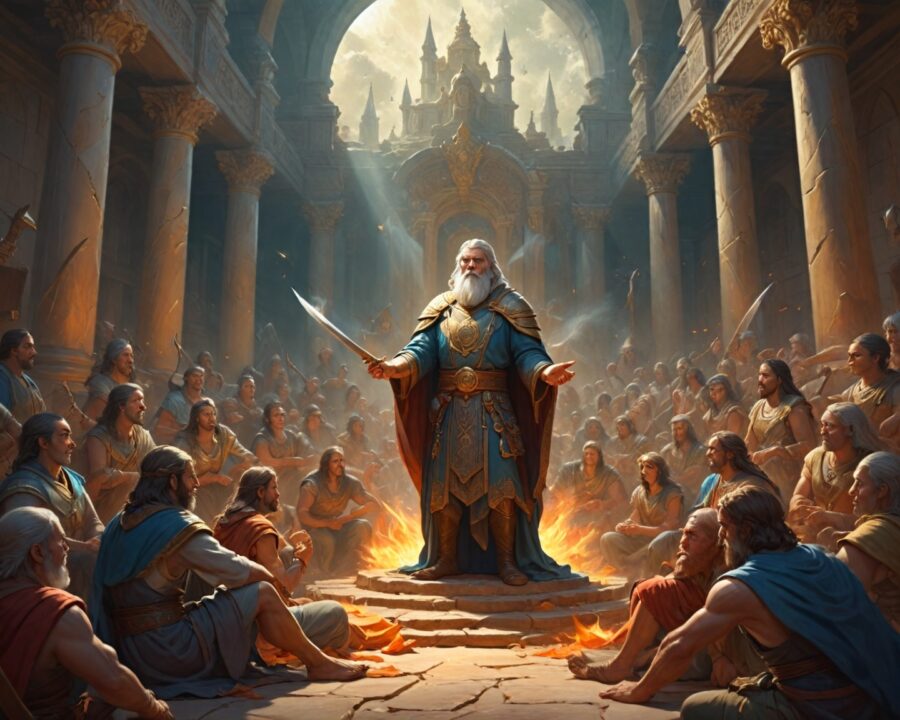
Introduction to the Intersection of History and Myth
The intersection of history and myth is a fascinating domain that captures the imagination and informs our understanding of humanity’s past. Throughout the ages, stories have served as powerful vehicles for preserving cultural heritage and imparting moral and spiritual lessons. History and myth merge to create epic stories that resonate with both past and present societies, binding us to our ancestors and their experiences. These narratives are more than tales of heroism or tragedy; they are chronicles that record the ebb and flow of civilizations, illustrating how humans have interacted with their world through time.
Myths, often considered merely symbolic or fictitious, have roots extending deep into historical events. By analyzing these epic stories, we can uncover kernels of truth and gain insights into ancient societies’ values, struggles, and achievements. Whether through the storytelling of ancient Greeks, the elaborate epics of India, or the sagas of the Norse, the blending of history and myth offers a rich tapestry of narratives that continue to influence cultures worldwide.
Defining Epic Stories and Their Cultural Significance
Epic stories are grand narratives that usually involve heroic deeds, significant events, and larger-than-life characters. These stories serve as epic poetry or prose, recounting the exploits of a central figure or group whose actions determine the fate of a nation or culture. Unlike simple tales, epics are lengthy and filled with elaborate dialogue and complex plotlines that draw audiences into their majestic worlds.
These narratives hold immense cultural significance, acting as conduits for shared values and communal identity. They are a reflection of the society that created them, embodying ideals, fears, and aspirations. Through epic stories, ancient people could convey complex social and moral lessons, preserving their legacies and inspiring future generations. Epics often explore themes of honor, loyalty, bravery, and fate, weaving them into their plots in ways that resonate across ages.
Culturally, epic stories are a means of understanding the human condition. By engaging with these narratives, audiences experience a connection with the creators and the world they inhabited. This connection fosters a sense of continuity and belonging, as epic stories serve to remind us of where we came from and the universal human struggles that bind us all together.
Examples of Myths Rooted in Historical Events
Myths rooted in historical events are abundant throughout world cultures. These stories provide windows into how ancient societies perceived their history and how they processed momentous occurrences through a mythological lens. One such example is the story of the fall of Troy, famously depicted in Homer’s “Iliad.” While the myth portrays larger-than-life characters like Achilles and Hector, archaeological evidence suggests that the city of Troy did exist, and events similar to the Trojan War may have occurred.
Another notable example is the Icelandic sagas, which blend Northern European myth with history. These narratives chronicle early settlers’ exploits, such as the voyages of Erik the Red and Leif Erikson, grounding mythical figures in real historical contexts. These stories illustrate the struggles and discoveries of Norsemen as they ventured into the unknown, capturing the essence of Viking exploration.
Similarly, the Indian epic “Mahabharata” combines history with mythology, encapsulating a time when even great dynasties like the Kuru had to contend with power, morality, and war. The epic is not just a story but a composite of historical remembrance, philosophical discourse, and religious ideals that persists in its influence on Indian culture.
How Ancient Civilizations Used Storytelling to Preserve History
Storytelling has been an indispensable tool for ancient civilizations in preserving history and imparting wisdom. In the absence of written records, oral storytelling was the primary means of documenting events, maintaining cultural heritage, and transmitting knowledge from generation to generation. These narratives served as living repositories of a people’s collective memory, captured in songs, poems, and stories.
Civilizations such as the Mesopotamians, Egyptians, and Greeks used storytelling to memorialize their great achievements and significant events. In Mesopotamia, for example, the “Epic of Gilgamesh” not only told the story of a hero’s quest but also reflected the values and religious beliefs of the time. It encoded the history of Uruk and insights into Sumerian society, practices, and cosmology.
In Egypt, storytelling immortalized pharaohs and preserved the kingdom’s expansive history. Mythological tales, such as the story of Osiris and Isis, reinforced the divine right of kings and entrenched cultural practices. This tradition was mirrored by the Greeks, whose myths were rife with human characteristics and moral dilemmas, underpinning the historical realities of Greek society and the Mediterranean world.
The Role of Oral Traditions in Blending Myth and History
Oral traditions were vital in preserving and blending myth and history, primarily due to their adaptive and interpretative nature. Before the advent of writing, communities depended on storytellers to relay their tales. These storytellers, known as bards or griots in various cultures, became custodians of cultural memory. Through generations, oral traditions allowed stories to evolve, incorporating both factual elements and exaggerated or symbolic interpretations.
In many cultures, oral traditions blurred the lines between literal and figurative truth. They served not only as entertainment but as educational tools, shaping the social and moral fabric of society. For instance, in West African cultures, griots recited epic histories like the “Epic of Sundiata,” intertwining the rise of the Mali Empire with legendary feats to illustrate virtue and leadership.
This dynamic nature of oral traditions allowed communities to adapt their stories to changing cultural, political, and social climates. Myths could be updated to reflect new realities or reshape historical perceptions, ensuring that stories remained relevant and engaging to contemporary audiences while preserving a connection to the past.
Analyzing Famous Epic Stories Like the Iliad and Mahabharata
Analyzing epic stories like the Iliad and the Mahabharata reveals a profound fusion of myth and history. These texts are not mere flights of fancy but sophisticated compositions that reflect historical, literary, and philosophical depth, transcending their narrative origins to become cultural cornerstones.
In the “Iliad,” Homer creates a vibrant tapestry of myth and history, set against the backdrop of the Trojan War. Although the details of the conflict are mythologized, the story is steeped in the customs, politics, and warfare of Mycenaean Greece. The Iliad’s recurring themes of honor, wrath, and fate offer insight into the social values of its time, intertwining them with the poetic grandeur of epic tradition.
Similarly, the “Mahabharata” contains historical kernels within its mythic structure. This Indian epic is both a historical account and a spiritual treatise, discussing the significance of dharma (duty/righteousness) through its complex characters and plotlines. The central conflict between the Pandavas and the Kauravas is set amidst the evolving political landscape of ancient India, providing a mirror to historical societal conflicts and philosophies.
The Influence of Historical Myths on Modern Literature and Media
Historical myths continue to exert a lasting influence on modern literature and media, effectively bridging the past with the present. These timeless stories, filled with universal themes and archetypes, inspire contemporary writers, filmmakers, and creators across various mediums. By drawing on the epic scope and emotional depth of myths, modern narratives evoke a sense of wonder and familiarity that resonates with audiences today.
Authors like J.R.R. Tolkien have masterfully woven mythological elements into their work, as seen in “The Lord of the Rings.” Drawing heavily from Norse and Anglo-Saxon mythologies, Tolkien created an expansive world that mirrors epic traditions, influencing generations of fantasy writers. Similarly, epic tales inspire entire cinematic franchises, as directors adapt larger-than-life stories to the silver screen, captivating audiences with their visual grandeur.
Moreover, historical myths provide a rich source of material for cultural reinterpretation and critique. Contemporary storytelling frequently revisits and reimagines these narratives to address modern themes, allowing authors and creators to explore new interpretations while engaging with the foundational elements of mythic tradition.
Common Misconceptions About Myths and Historical Accuracy
Despite the profound cultural value of myths, they often suffer from misconceptions regarding historical accuracy. The blending of myth and history can lead to a perception that all mythical stories are purely fictitious or embellishments that obscure the truth. However, such assumptions overlook the nuanced interplay between fact and fiction inherent in these narratives.
One common misconception is that myths are dictators of historical truth. While it is true that myths employ exaggeration and symbolism, they are often rooted in actual events or reflect the socio-political conditions of their time. For example, the legend of King Arthur, while steeped in medieval romance, draws from historical texts referencing potential Arthurian figures during the post-Roman period in Britain.
Another misconception is that myths are static stories. In reality, myths are dynamic and evolve alongside their cultures. Consequently, historical accuracy within myths can shift as societies reinterpret them to serve contemporary purposes. This fluid nature of myths allows for cultural adaptability over time.
Finally, the notion that myths lack factual basis entirely discounts the value they provide in understanding past civilizations. Myths hold instructional merit in their lessons and insights, allowing researchers to piece together historical contexts through archaeological and anthropological lenses.
How to Identify Historical Truths Within Mythical Narratives
Identifying historical truths within mythical narratives requires a discerning approach that balances historical evidence with critical literary analysis. Researchers and enthusiasts can employ several strategies to explore the factual underpinnings of these stories:
-
Literary Analysis: Begin by examining the narrative’s structure, themes, and motifs. Understanding these components provides insight into the cultural and societal context in which the myth was created.
-
Historical Correlation: Compare the events, locations, and figures in the myth with established historical records. Many myths align with known historical timelines, offering parallel narratives that illuminate historical truths.
-
Archaeological Findings: Utilize archaeological data to contextualize mythological stories. Excavations and artifacts can provide tangible evidence that supports or challenges the myth’s historical validity.
-
Cultural Anthropology: Investigate how the myth functions within its culture, interpreting how societal values and norms are encoded within the narrative. This approach offers clues about the historical circumstances that gave rise to the myth.
-
Interdisciplinary Study: Engage with multiple disciplines, such as history, literature, and archaeology, to construct a comprehensive understanding of the myth’s historical backdrop. Cross-referencing disciplines helps to decipher complex relationships between myth and history.
Practical Steps to Research and Explore Epic Stories Further
For those interested in researching and exploring epic stories, a structured approach can help uncover the intricate relationship between myth and history. Here are practical steps to guide your exploration:
-
Select an Epic: Choose an epic story or myth that piques your interest. Focus on a culture, tradition, or narrative you wish to investigate.
-
Read Widely: Obtain a comprehensive understanding of the epic by reading various translations and interpretations. Familiarize yourself with the narrative’s key elements and themes.
-
Investigate Historical Parallels: Identify historical events or figures that align with elements of the epic. Cross-reference historical texts, records, and research papers that elaborate on these connections.
-
Consult Scholarly Sources: Access academic articles, journals, and books that provide in-depth analyses of the epic. Look for works by historians and literary scholars who specialize in the epic’s cultural context.
-
Visit Museums and Exhibits: Engage with physical artifacts and exhibits related to the epic. Museums often provide contextual information that enhances your understanding of its historical backdrop.
-
Join Discussions and Lectures: Participate in forums, seminars, and lectures. Engaging with experts and fellow enthusiasts can offer diverse perspectives and insights.
-
Reflect and Write: Document your findings and reflections. Writing helps solidify your understanding and allows you to synthesize historical and mythological connections creatively.
| Myth | Historical Basis |
|---|---|
| Iliad | Trojan War |
| Mahabharata | Ancient Indian Dynasties |
| King Arthur | Post-Roman Britain |
Frequently Asked Questions (FAQ)
What distinguishes an epic story from regular stories?
Epic stories are characterized by their grand scale and scope, featuring significant events or heroic deeds. They usually involve larger-than-life characters and societal or cultural themes that reflect the values or history of a civilization.
Can myths be considered historical documents?
While myths are not historical documents in the traditional sense, they contain elements rooted in historical events. They reflect the cultural, political, and social realities of their time, offering insights into past societies despite their symbolic or exaggerated nature.
How do oral traditions contribute to myth-making?
Oral traditions are crucial to myth-making by preserving narratives through generations. They adapt and evolve stories, integrating historical events with cultural values, thus ensuring the survival and relevance of myths across time.
What role does symbolism play in mythological narratives?
Symbolism in mythological narratives is used to convey complex ideas, morals, and cultural values in an accessible form. It allows myths to impart lessons and emphasize themes crucial to the culture, offering layers of meaning beyond literal interpretation.
How can modern stories draw inspiration from historical myths?
Modern stories can incorporate the archetypes, themes, and structures of historical myths to create rich narratives. By playing on time-tested elements, they can evoke mythic grandeur and connect contemporary audiences with universal human experiences.
Are there specific techniques to analyze epic stories?
Analyzing epic stories involves literary and historical analysis, comparing the narrative to historical events, and examining cultural symbols and themes. Using interdisciplinary approaches helps uncover deeper connections between mythological and historical dimensions.
Why do myths often contain fantastical elements?
Myths incorporate fantastical elements to capture the imagination and communicate abstract concepts and philosophies. These elements make the narrative engaging and memorable, allowing complex ideas to be expressed through imaginative storytelling.
Recap
The article explores the intricate ways in which history and myth blend to create epic stories, demonstrating their cultural significance and ongoing influence. From defining the essence of epic narratives to providing examples of historically rooted myths, the article examines storytelling’s role in preserving history. It also highlights oral traditions, famous epics like the Iliad and Mahabharata, and the impact of historical myths on modern media. Furthermore, it addresses common misconceptions, methods for identifying historical truths within myths, and offers practical steps for further exploration of these enduring stories.
Conclusion
Epic stories that combine history and myth continue to shape the world of storytelling across generations. By exploring the depths of these narratives, we uncover profound connections that link humanity to its past, revealing both literal and figurative truths about the civilizations that created them. These stories do more than entertain; they educate, inspire, and bind people across time, serving as a testament to the enduring power of the human imagination.
Understanding how history and myth blend within epic narratives can enrich our appreciation of global cultures and inspire creativity as we reconstruct ancient worlds through our modern lenses. By delving into these stories, we connect with the cultures that came before us, gaining insights not only into their history but into universal truths about the human condition.
In celebrating this blend of history and myth, we acknowledge the profound impact that these narratives have on shaping our perception of the past and its narrative traditions. They remain vibrant parts of cultural identity, ensuring that history is not lost but continues to evolve in the consciousness of every new generation.