
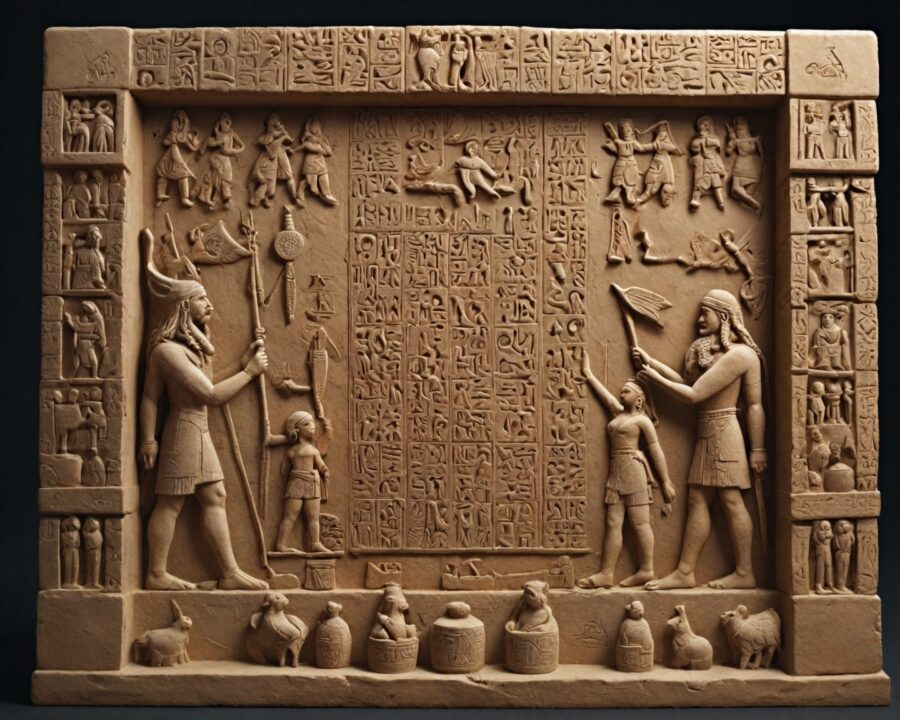
Mesopotamian mythology, often regarded as the cradle of human civilization’s religious narratives, offers a fascinating glimpse into the minds and lives of ancient societies. Positioned in the fertile crescent between the Tigris and Euphrates rivers, Mesopotamia, which encompasses parts of modern-day Iraq, Syria, and Turkey, is where human beings first formed complex societies. The myths and gods crafted by these ancient people offer profound insights into how they understood the world around them and established a foundation for many religious traditions that followed.
This article delves into the depths of Mesopotamian mythology, exploring its gods, myths, and cultural impacts. We will unravel the roles these deities played within society, examine key stories that resonated through Mesopotamian life, and discuss how these ancient tales have shaped cultures beyond their own time. From examining the underlying symbols and themes to understanding how these myths compare with those from other civilizations, this exploration offers a comprehensive understanding of why Mesopotamian mythology is still influential in modern times.
What is Mesopotamian mythology? An overview
Mesopotamian mythology refers to the collective spiritual beliefs and narratives of ancient Mesopotamian civilizations, primarily the Sumerians, Akkadians, Babylonians, and Assyrians. These stories were not only religious in nature but also served as explanations for natural phenomena and human experiences. The mythology is characterized by a pantheon of gods and goddesses, each governing different aspects of the universe and human life.
The pantheon is diverse, reflecting the complexity of Mesopotamian society itself. Gods such as Anu, the sky god, Enlil, the god of air and storms, and Ea, the god of water and wisdom, held significant sway over life and fate. Each deity had a distinct personality and set of responsibilities that aligned with natural elements, reinforcing their importance to the human world.
Myths were relayed through oral traditions and later inscribed on clay tablets in cuneiform script. These narratives not only entertained but also educated people about their environment, their gods, and how to live accordingly. Over time, these stories evolved and intermingled with those of neighboring cultures, forming a rich tapestry that illuminates the core elements of Mesopotamian belief systems.
The role of gods in Mesopotamian culture
The gods of Mesopotamia were integral to the very fabric of society. Their influence extended beyond the spiritual domain and into everyday life, governance, and culture. Deities were thought to have control over natural and cosmic forces, and maintaining their favor was crucial for the prosperity of individuals and the community as a whole.
Priests and priestesses acted as intermediaries between the gods and humans. They conducted rituals and made offerings to appease the gods and interpret their will. Temples dedicated to various deities served as centers for worship and social gatherings. These monumental structures were often the largest and most important buildings within a city, signifying the societal emphasis on religion and the divine.
The legacy of the gods is evident in legal and ethical frameworks of the time. Kings and rulers often claimed divine guidance or descent from the gods to legitimize their authority. The famous Code of Hammurabi, for instance, begins by invoking the god Marduk, emphasizing that governance and justice are under divine jurisdiction. This intertwining of religion and statecraft underscores the essential role that gods played in shaping the moral and social order of Mesopotamian life.
Key myths and their significance in Mesopotamian society
Several myths within Mesopotamian mythology have resonated deeply throughout the annals of history, not only illustrating the beliefs and values of the people but also influencing later mythological constructs. Among these tales, the Epic of Gilgamesh is perhaps the most well-known, recounting the journey of King Gilgamesh of Uruk in his quest for immortality and understanding the divine.
Another significant myth is that of Enuma Elish, the Babylonian creation epic. This story details the cosmic battle between the god Marduk and the chaos monster Tiamat and describes the creation of the world and humanity. It serves not only as a creation myth but also underlines the superiority of Marduk and the city of Babylon.
The Descent of Inanna is also a vital myth illustrating the themes of death, rebirth, and transformation. Inanna’s journey to the underworld and subsequent return parallels the life-death-rebirth cycle, reflecting agricultural cycles and emphasizing the resilience of life. These narratives shaped cultural rituals and provided metaphors for understanding life’s unpredictable nature.
The influence of Sumerian mythology on later cultures
Sumerian mythology, as one of the earliest recorded mythologies, greatly influenced subsequent Mesopotamian cultures and other neighboring civilizations. The transfer of deities and myths through conquest, trade, and cultural exchange facilitated the dissemination of Sumerian beliefs and narratives.
The Sumerian god Enlil, for example, evolved in the Babylonian and Assyrian pantheons as a more central figure, acquiring new attributes and responsibilities. Similarly, the Sumerian tale of the Great Flood, seen in the Epic of Gilgamesh, bears remarkable similarities to the biblical story of Noah’s Ark, indicating a shared narrative heritage that transcends geographical and temporal boundaries.
Many of the structural elements found in Sumerian myths can be observed in Greek and Roman mythology. Themes of heroism, divine intervention, and cosmic order resonate throughout ancient literatures, underscoring the profound and lasting impact of Sumerian mythology on world mythology at large. By adapting and incorporating these early stories, later cultures ensured the survival and evolution of these foundational myths through generations.
Common symbols and themes in Mesopotamian myths
Mesopotamian myths are replete with symbols and themes that reflect the values, fears, and aspirations of the civilizations that created them. Understanding these elements provides a deeper appreciation of how the people of Mesopotamia conceptualized their world and their place within it.
Common Symbols in Mesopotamian Myths:
- The Tree of Life: Often representing immortality, fertility, or a connection between the earthly and divine realms.
- Serpents: Associated with the underworld, transformation, and at times, deception or protection.
- Water: A symbol of chaos and creation, representing both life-giving and destructive forces.
Themes in Mesopotamian Myths:
- Creation and Destruction: Many myths explore the cyclical nature of life, where creation emerges from chaos, only to be eventually undone and begun anew.
- Heroism and Quest: The stories of figures like Gilgamesh showcase the pursuit of knowledge, immortality, and the trials that test human character.
- Divine Orders: Many myths emphasize a structured universe governed by powerful deities, with order stemming from chaos through divine actions.
These symbols and themes paint a picture of a world understood through cycles and divine orchestration, where human beings strive for balance and understanding within their transient existence.
How Mesopotamian mythology shaped ancient religions
The intricate tapestry of Mesopotamian mythology laid the groundwork for the religious traditions that followed in the ancient world. Many key concepts and divine archetypes first seen in Mesopotamia can be traced across various religions and mythologies in the ensuing centuries.
Central to this religious evolution was the structure of the pantheon, which presented a hierarchically organized society of gods that reflected human social organization. This structure provided a template for later polytheistic systems, including those of ancient Greece and Rome, influencing how societies configured their pantheon and divine hierarchies.
Mesopotamian influences persisted into the monotheistic traditions of the Middle East. For example, the concept of a great flood, a central narrative in both Mesopotamian and Abrahamic traditions, highlights direct narrative transmission. Moreover, moral and ethical codes derived from divine models in Mesopotamian myths contributed to the development of legal and religious frameworks in subsequent cultures.
Frequently asked questions about Mesopotamian mythology
What are Mesopotamian gods known for?
Mesopotamian gods are known for their diverse roles and responsibilities in nature, society, and cosmic order. They each controlled specific domains, such as weather, love, war, and agriculture, directly influencing human affairs and the natural world.
How were Mesopotamian myths recorded?
Mesopotamian myths were primarily recorded on clay tablets using cuneiform script. This writing method involved pressing a stylus into clay to create wedge-shaped impressions that articulated their stories and religious practices.
Who is the most famous Mesopotamian god?
One of the most famous Mesopotamian gods is Marduk, especially in Babylonian mythology. He was the patron deity of Babylon and played a central role in the creation myth Enuma Elish.
How did Mesopotamian mythology influence other cultures?
Through commerce, conquest, and cultural exchange, Mesopotamian mythology influenced Greek, Roman, and even Biblical traditions, imparting themes of divine hierarchy, epic heroism, and creation narratives.
What is the Epic of Gilgamesh about?
The Epic of Gilgamesh is an ancient poem from Mesopotamia, recounting the adventures of King Gilgamesh, who seeks immortality and wisdom, explores friendship’s values, and ultimately confronts human mortality.
Did Mesopotamian mythology include an afterlife?
Yes, Mesopotamian mythology included beliefs about the afterlife, often depicted as a dreary underworld called the “Land of No Return” where souls resided after death, reflecting views of mortality and the divine unknown.
How did the Mesopotamians view their gods?
The Mesopotamians viewed their gods as powerful controllers of the universe, demanding respect, worship, and sacrifices to maintain balance and human prosperity.
What are some artifacts related to Mesopotamian mythology?
Key artifacts include the ancient ziggurats, which were temple towers, and the tablets of the Epic of Gilgamesh, both of which provide historical insight into the religious practices and mythological narratives of ancient Mesopotamia.
Practical ways to explore Mesopotamian mythology today
Exploring Mesopotamian mythology today offers an enriching cultural and historical experience that deepens understanding of the ancient world. Here are some practical ways to engage with this ancient mythology:
-
Read Primary Texts: Reading translations of key texts like the Epic of Gilgamesh, Enuma Elish, and mythological inscriptions provides insight into ancient perspectives and storytelling traditions.
-
Visit Museums: The British Museum in London and the Louvre in Paris house extensive Mesopotamian collections, offering firsthand views of artifacts, sculptures, and tablets.
-
Online Resources and Courses: Websites like Khan Academy and Coursera offer courses and lectures on ancient history and mythology, providing valuable context and analysis.
-
Attend Lectures and Seminars: Participate in academic conferences and public lectures at universities that focus on ancient history and archaeology for expert insights into the latest research.
-
Join Online Forums and Discussions: Engage with communities on platforms like Reddit or specialized forums where enthusiasts and scholars discuss various aspects of Mesopotamian culture and religion.
By immersing oneself in these resources, one can appreciate the depth and influence of Mesopotamian mythology and its enduring legacy across time.
Comparing Mesopotamian myths with other ancient mythologies
Mesopotamian mythology shares striking similarities and distinct differences when compared to other ancient mythologies such as Egyptian, Greek, and Norse. These comparisons reveal both unique cultural traits and a shared human desire to explain existence and the cosmos.
Like Mesopotamian mythology, Greek myths feature a structured pantheon of gods with distinct domains. However, Greek mythology places a greater emphasis on the anthropomorphic traits of the gods and their direct interactions with humans. Similarly, Egyptian mythology shares the theme of cosmic order and the divine rule but is unique with its emphasis on the afterlife and the journey of the soul.
Norse mythology, with its own pantheon of gods, focuses more on the struggle between order and chaos, much like Mesopotamian myths. The Norse Ragnarök, an apocalyptic series of events, finds a thematic mirror in Mesopotamian motifs of destruction and renewal, as seen in stories like the flood myths.
These comparisons underscore the universal nature of myth-making, reflecting humanity’s shared endeavor to interpret creation, morality, and destiny through the lens of divine storytelling.
The legacy of Mesopotamian mythology in modern times
The legacy of Mesopotamian mythology is palpable in modern literary and cultural landscapes. Its narratives have inspired contemporary works of fiction, from novels to films, emphasizing timeless themes of heroism, exploration, and human endeavor. Characters like Gilgamesh have appeared in various forms, symbolizing the enduring nature of these ancient stories.
Scholarly fields such as archaeology, anthropology, and religious studies continue to draw from Mesopotamian mythology to explore the evolution of human societies and ideas. These early myths provide a foundation for evaluating the progression of religious thought and cultural identity.
Moreover, modern popular culture has embraced the imagery and symbolism of Mesopotamian mythology, evident in video games, fantasy genres, and media franchises that reference ancient deities and epic tales. Such representations ensure that these ancient narratives remain vibrant and relevant in today’s world, bridging past and present in a continuous narrative journey.
Recap
This article has traversed the rich terrain of Mesopotamian mythology, exploring the pantheon of gods, key myths, and their cultural significance. We’ve examined how these ancient narratives influenced subsequent cultures and religions, identified common symbols and themes, and offered practical ways to explore these myths today. Mesopotamian myths and mythology continue to shape academic discourse, modern storytelling, and cultural identity, highlighting their timeless resonance and importance.
Conclusion
Mesopotamian mythology forms one of humanity’s earliest ventures into the realm of divine storytelling, embedding itself in the cultural DNA of civilizations that have followed. It offers a window into the minds of our ancestors and their poignant attempts to understand life’s complexities and the forces guiding the cosmos.
As we reflect on these ancient narratives, we witness the enduring influence they have exerted across millennia, continuing to captivate our imagination and provide insightful parallels to our own experiences. Whether through academic study, literature, or cultural homage, Mesopotamian mythology persists as a vital thread in the tapestry of human knowledge and creativity, forever shaping our understanding of the world and ourselves.