
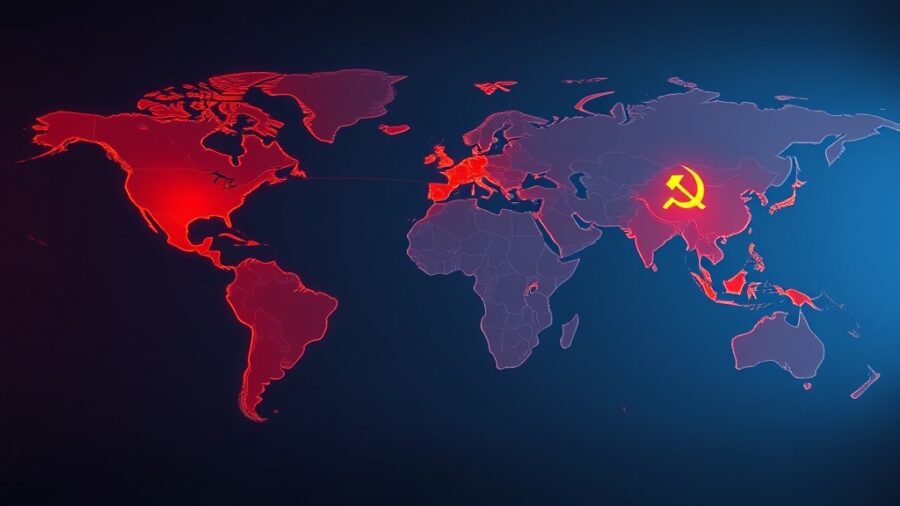
Cold War Geopolitical Tensions: An Overview
The Cold War geopolitical tensions have shaped the modern world in profound ways. Spanning approximately four decades, this era was characterized by a struggle for power between two dominant ideologies: capitalism and communism. Understanding the dynamics of these tensions not only provides insight into historical events but also helps explain current international relations. In this article, we will explore the origins, key players, major events, and the lasting impact of Cold War tensions on today’s geopolitical landscape.
The Cold War began shortly after World War II, during a time when the world was recovering from the devastation of global conflict. Nations were re-establishing their identities and political systems, leading to a power struggle that would influence global policies for generations. By delving into the intricate relationships between the United States, the Soviet Union, and their respective allies, we can better appreciate how these interactions set the stage for global conflict and cooperation.
Throughout this article, we will examine pivotal moments and ideologies that defined the Cold War era. From the establishment of military alliances like NATO and the Warsaw Pact to events such as the Cuban Missile Crisis and the Vietnam War, each segment reveals a layer of complexity that contributed to the geopolitical landscape. Finally, we will discuss how the legacies of the Cold War continue to influence modern conflicts and alliances.
The Origins of the Cold War
The Aftermath of World War II
In the wake of World War II, Europe lay in ruins, and the United States and the Soviet Union emerged as the two dominant superpowers. The differing visions for post-war Europe created a fertile ground for geopolitical tensions. The U.S. advocated for democratic governance and market economies, while the Soviet Union sought to expand its communist ideology.
One pivotal moment that illustrated these tensions was the Yalta Conference in February 1945, where leaders from the U.S., the U.K., and the Soviet Union discussed the reorganization of post-war Europe. Disagreements over the fate of Eastern Europe foreshadowed the division that would soon emerge. By 1947, the ideological divide had solidified, leading to the formation of the Iron Curtain, a term popularized by Winston Churchill to describe the separation of Eastern and Western Europe.
The Truman Doctrine and the Marshall Plan
The U.S. response to the growing influence of communism was articulated through the Truman Doctrine in 1947, which pledged to support countries resisting communist subjugation. This doctrine marked a significant shift in American foreign policy, committing the U.S. to a proactive stance in global affairs.
In addition, the Marshall Plan, initiated in 1948, aimed to provide economic aid to Western European nations, fostering recovery and preventing the spread of communism. This financial assistance not only helped rebuild war-torn countries but also solidified U.S. influence in the region. By 1951, the plan had distributed over $12 billion, significantly aiding countries like France, Italy, and West Germany.
Key Players in Cold War Geopolitics
The United States and Its Allies
The United States played a crucial role in shaping the geopolitical landscape during the Cold War. With its economic power and military capabilities, the U.S. led a coalition of Western nations, primarily through the North Atlantic Treaty Organization (NATO), established in 1949. NATO’s purpose was to provide collective security against potential Soviet aggression, creating a unified front among member countries.
Key figures in U.S. Cold War policy included Presidents Harry S. Truman, Dwight D. Eisenhower, and John F. Kennedy. Each leader contributed to the escalation and management of tensions through various foreign policies and military strategies, including the doctrine of containment, which aimed to prevent the spread of communism worldwide.
The Soviet Union and Its Allies
In contrast, the Soviet Union sought to expand its influence through the establishment of the Warsaw Pact in 1955, a military alliance that included Eastern European communist states. Key players in Soviet strategy included leaders like Joseph Stalin, Nikita Khrushchev, and Leonid Brezhnev, who each played a role in implementing policies that reinforced Soviet power.
Throughout the Cold War, the Soviet Union engaged in numerous conflicts and supported various revolutionary movements worldwide, from Asia to Africa and Latin America. This expansionist approach heightened tensions with the West as both superpowers vied for influence in developing nations.
Major Events that Shaped Cold War Dynamics
The Cuban Missile Crisis
One of the most critical incidents of the Cold War was the Cuban Missile Crisis in October 1962. This 13-day confrontation between the United States and the Soviet Union was triggered by the discovery of Soviet nuclear missiles in Cuba, just 90 miles from Florida. The crisis marked a peak in Cold War tensions, bringing the world dangerously close to nuclear war.
President Kennedy’s decision to impose a naval blockade around Cuba and his subsequent negotiations with Soviet Premier Khrushchev ultimately de-escalated the situation. The resolution involved the withdrawal of Soviet missiles from Cuba in exchange for the U.S. agreeing not to invade the island and secretly removing American missiles from Turkey.
The Vietnam War
The Vietnam War, which lasted from 1955 to 1975, further exemplified Cold War tensions, with the U.S. embroiled in a conflict aimed at preventing the spread of communism in Southeast Asia. The war resulted in significant loss of life, with estimates of over 3 million Vietnamese and approximately 58,000 American soldiers killed.
The war also sparked widespread protests within the United States and abroad, highlighting the internal divisions and moral questions surrounding American involvement. The eventual fall of Saigon in 1975 marked a significant defeat for U.S. foreign policy and a victory for communist forces, prompting a reevaluation of American strategies in the Cold War context.
The Role of Ideology in Cold War Conflicts
Capitalism vs. Communism
The ideological conflict between capitalism and communism was at the core of the Cold War. The United States championed free-market economies and democratic governance, while the Soviet Union promoted state-controlled economies and a one-party political system. This fundamental clash of ideologies fueled numerous conflicts around the globe.
The economic systems of both superpowers were often pitted against each other in various political and military arenas. For instance, the U.S. provided economic and military support to anti-communist regimes, while the Soviet Union backed leftist movements and revolutionary governments, leading to proxy wars in countries like Korea, Angola, and Afghanistan.
Propaganda and Public Perception
Throughout the Cold War, both sides engaged in extensive propaganda campaigns to promote their ideologies and undermine the other. The U.S. portrayed itself as a bastion of freedom and democracy, while the Soviet Union depicted capitalism as a system of exploitation and oppression.
Media outlets, literature, and film played pivotal roles in shaping public perceptions and reinforcing ideological divisions. For example, American cinema often depicted the Soviet Union as a menacing force, while Soviet media showcased the U.S. as a capitalist oppressor. These narratives contributed to heightened tensions and mistrust between the two superpowers.
The Impact of the Cold War on Modern Geopolitics
Lasting Legacies of the Cold War
The Cold War left an indelible mark on global politics, shaping contemporary international relations. The division of the world into two ideological camps led to the establishment of numerous military alliances and treaties that continue to influence geopolitical dynamics.
For instance, NATO remains a pivotal military alliance, with 30 member countries committed to collective defense. Similarly, the legacy of the Warsaw Pact can be seen in the ongoing tensions in Eastern Europe, particularly between Russia and NATO member states.
Current Geopolitical Tensions
Today, remnants of Cold War geopolitical tensions can be observed in various conflicts and diplomatic relations. The U.S. and Russia continue to navigate a complex relationship marked by suspicion and competition, particularly in areas such as cybersecurity, military interventions, and influence in former Soviet states.
Moreover, the rise of China as a global superpower has introduced a new dimension to geopolitical tensions, leading to comparisons between the current U.S.-China rivalry and the historical U.S.-Soviet competition. Understanding the Cold War’s legacy is crucial for analyzing contemporary issues and predicting future conflicts.
Conclusion
The Cold War geopolitical tensions were a defining period of the 20th century, marked by ideological rivalry, military conflict, and profound global implications. By exploring the origins, key players, and major events of this era, we gain valuable insights into how these dynamics shaped the modern world.
As we navigate today’s complex geopolitical landscape, the lessons learned from the Cold War remain relevant. The interplay of ideology, power, and international relations continues to influence contemporary conflicts and alliances, reminding us of the enduring impact of this historical period.
Frequently Asked Questions
What were the main causes of the Cold War?
The main causes of the Cold War included ideological differences between capitalism and communism, power struggles following World War II, and the desire of both the U.S. and the Soviet Union to expand their influence globally. These factors created a climate of distrust and competition.
How did the Cold War affect global politics?
The Cold War significantly affected global politics by leading to the formation of military alliances, such as NATO and the Warsaw Pact, and creating a divide between Eastern and Western blocs. It also prompted numerous proxy wars and conflicts around the world, shaping international relations for decades.
What was the significance of the Cuban Missile Crisis?
The Cuban Missile Crisis was significant as it brought the U.S. and the Soviet Union to the brink of nuclear war. The successful resolution of the crisis highlighted the importance of diplomacy and communication in preventing escalations in conflict during the Cold War.
How did the Cold War end?
The Cold War ended with the dissolution of the Soviet Union in December 1991, following a series of political changes and reforms initiated by leaders like Mikhail Gorbachev. The fall of the Berlin Wall in 1989 symbolized the collapse of communist regimes in Eastern Europe.
What are the legacies of the Cold War today?
Today, the legacies of the Cold War include ongoing geopolitical tensions, the persistence of military alliances like NATO, and the ideological competition between democracy and authoritarianism. Understanding these legacies is essential for analyzing current international relations and conflicts.
- The Cold War lasted approximately 40 years, from the late 1940s to the early 1990s.
- The U.S. and the Soviet Union were the two primary superpowers involved.
- Key events included the Cuban Missile Crisis and the Vietnam War.
- Ideological differences were central to the conflict.
- The Cold War led to the establishment of NATO and the Warsaw Pact.
- Its impact continues to shape modern geopolitical dynamics.
- Diplomatic relations today are influenced by Cold War legacies.
- Understanding this period is vital for comprehending contemporary conflicts.