
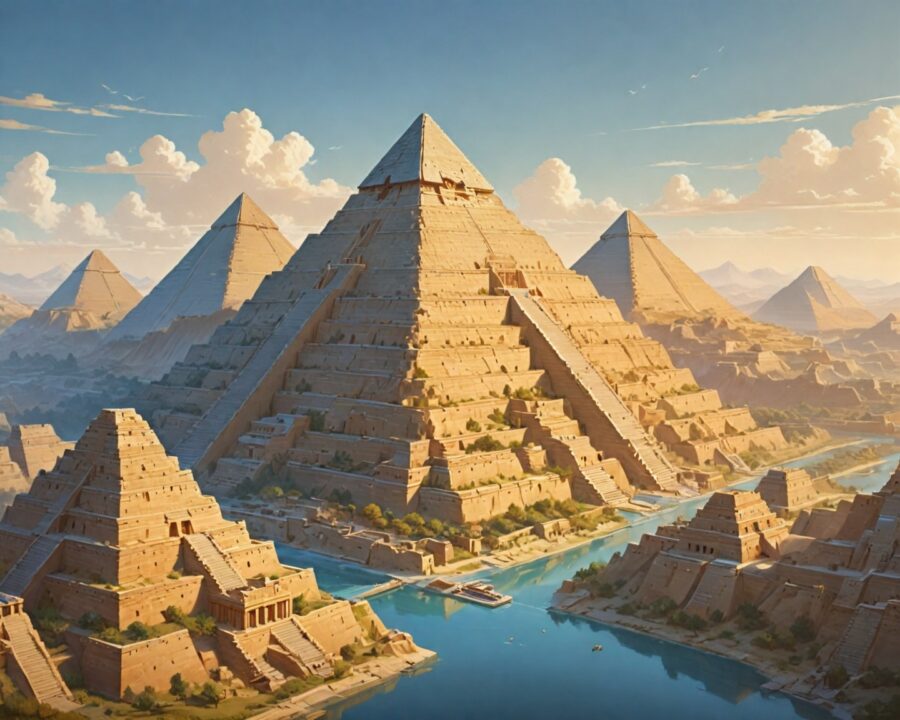
Introduction to Ancient Civilizations and Their Significance
The dawn of human civilization marks a fascinating chapter in the vast history of our planet. Tracing the evolution of ancient civilizations provides profound insights into how human society has developed over the millennia. These early societies laid the foundation for many aspects of modern life, including government, religion, technology, and culture. Studying these enduring legacies not only enriches our understanding of history but also highlights the common endeavors and achievements that unite humanity across time.
Ancient civilizations such as Mesopotamia, Egypt, the Indus Valley, and China hold particular significance. Each contributed uniquely to the tapestry of world history, offering advancements in writing, architecture, and governance, among others. As we explore the basic timeline of these civilizations, we uncover key milestones that have shaped human progress. This exploration fosters a deeper appreciation of their enduring influence on today’s global society.
The Rise of Mesopotamia: The Cradle of Civilization
Often referred to as the “Cradle of Civilization,” Mesopotamia stretches back to around 3500 BCE in the fertile valleys between the Tigris and Euphrates rivers. This region, located in modern-day Iraq, is historically significant for being one of the earliest centers of complex society and urbanization. Mesopotamia is credited with the beginnings of organized farming, the creation of the first cities, and the birth of complex social structures.
One of the most notable contributions from Mesopotamia is the development of writing. The Sumerians, an ancient people of southern Mesopotamia, invented cuneiform script around 3200 BCE. This system of writing on clay tablets enabled the recording of laws, economic transactions, and literature, facilitating an unprecedented level of cultural and administrative sophistication. The Epic of Gilgamesh, one of the world’s oldest works of literature, is a product of this literary blossoming.
The governance structure in Mesopotamia evolved through various forms, from city-states like Uruk and Ur to empires such as Akkad and Babylon. The Code of Hammurabi, one of the earliest and most complete written legal codes, originated from Babylon, reflecting the advanced state of law and order at that time. Mesopotamians also made significant advancements in mathematics and astronomy, laying foundational principles that are still relevant today.
Ancient Egypt: The Age of Pharaohs and Pyramids
Situated along the fertile Nile River, ancient Egypt thrived for thousands of years, leaving behind a wealth of monumental architecture and cultural achievements. The civilization’s recorded history began around 3100 BCE with the unification of Upper and Lower Egypt under the first pharaoh, Narmer. This event marked the start of the dynastic periods and Egypt’s rise as a dominant cultural and political force.
The age of the pharaohs is particularly remembered for its remarkable architectural feats. The Pyramids of Giza, built during the Fourth Dynasty around 2580–2560 BCE, are emblematic of Egypt’s engineering prowess and religious devotion. These monumental constructions were not just tombs but also represented the Egyptians’ complex beliefs about the afterlife. The construction of massive temples and statues, such as the colossal statues of Ramesses II, further exemplify the grandeur of ancient Egyptian architecture.
Ancient Egypt was also a society deeply woven with religion and rich artistic expression. The pantheon of Egyptian gods influenced daily life and governance, as did the structure of the afterlife, captured in texts like the Book of the Dead. Advances in medicine, mathematics, and written language, exemplified by hieroglyphics, underscore the impact of Egyptian ingenuity, much of which would influence later cultures, including Greece and Rome.
The Indus Valley Civilization: Urban Planning and Trade
The Indus Valley Civilization, flourishing between 2600 and 1900 BCE, was one of the earliest societies to exhibit urban planning and sophisticated trade. Located in what is now Pakistan and northwest India, the civilization is best known for its impressive cities like Harappa and Mohenjo-Daro. These urban centers were remarkably advanced, boasting sophisticated infrastructure, including well-planned streets, drainage systems, and water supply facilities.
The Indus people were skilled traders, engaging in commerce with distant regions such as Mesopotamia. Archaeological evidence suggests the exchange of goods like metals, pottery, and textiles, pointing to a complex economy that supported the civilization’s growth and prosperity. The standardized weights and measures system they used facilitated domestic and international trade, ensuring consistency and trust among merchants.
Despite its early accomplishments, much about the Indus Valley remains a mystery, particularly its language. The script, found on numerous seals and pottery shards, remains undeciphered, leaving many questions about the civilization’s governance, social structure, and beliefs. Nevertheless, the legacy of its urban planning and trade networks continues to be a point of fascination for historians and archaeologists alike.
Ancient China: Dynasties and Cultural Advancements
China’s ancient history, stretching back to the Shang Dynasty around 1600 BCE, is rich with dynastic cycles and cultural achievements that profoundly influenced its development. The Zhou Dynasty (1046–256 BCE) introduced the Mandate of Heaven, a philosophical concept that justified the rule of the emperor as divinely ordained and also provided grounds for rebellion against unjust rulers. This idea was central to Chinese political theory for centuries.
During the later Han Dynasty (206 BCE–220 CE), China saw significant advancements in technology, culture, and science. This period is often considered a golden age, characterized by inventions such as paper, the seismograph, and the compass. The development of the Silk Road during this time facilitated cultural and commercial exchanges with India, Persia, and the Roman Empire, enriching China’s culture and economy.
Philosophical and religious systems such as Confucianism and Daoism emerged during the Eastern Zhou period, deeply influencing Chinese culture and governance. Confucianism, with its emphasis on ethics, social hierarchy, and education, became a guiding framework for society. The intricate balance between these philosophies is reflected in Chinese literature, art, and governance, laying the groundwork for the nation’s enduring cultural identity.
The Greek and Roman Empires: Foundations of Western Culture
The rise of the Greek and Roman empires marked a pivotal period in ancient history, laying the foundations for Western thought, politics, and culture. The Greek civilization, particularly during the Classical period (5th to 4th century BCE), produced remarkable advancements in philosophy, science, and politics. Renowned figures like Socrates, Plato, and Aristotle shaped philosophical discourse, while innovations in democratic governance in Athens set lasting precedents.
Greek contributions to the arts are equally noteworthy, with drama, sculpture, and architecture achieving high levels of sophistication. The construction of the Parthenon and the development of the dramatic arts exemplify Greek cultural achievements. Additionally, scientific advances by figures like Archimedes and Hippocrates set the stage for future developments in medicine and engineering.
The Romans, influenced by the Greeks, built an empire that spanned much of Europe, the Mediterranean, and North Africa. The Roman Republic, and later the Roman Empire, introduced key governance structures, including the Senate and a republican constitution. Their achievements in law, engineering, and architecture, seen in structures like the Colosseum and aqueducts, have been monumental influences on Western civilization.
The Mayan and Aztec Civilizations: Achievements in the Americas
In the Americas, the ancient Mayan and Aztec civilizations emerged as powerful cultures with unique achievements. The Mayans, flourishing from around 2000 BCE to 1500 CE in present-day Mexico, Guatemala, Belize, and Honduras, are renowned for their astronomical and mathematical prowess. They developed a complex calendar system and advanced writing known as hieroglyphics—which provided detailed records of their history and culture.
Mayan society thrived in city-states such as Tikal and Copán, which were known for their grandiose architecture and ritual centers. Their understanding of astronomy was so advanced that they could predict solar eclipses and other celestial events with remarkable accuracy, guiding their agricultural and ceremonial practices.
The Aztecs, rising to prominence in the 14th century in central Mexico, established a vast empire centered on Tenochtitlán, present-day Mexico City. Known for their impressive architectural achievements, they built temples, canals, and causeways that facilitated the administration of their empire. The Aztec civilization is also remembered for its elaborate religious practices and highly efficient tribute-based economy.
Key Contributions of Ancient Civilizations to Modern Society
Ancient civilizations have left an indelible mark on modern society in countless ways, influencing everything from government structures to technology and cultural practices. Many of their inventions and ideas are foundational to aspects of contemporary life:
- Writing Systems: The creation and refinement of writing systems, like Mesopotamia’s cuneiform and Egypt’s hieroglyphics, established a means for cultural expression and record-keeping.
- Legal Codes: The Code of Hammurabi and Roman law systems promoted principles of justice that are cornerstones in many legal systems today.
- Architecture: Egyptian pyramids, Greek temples, and Roman aqueducts have inspired architectural styles and techniques that endure worldwide.
- Science and Mathematics: The ancient Greeks and Chinese made significant contributions to mathematics and science, many of which are integral to modern advancements.
Additionally, the philosophical and ethical systems devised by these civilizations, such as those seen in Greek philosophy and Chinese Confucianism, continue to inform modern educational, ethical, and governance frameworks.
Common Questions About Ancient Civilizations Answered
What characterized the earliest civilizations?
The earliest civilizations were characterized by the development of urban areas, complex social structures, state governance, and written languages. They often arose in fertile regions, allowing for agriculture, which supported dense populations.
How did writing systems impact ancient societies?
Writing systems enabled these societies to record laws, trade transactions, and cultural stories, enhancing communication and governance while preserving cultural heritage across generations.
Why are ancient wonders significant today?
Ancient wonders embody the engineering and artistic achievements of past societies, providing insights into their cultural priorities and technological capabilities. They also continue to inspire modern architecture and art.
How did ancient civilizations influence modern governance?
Ancient civilizations established governance frameworks, such as democracy in Greece and republicanism in Rome, which significantly influenced the development of modern political systems around the world.
What can we learn from the collapse of ancient civilizations?
Studying the collapse of ancient civilizations, often due to environmental changes, economic decline, or sociopolitical instability, teaches valuable lessons about sustainability and adaptability in modern society.
How to Explore Ancient History Further: Resources and Tips
Exploring the rich tapestry of ancient civilization history can be deeply rewarding. Here are some tips and resources for those interested in delving deeper:
- Read Widely: Books like Jared Diamond’s “Guns, Germs, and Steel” or Mary Beard’s “SPQR: A History of Ancient Rome” provide comprehensive overviews.
- Online Courses: Platforms like Coursera and edX offer free courses from top universities on ancient history topics.
- Visit Museums: Museums worldwide house extensive collections of ancient artifacts—consider visiting local exhibits or planning a trip to places like the British Museum or the Louvre.
- Documentaries and Videos: Channels like BBC and National Geographic produce insightful documentaries that bring ancient histories to life.
- Engage with Online Communities: Forums and social media groups dedicated to history provide engagement with others interested in ancient civilizations.
By leveraging these resources, you can enrich your understanding of ancient history and its relevance to contemporary society.
Recap
In summary, our exploration of ancient civilizations through a historical timeline reveals the enduring impact of societies like Mesopotamia, Egypt, the Indus Valley, China, Greece, Rome, the Maya, and the Aztecs. Their innovations in writing, architecture, governance, and cultural expression laid the groundwork for modern civilization. Each civilization contributed uniquely, from the legal principles of Babylon to China’s scientific advancements and the political experiments of the Greeks and Romans. Additionally, the Mayan and Aztec achievements in the Americas reflect significant advancements in societal organization and knowledge.
Conclusion
The study of ancient civilizations is not merely about understanding the past; it is about recognizing their instrumental role in shaping the present and future of human society. By examining the key milestones and achievements of these early cultures, we gain invaluable perspectives on the developments that have led to our current way of life.
These ancient societies confronted challenges and crafted solutions, some of which remain relevant in our modern world. Understanding these timeless lessons enhances our appreciation of human ingenuity and resilience. As we continue to uncover and learn from ancient histories, we not only honor their legacies but also enrich our collective spirit and imagination.
With ongoing archaeological discoveries and innovations in historical research, the narratives of ancient civilizations grow ever richer. Embracing this knowledge encourages us to reflect on our shared human heritage and inspires the pursuit of wisdom that transcends boundaries of time and geography.