
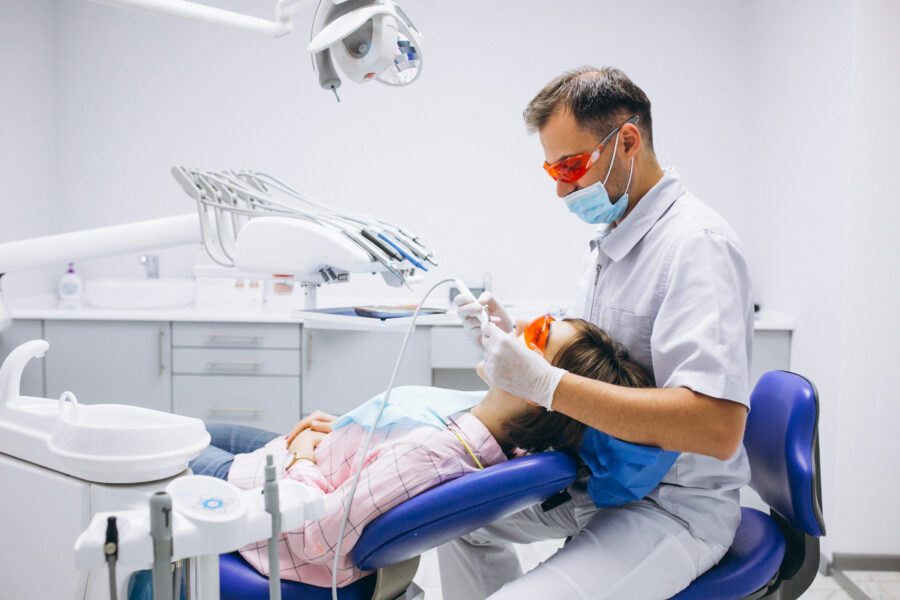
Approximately 68 to 74 million people in the United States lack dental insurance. If you’re among them, you’re likely aware of the issue: a standard cleaning can cost between $100 and $200 at a private practice, fillings range from $150 to $300, and root canals can easily surpass $1,000. Such expenses compel millions to forgo dental care — until a minor issue escalates into a painful and costly emergency.
However, there are genuine, effective programs that can lower your dental expenses by 70% to 90%. This guide outlines every significant option available, from federally supported health centers to Medicaid, dental schools, and nonprofit initiatives aimed at seniors and veterans.
Community Health Centers: The Top Choice for Budget-Friendly Dental Care
The premier resource for affordable dental care across the United States is the network of Community Health Centers (officially known as Federally Qualified Health Centers, or FQHCs). Backed by the federal government through the Health Resources and Services Administration (HRSA), there are over 15,000 locations nationwide.
About 80% of these centers provide dental services such as cleanings, fillings, extractions, X-rays, root canals, and preventive care. What sets them apart from private dental practices is the sliding fee scale — a payment model mandated by federal law that adjusts costs according to your household income and family size.
What Are the Actual Costs?
The sliding fee scale operates on a tiered basis tied to the Federal Poverty Level (FPL):
- At or below 100% FPL (approximately $15,060/year for a single individual): You pay a nominal fee of around $20 to $40 per visit
- 101% to 150% FPL: Reduced fees, generally 25-50% of the standard charge
- 151% to 200% FPL: Moderate discounts, typically 25-75% of the standard charge
- Above 200% FPL: Full fee schedule, which is still often lower than rates at private practices
The key takeaway is: no one is refused service due to inability to pay. This is a federal obligation. Even if you have no income, you can access dental care at these centers.
What Services Are Available?
| Procedure | Cost at Private Office | Cost at Health Center | Typical Savings |
|---|---|---|---|
| Dental Cleaning | $100 – $200 | $20 – $40 | 80-90% |
| Root Canal | $1,000+ | $100 – $300 | 70-90% |
| Tooth Extraction | $150 – $300 | $30 – $75 | 75-80% |
| Filling | $150 – $300 | $25 – $60 | 80% |
| Full X-rays | $50 – $150 | $10 – $30 | 80% |
How to Locate and Visit a Community Health Center
Step 1: Search by ZIP code. Visit findahealthcenter.hrsa.gov and input your ZIP code. The tool will list every federally funded health center in your vicinity, complete with addresses, phone numbers, and available services.
Step 2: Call in advance. Not every center provides dental services, so it’s prudent to call before heading out. Specifically ask: “Do you have a dental program?” and “Do you accept patients on a sliding fee scale?” The response to the second question should always be affirmative.
Step 3: Prepare your documents. Bring proof of income (such as pay stubs or tax returns, or a signed statement if unemployed), a photo ID, proof of address, any insurance cards you possess, and a list of current medications.
Step 4: Receive treatment. During your appointment, the center will set your fee based on your income documentation. You’ll receive care equivalent to what you’d find in a private practice — with licensed dentists, modern equipment, and professional standards — at a cost tailored to your financial situation.
Medicaid: Free or Low-Cost Dental Coverage by State
Medicaid is a cooperative state and federal program that provides health coverage for low-income individuals. Around 20 states currently offer extensive adult dental benefits through Medicaid, encompassing services from cleanings and fillings to dentures and root canals.
Eligibility differs by state but generally extends to individuals earning up to 138% of the Federal Poverty Level. In states that have expanded Medicaid under the Affordable Care Act, a greater number of adults qualify. Even in states with limited adult dental coverage, emergency dental services — for acute pain, infection, or trauma — are usually included.
You can verify your eligibility by visiting medicaid.gov or your state’s health department website. If you qualify, dental visits might be entirely free or require only a minimal copay.
Verify Medicaid EligibilityYou will be redirectedDental Schools: Professional Treatment at 30-60% Less Cost
There are around 70 accredited dental schools in the United States, and most have clinics open to the public. Procedures are carried out by dental students in their final years of education, under the direct supervision of licensed faculty dentists who oversee each treatment.
The quality of care is generally top-notch — dental school clinics utilize modern technology, adhere to strict protocols, and deliver comprehensive treatment. Appointments may take longer than a visit to a private office due to the educational aspect, but the savings are considerable: 30% to 60% less than fees charged by private practices across all services.
This option is especially beneficial for more complex procedures like crowns, bridges, and implants, which can be very costly at private practices. You can find accredited dental schools using the online directory provided by the American Dental Association.
Dental Lifeline Network: No-Cost Care for Seniors and the Disabled
The Dental Lifeline Network administers the “Donated Dental Services” program in all 50 states. Volunteer dentists offer entirely free, comprehensive dental care to individuals aged 65 and older, those who are permanently disabled, or medically fragile and unable to afford treatment.
Services range from cleanings and fillings to crowns, dentures, and root canals — all provided by licensed dentists in private practices. The only qualifications are that you meet the age or disability requirements and lack the financial means to pay for dental care.
VA Dental Benefits for Veterans
Veterans of the U.S. military may be eligible for dental services through the Department of Veterans Affairs. Eligibility is mainly based on service-connected disability ratings. Veterans with a 100% disability rating or service-related dental conditions typically receive complete dental care at no charge through VA medical facilities.
Those who do not qualify for free VA dental services can enroll in the VA Dental Insurance Program (VADIP), which offers dental insurance at significantly reduced group rates.
Common Questions
Can I actually receive dental care if I have no income at all?
Absolutely. Community Health Centers are mandated by federal law to treat patients regardless of their ability to pay. If you have no income, your charge will be a nominal fee or none at all. This applies to all 15,000+ FQHC facilities nationwide.
Is the quality of care at a health center lower than at a private dentist?
Not at all. Community Health Centers employ licensed dentists and dental hygienists who adhere to the same professional standards as private practices. The facilities utilize modern equipment and conform to established dental protocols. The main difference lies in the cost.
How long is the wait for an appointment?
Waiting times depend on the location and current demand. Some centers can accommodate you within days, while others may have a wait of several weeks for non-urgent visits. If you’re experiencing acute pain, most centers will expedite your appointment or direct you to emergency dental care.
Do I need to be a U.S. citizen to utilize a Community Health Center?
No. FQHCs provide services to all patients, irrespective of their immigration status, citizenship, or insurance coverage. You are not required to present a Social Security number to receive care.
What if the closest health center does not offer dental services?
About 80% of FQHCs provide dental care. If your nearest center does not, they can typically refer you to one that does. You can also search for dental-specific centers at findahealthcenter.hrsa.gov using the service filters.
Can I utilize several programs simultaneously?
Definitely. For instance, you might use Medicaid as your primary coverage while visiting a Community Health Center for services not covered by Medicaid in your state. You can also seek care at a dental school for major treatments while going to an FQHC for regular cleanings.
Locate a Health Center Near YouYou will be redirectedOver 30 million Americans already depend on Community Health Centers for their healthcare needs. With over 15,000 locations and fees starting at $20-40 per visit, affordable dental care may be accessible right in your neighborhood.