
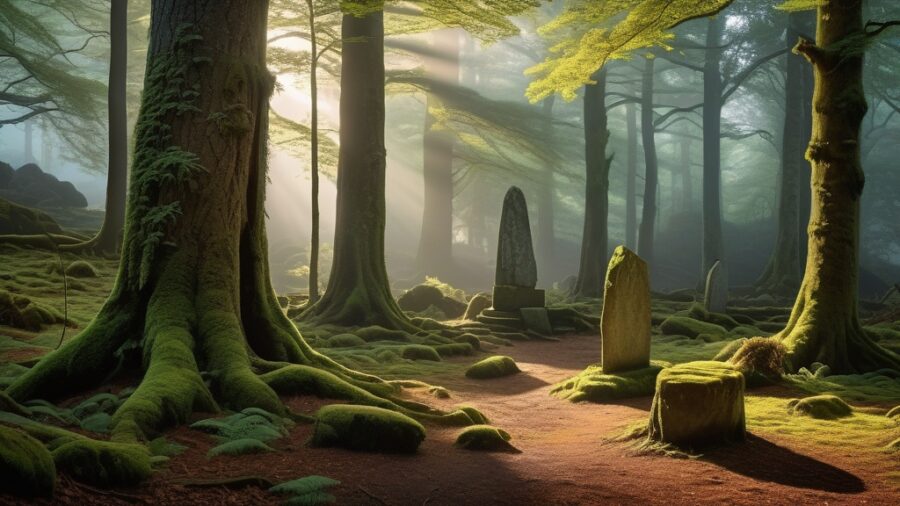
Introduction to Celtic Mythology and Druid Traditions
Celtic mythology and druid traditions are rich and intricate aspects of ancient Celtic culture, representing a deep connection to nature, spirituality, and community. At the heart of these traditions lies a framework of beliefs and practices that have captivated scholars and enthusiasts alike for centuries. The Celtic mythology druid traditions serve not only as a historical artifact but also as a living resource for understanding the universe’s mysteries and the human experience.
The Celts, who inhabited regions of Europe such as Ireland, Scotland, Wales, and parts of France and Germany, believed in a world filled with deities, spirits, and mythical creatures. Druidism, the spiritual practice associated with the Celts, is often regarded as a form of nature worship that emphasizes harmony with the earth and the cosmos. In this article, we will embark on a journey through the historical context, core beliefs, and practices of druids, as well as their influence on modern spirituality.
As we delve into the core elements of Celtic mythology and druid traditions, readers will gain insights into the role of nature, the significance of rituals, and the pantheon of Celtic deities. This exploration will also highlight the ways in which these ancient practices continue to resonate in contemporary spiritual movements. By the end of this article, you will have a comprehensive understanding of how Celtic mythology and druid traditions shape our understanding of spirituality today.
Historical Context of Druidism
The Origins of Druidism
Druidism has its roots in the ancient Celtic tribes that existed around 600 BCE. The term “druid” is derived from the Proto-Celtic word *druides*, which is believed to mean “oak-knower,” emphasizing the druids’ deep knowledge of nature and trees. Historically, druids served as priests, teachers, and judges within their communities, holding significant influence over spiritual and social matters.
The first recorded mention of druids can be traced back to Roman accounts in the 1st century BCE, particularly by Julius Caesar, who described them as a learned class that played a crucial role in Celtic society. The druids were known for their oral traditions, as they did not write down their teachings, which led to a rich and complex system of knowledge that has largely been lost to time.
Druidic Education and Society
Druidic education was extensive and rigorous, often requiring up to twenty years of study. Students learned about astronomy, herbal medicine, law, philosophy, and the arts. This education was critical in preparing druids to serve their communities effectively. Druids were not only spiritual leaders but also mediators in disputes, advisors to kings, and custodians of ancient knowledge.
As the Roman Empire expanded, druidism faced significant challenges. The destruction of sacred groves and the suppression of pagan practices during the Roman conquest led to a decline in druidic influence. However, elements of druidism persisted, evolving and adapting through the centuries, particularly in areas that maintained a strong Celtic identity.
Core Beliefs and Practices of Druids
The Druidic Worldview
At the core of druidic beliefs is a profound respect for nature and the interconnectedness of all living things. Druids viewed the world as a living entity, imbued with spirit and energy. This animistic perspective led to the veneration of natural elements such as trees, rivers, and animals. The oak tree, in particular, held a sacred status, symbolizing strength, endurance, and wisdom.
Druids believed in the concept of reincarnation and the cyclical nature of life. They taught that the soul undergoes a journey through various incarnations, learning and evolving with each life. This belief fostered a sense of continuity and connection to ancestors, as well as a responsibility to live in harmony with the earth.
Rituals and Ceremonies
Rituals played a vital role in druidic practice, serving as a means to connect with the divine and the natural world. Celebrations were often aligned with the seasons and lunar cycles, reflecting the rhythms of nature. Key festivals included Beltane, Samhain, Imbolc, and Lughnasadh, each marking significant points in the agricultural calendar.
- Beltane: Celebrated on May 1st, this festival marked the beginning of summer and involved lighting bonfires to symbolize purification and fertility.
- Samhain: Occurring on October 31st, it was believed to be a time when the veil between the worlds of the living and the dead was thinnest, allowing for communion with ancestors.
- Imbolc: Celebrated on February 1st, this festival signified the return of light and the first stirrings of spring.
- Lughnasadh: Held on August 1st, it celebrated the harvest and was a time for feasting and community gatherings.
The Role of Nature in Druid Traditions
Nature as a Teacher
Nature held a central position in druidic traditions, serving as both a sacred space and a source of wisdom. Druids believed that every element of nature contained lessons about life, spirituality, and the universe. Observing the changing seasons, the growth of plants, and the behavior of animals provided insights into the cycles of existence.
This connection to nature was not merely observational; it informed the druids’ practices, rituals, and daily lives. They often engaged in activities such as tree planting, herbal medicine, and animal husbandry, emphasizing sustainable practices that honored the earth.
The Sacred Landscape
The geography of the Celtic world was imbued with spiritual significance. Sacred sites, such as stone circles, burial mounds, and holy wells, were places where druids performed rituals and ceremonies. These landscapes were often chosen for their natural beauty and energy, believed to be gateways to the divine.
One notable site is the ancient site of Newgrange in Ireland, a passage tomb that dates back to around 3200 BCE. This site is aligned with the winter solstice, showcasing the druids’ advanced understanding of astronomy and their reverence for celestial events.
Celtic Deities and Mythological Creatures
The Pantheon of Celtic Gods
The Celtic pantheon is diverse, featuring a multitude of deities that represented various aspects of life, nature, and the cosmos. Some of the most prominent gods and goddesses include:
- Danu: Considered the mother goddess and associated with fertility and the earth.
- Lugh: A god of light, craftsmanship, and skill, often depicted as a warrior.
- Cernunnos: The horned god of nature, animals, and fertility, symbolizing the cycle of life.
- Brigid: A goddess of healing, poetry, and smithcraft, revered for her nurturing qualities.
These deities were worshipped through various rituals and offerings, often held at sacred sites throughout the Celtic landscape.
Mythological Creatures and Their Significance
Celtic mythology is also populated by a rich tapestry of mythical creatures, each with its unique symbolism and stories. Some notable beings include:
- Faeries: Often regarded as nature spirits, faeries were believed to inhabit the Otherworld and had the power to influence human affairs.
- Selkies: Mythical seal creatures that could transform into humans, symbolizing the connection between land and sea.
- Banshees: Female spirits who foretold death, often associated with ancestral connections and the cycle of life.
These creatures played essential roles in conveying moral lessons and cultural values within Celtic society.
Rituals and Ceremonies in Druidic Culture
The Importance of Sacred Rituals
Rituals within druidic culture were fundamental in fostering a sense of community and spiritual connection. They served as a bridge between the mundane and the sacred, allowing practitioners to commune with the divine and honor the cycles of nature. Rituals often involved offerings, prayers, and invocations to the deities, highlighting the importance of gratitude and reciprocity.
One of the primary purposes of these rituals was to mark significant transitions in life, such as birth, coming of age, marriage, and death. Each ceremony was carefully crafted to align with the natural world, ensuring that participants were aware of their place within the larger cosmic order.
Modern-Day Druidic Practices
Today, many individuals and groups are revitalizing druidic traditions, adapting ancient practices to contemporary life. Modern druids often engage in rituals that honor the earth, celebrate seasonal festivals, and cultivate a personal connection to nature. These practices may include:
- Nature Walks: Reflecting on the beauty and lessons of the natural world.
- Community Gatherings: Celebrating significant festivals with shared rituals and feasting.
- Spiritual Reflection: Incorporating meditation and mindfulness practices inspired by ancient teachings.
This revival of druidic practices highlights the enduring relevance of these traditions in fostering a deeper connection to the earth and each other.
The Influence of Druid Traditions on Modern Spirituality
Neo-Druidism and Contemporary Spiritual Movements
In the 20th century, there was a resurgence of interest in ancient spiritual practices, including druidism. This movement, often referred to as neo-druidism, draws inspiration from historical druidic beliefs while incorporating modern values and practices. Neo-druids emphasize environmentalism, social justice, and personal spirituality, making their practices relevant to contemporary life.
Many practitioners of neo-druidism engage in activities such as ecological conservation, promoting sustainability, and advocating for the rights of marginalized communities. This alignment with modern values reflects the adaptability and resilience of druid traditions in addressing contemporary issues.
Celtic Spirituality in Popular Culture
The influence of Celtic spirituality, particularly druid traditions, can also be seen in popular culture. Literature, films, and television often draw upon Celtic mythology, introducing characters and plots inspired by ancient stories. Works such as J.K. Rowling’s “Harry Potter” series and movies like “The Secret of Kells” showcase the allure of Celtic themes, captivating audiences and sparking interest in the original traditions.
This cultural fascination has led to a broader appreciation for the wisdom embedded in druidic teachings, encouraging individuals to explore their spiritual paths and connect with nature.
Preserving Druid Traditions Today
Efforts to Revitalize Ancient Practices
As interest in druid traditions grows, various organizations and groups are dedicated to preserving and revitalizing these ancient practices. Many modern druids seek to create educational resources, workshops, and gatherings to share knowledge and experiences related to druidic culture.
Organizations such as the Order of Bards, Ovates, and Druids (OBOD) and the Ancient Order of Druids in America (AODA) play significant roles in fostering community among practitioners and providing guidance for those seeking to learn about druidism.
Challenges and Future Directions
Despite the resurgence of interest in druid traditions, challenges remain. The need for accurate historical representation and the risk of cultural appropriation are ongoing concerns. It is essential for modern practitioners to approach druidism with respect, acknowledging its rich history while creating an inclusive and authentic practice.
Looking to the future, the continued exploration of the intersections between ancient and modern spirituality will shape the evolution of druid traditions. As more individuals seek connection and meaning, the teachings of the druids will likely inspire new generations to cultivate their relationships with nature and the cosmos.
Conclusion
In summary, the exploration of Celtic mythology druid traditions reveals a profound and intricate spiritual framework that emphasizes the interconnectedness of nature, community, and the divine. From the historical roots of druidism to its modern-day practices, these traditions continue to resonate with those seeking a deeper understanding of their place in the world.
Through an appreciation for the natural world, rituals that honor the sacred, and a commitment to preserving these teachings, individuals can draw inspiration from the wisdom of the druids. As we move forward, the lessons of the past provide valuable insights for navigating the complexities of contemporary life, reminding us of the enduring power of connection, reverence, and spirituality.
FAQ
What are the main beliefs of druids?
Druids believe in the interconnectedness of all living things and the importance of nature in spiritual practice. They view the universe as a living entity, emphasizing harmony with the earth and the cycles of life.
How did druids conduct their rituals?
Druids conducted rituals that often aligned with the seasons and lunar cycles. These ceremonies included offerings, prayers, and communal gatherings, allowing participants to connect with the divine and honor nature.
What role do Celtic deities play in druid traditions?
Celtic deities represent various aspects of life and nature, serving as focal points for worship and ritual. Druids invoke these deities during ceremonies to seek guidance, protection, and blessings.
How can I learn more about druid traditions?
To learn more about druid traditions, consider joining modern druidic organizations, attending workshops, or reading literature on Celtic mythology and druidism. Engaging with a community can enhance your understanding and practice.
Are there modern druids today?
Yes, there are many modern druids today, often associated with neo-druidism. These practitioners adapt ancient practices to contemporary life, emphasizing environmental stewardship, social justice, and personal spirituality.
Recap
- Celtic mythology and druid traditions emphasize the interconnectedness of nature and spirituality.
- Druidism has historical roots dating back to 600 BCE, with a focus on oral traditions and extensive education.
- Core beliefs include a reverence for nature, reincarnation, and the importance of rituals.
- Celtic deities and mythical creatures play significant roles in conveying cultural values and moral lessons.
- Modern druids are revitalizing ancient practices, aligning them with contemporary values.
- The influence of druid traditions can be seen in popular culture, inspiring interest in Celtic spirituality.
- Efforts to preserve and educate about druid traditions are ongoing, fostering community among practitioners.
- The future of druidism will involve navigating challenges while honoring the wisdom of the past.