
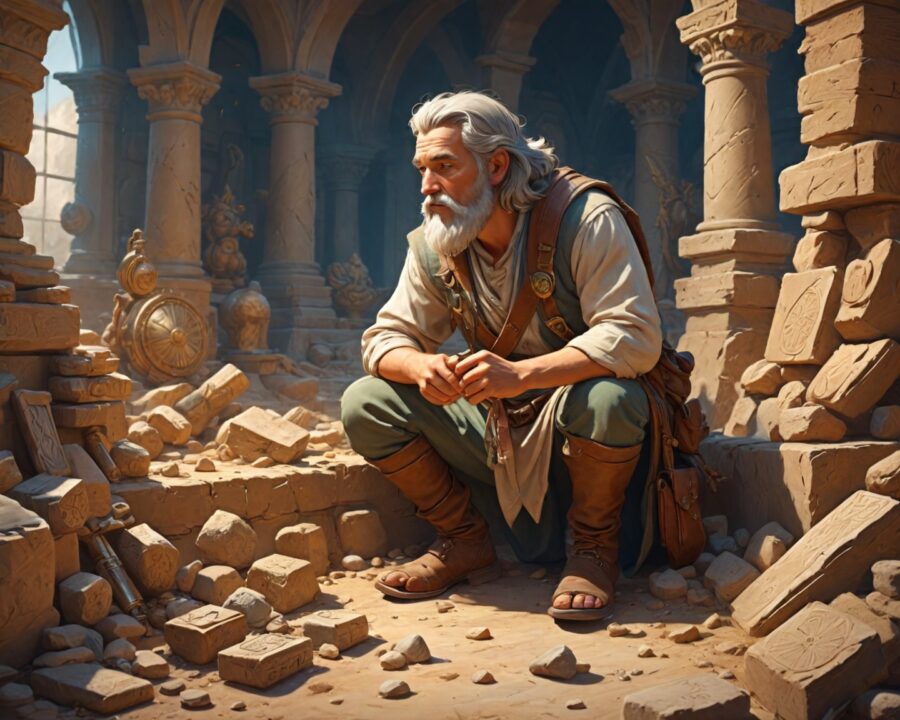
Introduction to Humanity’s Origins and Myths
Humanity has long been fascinated with deciphering its origins, seeking answers to the profound question of where we come from. Throughout history, diverse cultures have woven intricate narratives to explain the genesis of humankind, often embedding these stories deeply within cultural and spiritual frameworks. These myths have not only served as chronicles of human curiosity but have also provided meaning and context, influencing behaviors, values, and societal structures across generations.
In the modern world, as scientific inquiry advances, these traditional narratives face scrutiny and reinterpretation. While some myths fade into obscurity under the spotlight of empirical evidence, others endure, continuously shaping the world’s cultural fabric. This article aims to explore these ancient stories, contrasting them with scientific perspectives, and to offer insights into the continuing significance of these myths in contemporary times.
Common Ancient Creation Stories Across Cultures
Creation myths are as varied as the cultures from which they originate, yet surprisingly, many share common themes and archetypes. These stories often tackle existential questions and provide moral guidance, acting as a cornerstone in the cultural identity of communities.
One example is the Mesopotamian creation story, where the god Marduk defeats the chaos dragon Tiamat, creating the world from her divided body. This epic tale reflects chaos and order dynamics, illustrating early human contemplation of the universe’s structure. Similarly, in Greek mythology, the world is born from chaos, with gods like Gaia and Uranus representing elements of the earth and sky.
In contrast, the Chinese creation myth of Pangu involves a cosmic egg, from which Pangu emerges. As he dies, his body transforms into the world’s features, such as mountains and rivers, highlighting themes of transformation and sacrifice. Native American stories, such as the Sun and Moon narrative, emphasize harmony with nature, depicting animal collaborators that participate in creation.
These myths collectively reflect an intrinsic human need to relate to the world, providing blueprints for behavior and illustrating core societal values. Understanding these stories enriches our grasp of past human thought processes and the perennial quest for meaning.
Scientific Perspectives on Human Evolution
While mythical narratives offer rich cultural insights, they differ significantly from scientific interpretations grounded in research and evidence. Scientific perspectives on human origins focus on biological evolution, particularly through the theory of natural selection proposed by Charles Darwin.
The scientific community largely agrees that human evolution is a lengthy and complex process involving gradual changes over millions of years. Fossils and genetic data indicate that humans share a common ancestor with apes, and over time, adaptive changes have given rise to Homo sapiens. Key milestones include the development of bipedalism, advanced tool use, and complex linguistic capabilities.
One critical aspect of human evolution is the role of environmental pressures. As ancestors faced diverse challenges, advantageous traits were favored, leading to our species’ development. Scientists use fossil records, DNA analysis, and archaeological findings to piece together this vast puzzle, continually updating our understanding as new evidence emerges.
The scientific narrative of human evolution underscores the dynamic interplay between adaptation and environment—an ongoing process that continues to shape humanity today.
Debunking Popular Myths About Human Origins
The interface of ancient myths and modern science often leads to misconceptions about human origins. These misconceptions persist for various reasons, including cultural inertia and misunderstanding of scientific findings.
One prevalent myth is the belief in a single ‘missing link’ that conclusively connects humans to their ape-like ancestors. In reality, evolution is a branching process with many transitional forms, and the notion of a single missing link oversimplifies the complexity of human descent.
Another common misconception is that humans evolved from modern apes. While humans and apes share a common ancestor, our evolutionary paths diverged millions of years ago. This misinterpretation arises from confusion over evolutionary relationships and timelines.
Lastly, the concept of evolution as a linear progression towards complexity is misleading. Evolutionary changes result from adaptation to specific environments rather than a march toward an ideal form. Our understanding should reflect the branching and non-linear nature of evolutionary pathways.
Dispelling these myths requires continuous education and dialogue, fostering a nuanced understanding of humanity’s origins in scientific and cultural contexts.
The Role of Religion in Shaping Origin Stories
Religion has profoundly influenced the formation and perpetuation of human origin myths. Origin stories are often inseparable from religious doctrines, providing foundational narratives that underpin moral and ethical systems within societies.
Religious texts, such as the Bible’s Book of Genesis, offer accounts of human creation that have shaped Western cultural perspectives for centuries. In these narratives, the divine act of creation is central, infusing humanity with purpose and responsibility. These stories serve not only as explanations of existence but also as frameworks for ethical behavior and social organization.
In Hinduism, the Rigveda presents the Purusha Sukta, describing creation through the sacrifice of a cosmic man, emphasizing the interconnectedness of cosmic forces and life. Such stories illustrate a divine cosmic order, reflecting the spiritual and ethical dimensions of existence and humanity’s place within it.
Religion’s role in origin stories highlights the intertwining of belief and identity. It shapes how communities interpret their past, present, and future, offering solace and teaching values that persist across generations.
How Myths Influence Modern Understanding of Humanity
Despite advancements in scientific understanding, myths continue to influence contemporary perceptions of human origins. These narratives resonate emotionally, offering meaning and context that science, in its objectivity, sometimes lacks.
Myths contribute to a sense of identity and belonging, connecting individuals to their ancestral and cultural heritage. They provide a shared language that transcends generations, influencing literature, art, and cultural expressions. Such stories endure in their symbolic relevance, shaping ideologies and societal norms even today.
Additionally, myths serve as valuable metaphoric tools, helping humans grapple with existential questions that science alone struggles to address. They allow for an exploration of the human condition in ways that scientific facts may not fully articulate.
Understanding these influences invites a broader dialogue about human origins, acknowledging the spectrum of beliefs and knowledge that shape our environment and individual worldviews.
Comparing Scientific Evidence with Mythological Accounts
Examining human origins requires distinguishing between mythological and scientific accounts, each offering distinct but valuable perspectives. While myths are culturally and spiritually significant, scientific evidence provides empirically supported explanations.
| Aspect | Mythological Accounts |
|---|---|
| Basis | Cultural, religious narratives |
| Purpose | Moral, ethical, existential exploration |
| Interpretation | Symbolic, allegorical |
| Adaptation | Varies across cultures; evolves with society |
| Aspect | Scientific Accounts |
|---|---|
| Basis | Empirical evidence, research, and observation |
| Purpose | Understanding natural processes and history |
| Interpretation | Objective, evidence-based |
| Adaptation | Subject to refinement with new discoveries |
This comparison underscores a key insight: myths and science serve different purposes but together enrich the collective understanding of humanity. While myths illustrate humanity’s creative and spiritual dimensions, science elucidates the biological and physical realities underpinning existence. Both approaches are integral to appreciating the multifaceted nature of human origins.
Addressing Common Misconceptions About Evolution
Misconceptions about evolution abound, often stemming from misunderstandings or lack of exposure to accurate scientific information. Addressing these misconceptions is crucial for fostering informed discourse on human origins.
One common error is the belief that evolution implies progress, suggesting a predetermined direction toward perfection. In reality, evolution is about adaptation to environments, where “fitness” is context-dependent rather than absolute improvement.
Another misunderstanding is the concept of “survival of the fittest” as a ruthless competition. In truth, evolution often involves cooperation and symbiotic relationships, with fitness encompassing a species’ ability to thrive in its niche.
Lastly, some argue that the complexity of life indicates intelligent design. While natural selection can produce intricate adaptations, seemingly complex traits arise over time through gradual modifications subject to environmental pressures.
Addressing these misconceptions requires education focusing on scientific literacy, ensuring individuals have the tools to critically engage with evolutionary concepts and their broader implications.
The Cultural Significance of Origin Myths Today
In contemporary society, origin myths continue to hold substantial cultural significance. These narratives often serve as touchstones for cultural identity, providing a shared heritage that aligns communities around common values and beliefs.
In literature and popular media, origin stories inspire creators, offering rich material for reimagining historical and speculative worlds. They shape character development, plotlines, and thematic explorations, allowing modern adaptations to convey timeless messages in new formats.
In educational settings, origin myths can foster cross-cultural appreciation and understanding. Engaging with these stories provides insights into the diverse worldviews that have influenced humanity’s development across millennia.
By appreciating the cultural significance of origin myths, we acknowledge their enduring role in enriching human experience and promoting deeper understanding among people from diverse backgrounds.
Practical Steps to Critically Evaluate Origin Narratives
Engaging critically with origin narratives involves understanding both mythical and scientific perspectives. Here are practical steps to evaluate these narratives thoughtfully:
-
Research Diverse Sources: Explore various accounts of human origins from both cultural and scientific perspectives. This broader view allows for a comprehensive understanding of the narratives.
-
Analyze Contextual Influence: Consider the cultural, religious, and historical contexts in which origin stories developed. This analysis offers insights into their meaning and relevance.
-
Compare with Scientific Evidence: Evaluate the compatibility of creation stories with scientific findings. Understanding where narratives align or diverge from scientific evidence is crucial.
-
Recognize Symbolism and Allegory: Acknowledge the symbolic nature of myths and the moral or philosophical truths they convey beyond literal interpretations.
-
Foster Open Dialogue: Engage in conversations with individuals from diverse backgrounds to appreciate multiple perspectives on human origins.
-
Educate Continuously: Stay informed about scientific advancements and emerging interpretations of ancient myths. Continuous education is key to maintaining a balanced perspective.
By adopting these critical evaluation practices, individuals can appreciate the complexity of human origins, recognizing the interplay between cultural heritage and scientific discovery.
FAQ
What is the difference between myths and scientific theories on human origins?
Myths are culturally and religiously grounded stories explaining human origins, often using symbolism and allegory. Scientific theories, on the other hand, are based on empirical evidence and research describing natural processes, like evolution, that explain human origins objectively.
Why do some people still believe in creation myths?
Creation myths persist because they offer cultural and spiritual connections, providing meaning and context for existence. They also play a significant role in cultural identity and moral frameworks, resonating with individuals on a deeper level than scientific explanations can.
How does evolution explain human origins?
Evolution describes the gradual process by which species change over time through natural selection and genetic variation. Human evolution involves the development of traits like bipedalism and cognitive abilities that distinguish Homo sapiens from other species.
Are there any similarities between different creation myths?
Yes, many creation myths share themes such as emergence from chaos, the presence of a creator or divine beings, and the transformation of primordial elements into the world. These commonalities reflect universal human concerns about order, identity, and the nature of existence.
How do scientific discoveries impact the understanding of origin myths?
Scientific discoveries provide empirical context to origin myths, challenging literal interpretations while allowing for symbolic and allegorical understanding. As science advances, societies frequently revisit these myths, which may evolve to incorporate contemporary knowledge.
Can origin myths and science coexist?
Yes, origin myths and science can coexist as they serve different purposes. Myths capture the spiritual and moral dimensions of existence, while science provides evidence-based explanations of natural phenomena. Together, they offer a holistic understanding of human origins.
Recap
In this article, we explored the rich tapestry of human origins, focusing on the diverse origins myths across cultures and their cultural significance. We debunked common myths about evolution, highlighted the impact of religion on origin narratives, and compared these myths to scientific evidence. Through practical steps, we discussed how to approach origin stories critically, respecting both cultural heritage and scientific inquiry. Understanding these narratives enriches our appreciation of humanity’s complexity and invites dialogue between tradition and science.
Conclusion
Examining the myths and truths of human origins reveals a complex interplay between cultural heritage, religious beliefs, and scientific inquiry. While myths provide profound insights into humanity’s spiritual and existential questions, science offers clarity on biological and evolutionary processes that define human history.
Embracing both narratives requires a commitment to critical thinking and open-mindedness, appreciating the symbolic richness of myths alongside scientific rigor. In doing so, we advance not only our understanding of the past but also our capacity to engage with diverse perspectives in the present, fostering a world where tradition and science can inform and enrich each other.