
Introduction
The concept of Egyptian pharaohs as divine rulers has captivated historians, archaeologists, and the general public for centuries. These leaders, who reigned over the ancient civilization of Egypt, were more than mere political figures; they embodied the divine essence, serving as intermediaries between the gods and the people. Understanding their role provides insight into how religion and governance intertwined to shape one of the most remarkable empires in history.
This article delves into the multifaceted roles of pharaohs, exploring their political authority, religious significance, and the monumental structures they commissioned. By examining these aspects, we aim to uncover the profound impact they had on both their society and the modern world. Readers will gain an appreciation for the complexity of their reigns and the lasting legacy they left behind.
Furthermore, we will explore how the divine right of kings influenced their governance, the construction of temples as a reflection of their religious duties, and the cultural implications of their rule that resonate even today. Let us embark on this journey through time to unravel the enigma of the Egyptian pharaohs.
The Role of Pharaohs in Ancient Egyptian Society
Political Authority and Governance
In ancient Egypt, the pharaoh was the supreme ruler and held absolute power over the land and its people. Their authority was derived not only from military strength but also from a belief in their divine right to rule. The Egyptians viewed the pharaoh as a living god, a belief that was crucial for maintaining social order and stability. This perception allowed them to wield immense influence over various aspects of daily life, including agriculture, trade, and law.
The pharaoh’s governance was characterized by a centralized system, where decisions were made at the top and communicated downwards. This hierarchical structure allowed for efficient administration, though it also meant that the pharaoh’s decrees were often absolute. The role of the pharaoh encompassed responsibilities such as organizing labor for large-scale projects, ensuring the economy’s vitality, and maintaining the favor of the gods through religious rituals.
Social Hierarchy and Class Structure
Egyptian society was strictly stratified, with the pharaoh at the apex of the social pyramid. Below the pharaoh were the nobles and priests, who played significant roles in governance and religious activities. The middle class included skilled workers, artisans, and merchants, while the lower class consisted of farmers and laborers. This social hierarchy was crucial for maintaining order and ensuring that each class fulfilled its designated role.
The pharaoh’s decisions directly affected the livelihoods of the common people. For instance, during times of famine or disaster, the pharaoh was expected to intervene and provide for his subjects. This expectation reinforced the idea of the pharaoh as a benevolent ruler, while failures in leadership could lead to social unrest or rebellion.
| Social Class | Characteristics | Responsibilities |
|---|---|---|
| Pharaoh | Divine ruler, living god | Governance, religious duties |
| Nobles and Priests | Wealthy, influential | Advisors, religious leaders |
| Middle Class | Skilled workers, merchants | Trade, craftsmanship |
| Lower Class | Farmers, laborers | Agriculture, manual labor |
The Divine Right of Kings
Concept and Significance
The notion of the divine right of kings was central to the Egyptian understanding of leadership. Pharaohs were believed to be chosen by the gods, which endowed them with the legitimacy to rule. This divine appointment was reinforced through various religious ceremonies, where the pharaoh would receive blessings from the deities, symbolizing their role as the intermediary between the divine and the mortal realms.
This divine right not only legitimized the pharaoh’s authority but also placed a heavy burden on their shoulders. They were seen as responsible for the welfare of their people, tasked with ensuring prosperity and harmony within the kingdom. As such, a pharaoh’s failure to fulfill these duties could be interpreted as a sign of divine disfavor, potentially leading to their downfall.
Rituals and Ceremonies
Rituals played a crucial role in affirming the pharaoh’s divine status. Coronation ceremonies, for example, were elaborate events that emphasized the pharaoh’s connection to the gods. During these ceremonies, the new ruler would often don the royal regalia, which included the crown, scepter, and other symbols of power, while reciting oaths to uphold Ma’at, the ancient Egyptian concept of truth, balance, and order.
Moreover, annual festivals were held to celebrate the pharaoh’s divine lineage and accomplishments. These events often involved large gatherings, feasting, and public displays of loyalty, reinforcing the bond between the ruler and the ruled. Such rituals were integral in maintaining social cohesion and ensuring the acceptance of the pharaoh’s authority.
Pharaohs as Religious Leaders
Spiritual Role and Responsibilities
Beyond their political duties, pharaohs also served as the highest religious leaders in ancient Egypt. They were responsible for upholding the religious practices and rituals that honored the pantheon of Egyptian gods. This spiritual leadership was essential for maintaining the favor of the deities, which was believed to directly impact the prosperity of the kingdom.
The pharaoh often participated in religious ceremonies, offering sacrifices and prayers to the gods. They were seen as the chief priest of the state, responsible for the maintenance of temples and the performance of sacred rites. This dual role of political and religious authority not only solidified their power but also reinforced the belief in their divine status among the populace.
The Pantheon of Gods
The religious landscape of ancient Egypt was rich and complex, featuring a diverse pantheon of gods and goddesses. Key deities included Ra, the sun god; Osiris, the god of the afterlife; and Isis, the goddess of motherhood and fertility. The pharaoh was expected to honor these gods through various rituals and offerings, ensuring their blessing for the land.
Temples dedicated to these deities were constructed throughout Egypt, showcasing the pharaoh’s commitment to religion. These grand structures not only served as places of worship but also as centers of economic activity, housing vast resources and employing many artisans and laborers.
The Construction of Monuments and Temples
Architectural Achievements
The reign of the pharaohs is often synonymous with remarkable architectural feats. The construction of monumental structures, such as the pyramids and temples, stands as a testament to their power and vision. The Great Pyramid of Giza, built during the Fourth Dynasty around 2580–2560 BCE, is perhaps the most iconic representation of this era’s ingenuity. This colossal structure was constructed using an estimated 2.3 million blocks of stone, each weighing between 2.5 to 15 tons.
Pyramids served not only as tombs for the pharaohs but also as symbols of their divine status. The design of these structures reflected the Egyptian belief in the afterlife and the pharaoh’s journey to immortality. The construction of such monuments required vast resources, skilled labor, and sophisticated planning, showcasing the organizational capabilities of the ancient Egyptians.
Temples as Centers of Worship
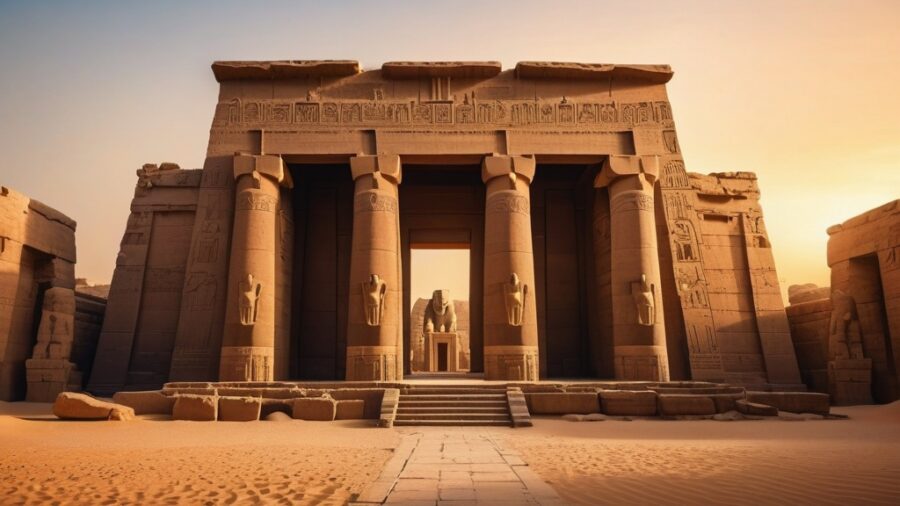
In addition to pyramids, temples played a vital role in Egyptian society. These structures were the focal points of religious activities and served as the homes of the gods. The Temple of Karnak, dedicated to the god Amun, is one of the largest temple complexes in the world, covering an area of around 200 acres. It features a stunning array of obelisks, statues, and colossal columns, exemplifying the grandeur of ancient Egyptian architecture.
Temples were not only places of worship but also centers of education, administration, and economic activity. They employed thousands of priests, artisans, and laborers, contributing significantly to the local economy. The pharaoh’s patronage of these temples reinforced their role as a divine ruler and helped maintain social order through religious observance.
| Monument Type | Purpose | Notable Examples |
|---|---|---|
| Pyramids | Tombs for pharaohs | Great Pyramid of Giza |
| Temples | Worship of gods, economic centers | Temple of Karnak |
| Obelisks | Commemoration and religious significance | Obelisk of Hatshepsut |
Pharaohs and Their Political Power
Military Leadership
The pharaohs were not only religious and political figures but also military leaders. Their ability to lead armies into battle was crucial for maintaining the security and expansion of their territory. Pharaohs like Ramses II, who reigned from 1279 to 1213 BCE, are renowned for their military exploits and campaigns against neighboring nations, such as the Hittites.
Military campaigns were often portrayed in art and inscriptions, emphasizing the pharaoh’s role as a protector of Egypt. Successful military endeavors not only expanded the empire but also enhanced the pharaoh’s status among the people, reinforcing the belief in their divine right to rule. Victories in battle were celebrated with grand triumphs and elaborate reliefs, showcasing the power and might of the pharaoh.
Diplomatic Relations
In addition to military prowess, pharaohs engaged in diplomacy to secure alliances and trade agreements with neighboring nations. Marriages between royal families were common, serving as a means to strengthen political ties. For instance, the marriage between Pharaoh Akhenaten and Nefertiti was not only a union of love but also a strategic alliance that impacted the political landscape of the time.
Trade routes established during the pharaohs’ reign facilitated the exchange of goods, ideas, and cultural practices, contributing to the prosperity of ancient Egypt. The pharaoh’s ability to navigate diplomatic relationships was essential for maintaining stability and ensuring the kingdom’s continued success.
Impact of Pharaohs on Modern Culture
Influence on Art and Architecture
The legacy of the Egyptian pharaohs continues to influence contemporary culture, particularly in the realms of art and architecture. The monumental structures they built serve as a source of inspiration for modern architects and artists. The use of columns, obelisks, and intricate designs in contemporary buildings can be traced back to ancient Egyptian influences.
Moreover, the artistic representations of pharaohs and their deities have left an indelible mark on global art. The iconic imagery of pharaohs, often adorned with elaborate jewelry and headdresses, is recognized worldwide. This artistic legacy continues to inspire modern interpretations in various forms of media, including film, literature, and fashion.
Cultural References in Literature and Media
The fascination with ancient Egypt and its pharaohs has permeated literature and popular culture. Numerous books, films, and documentaries explore the lives and reigns of these rulers, often romanticizing their achievements and mysteries. Works such as “The Egyptian” by Mika Waltari and movies like “The Prince of Egypt” have contributed to the ongoing interest in this ancient civilization.
Furthermore, the discovery of tombs, artifacts, and hieroglyphs in modern times has fueled scholarly research and public interest. Exhibitions showcasing ancient Egyptian treasures attract millions of visitors worldwide, highlighting the enduring legacy of the pharaohs.
Conclusion
In conclusion, the Egyptian pharaohs were not merely rulers but divine figures whose influence shaped the course of history. Their roles as political leaders, religious authorities, and military commanders demonstrate the intricate interplay between governance and spirituality in ancient Egypt. The monumental achievements in architecture, art, and culture reflect their enduring legacy, which continues to captivate and inspire generations.
Understanding the complexities of their reigns allows us to appreciate the significance of the Egyptian pharaohs as divine rulers and their lasting impact on both ancient and modern civilizations. As we explore their stories, we gain insights into the values, beliefs, and aspirations of a society that thrived for thousands of years.
FAQ
1. What was the role of pharaohs in ancient Egypt?
Pharaohs served as the supreme rulers of ancient Egypt, wielding political and religious authority. They were viewed as intermediaries between the gods and the people, responsible for maintaining order and prosperity within the kingdom.
2. How did pharaohs demonstrate their divine right to rule?
Pharaohs demonstrated their divine right through rituals, ceremonies, and public displays of power. Their coronation ceremonies and participation in religious rites reinforced their status as living gods chosen by the deities to govern.
3. What were some notable achievements of the pharaohs?
Pharaohs are renowned for their monumental architectural achievements, including the construction of the pyramids and temples. They also made significant contributions to art, literature, and military campaigns that expanded Egypt’s territory.
4. How did pharaohs influence modern culture?
The legacy of the pharaohs continues to influence modern architecture, art, and popular culture. Their iconic imagery and monumental structures inspire contemporary artists and architects, showcasing the enduring fascination with ancient Egypt.
5. What is the significance of the pyramids in relation to pharaohs?
The pyramids served as tombs for pharaohs and symbols of their divine status. They reflect the Egyptians’ beliefs in the afterlife and the pharaoh’s journey to immortality, showcasing the architectural brilliance of ancient civilization.
Recap
- Egyptian pharaohs were divine rulers with political and religious authority.
- The concept of divine right legitimized their power and influence.
- Pharaohs played crucial roles in military leadership and diplomacy.
- Monumental structures, such as pyramids and temples, reflect their legacy.
- Modern culture continues to be influenced by the achievements of pharaohs.
- Pharaohs were seen as intermediaries between the gods and the people.
- Their reigns impacted art, architecture, and literature throughout history.
- Understanding their role helps us appreciate the complexities of ancient Egyptian society.