
Introduction to Ancient Greek Theater Drama
Ancient Greek theater drama is a captivating subject that offers profound insights into the cultural and social dynamics of ancient Greece. This form of artistic expression not only entertained audiences but also served as a medium for philosophical discourse and moral dilemmas. By delving into the intricacies of ancient Greek theater drama, one can appreciate its lasting influence on modern theatrical practices and storytelling methods.
The origins of ancient Greek theater can be traced back to religious festivals honoring the gods, particularly Dionysus. These early performances were characterized by their communal nature, where the audience played an integral role in the theatrical experience. The unique combination of music, dance, and dialogue in these dramas created a rich tapestry of narrative that continues to resonate in contemporary performance art.
Throughout this article, we will explore the historical context, key features, and influential playwrights of ancient Greek theater drama. We aim to uncover the themes and motifs that permeate these works and examine their impact on modern drama. By the end of this exploration, readers will have a comprehensive understanding of the legacy left by ancient Greek theater drama.
The Historical Context of Ancient Greek Drama
The historical backdrop of ancient Greek drama is essential to understanding its development and significance. Ancient Greek theater emerged during the 6th century BCE, coinciding with the rise of city-states such as Athens. The socio-political landscape of the time, marked by democracy and intellectual fervor, fostered an environment conducive to artistic expression. Festivals dedicated to Dionysus, known as the City Dionysia, played a pivotal role in shaping the theater scene, featuring competitions where playwrights showcased their works.
The Evolution of Greek Theater
Initially, Greek theater began as a form of ritualistic storytelling. The incorporation of dialogue and character development evolved over time, leading to the emergence of distinct genres such as tragedy and comedy. The first known playwright, Thespis, introduced the concept of an actor who could interact with the chorus, thereby laying the foundation for dramatic performances.
Socio-Political Influences
The themes explored in ancient Greek theater often reflected the societal values and challenges of the time. Issues such as governance, morality, and human suffering were central to many plays. Additionally, the participation of the public in theatrical events reinforced the notion of democracy, as citizens engaged with the narratives that questioned authority and societal norms.
- 6th century BCE: Emergence of Greek theater.
- Thespis: The first known playwright.
- City Dionysia: Key festival that showcased dramatic works.
- Tragedy and comedy: The two primary genres of ancient Greek theater.
Key Features of Ancient Greek Theater
The presentation of ancient Greek theater was marked by several defining characteristics that set it apart from other forms of dramatic expression. These features not only enhanced the storytelling but also contributed to the overall aesthetic experience of the audience.
The Structure of the Theater
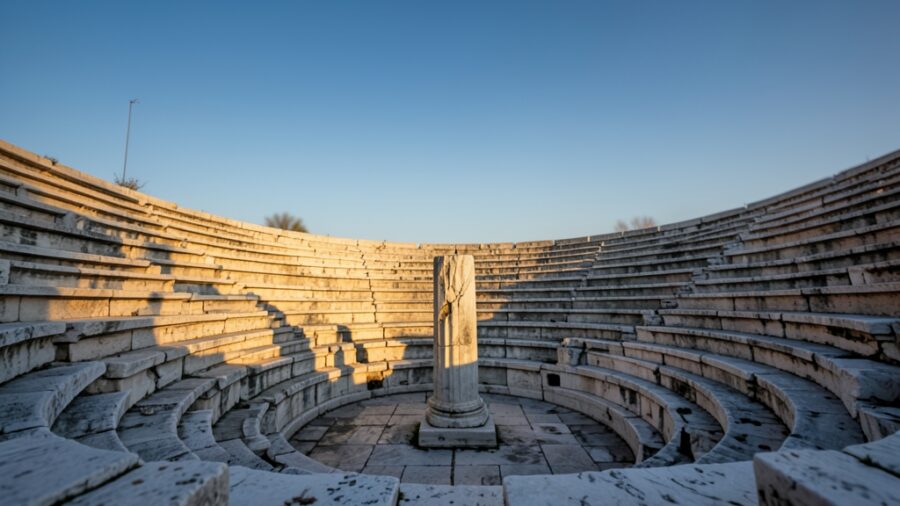
Ancient Greek theaters were typically open-air structures built into hillsides, allowing for natural acoustics and visibility. The theater consisted of three main parts: the orchestra, where the chorus performed; the skene, which served as the backdrop and dressing area for actors; and the theatron, the seating area for the audience. This architectural design facilitated a unique connection between the performers and the spectators.
The Role of the Chorus
The chorus played a significant role in ancient Greek theater, acting as a narrative device that provided commentary on the action and themes of the play. Composed of a group of performers, the chorus would engage in song and dance, often reflecting the emotions and moral implications of the story. Their presence not only enhanced the emotional depth of the performance but also served as a bridge between the audience and the unfolding drama.
| Feature | Description |
|---|---|
| Theater Structure | Open-air design with natural acoustics. |
| Orchestra | Performance space for the chorus. |
| Skene | Backdrop and dressing area for actors. |
| Theatron | Seating area for the audience. |
| Chorus | Group providing commentary and emotional depth. |
The Role of Festivals in Ancient Greek Drama
Festivals were integral to the development and popularity of ancient Greek theater. They served as both a religious observance and a cultural celebration, drawing large crowds and fostering a sense of community. The most notable of these festivals was the City Dionysia, which honored Dionysus, the god of wine and fertility.
The City Dionysia Festival
Held annually in Athens, the City Dionysia featured a dramatic competition in which playwrights presented their works to be judged by the public. The festival included various types of performances, including tragedies, comedies, and satyr plays. Winning the competition was a significant honor, elevating the playwright’s status and contributing to the cultural fabric of Athenian society.
Other Festivals and Their Significance
Besides the City Dionysia, other festivals such as the Lenaia and the Great Panathenaea also included theatrical performances. These gatherings provided a platform for emerging playwrights and fostered the exchange of ideas among artists. The communal aspect of these festivals facilitated a shared cultural identity, reinforcing the importance of theater in ancient Greek society.
Influential Playwrights and Their Works
Several playwrights emerged during the classical period of ancient Greece, each contributing uniquely to the evolution of theater. Their works continue to be studied and performed, showcasing the timeless nature of their themes and storytelling techniques.
Aeschylus: The Father of Tragedy
Aeschylus is often regarded as the father of tragedy and is known for his profound exploration of moral and philosophical questions. His most famous works, such as the Oresteia trilogy, delve into themes of justice, revenge, and the human condition. Aeschylus introduced the second actor to dramatic performances, allowing for more complex dialogue and interactions between characters.
Sophocles and the Tragic Hero
Sophocles further advanced the art of drama with his focus on character development and the concept of the tragic hero. His plays, including Oedipus Rex and Antigone, exemplify the struggle between individual agency and fate. Sophocles introduced innovations such as painted scenery and the third actor, enhancing the visual and emotional impact of his works.
- Aeschylus: Known for the Oresteia trilogy.
- Sophocles: Creator of Oedipus Rex and Antigone.
- Euripides: Focused on human emotion and social issues.
- Aristophanes: Master of comedy and satire.
Themes and Motifs in Ancient Greek Theater Drama
The exploration of themes and motifs in ancient Greek theater provides insight into the values and beliefs of the society that created it. Many of these themes resonate with audiences even today, highlighting the universality of human experiences.
Fate and Free Will
One of the central themes in ancient Greek drama is the tension between fate and free will. Many protagonists grapple with their destinies, often facing dire consequences due to their actions. This exploration raises questions about human agency and the extent to which one can influence their fate, a theme poignantly illustrated in plays like Oedipus Rex.
Justice and Revenge
The concepts of justice and revenge are also prevalent in ancient Greek theater. Characters often seek retribution for wrongs committed against them, leading to a cycle of violence and moral dilemmas. The Oresteia trilogy exemplifies this theme, as it examines the consequences of vengeance and the establishment of justice through the court system.
| Theme | Description | Example Play |
|---|---|---|
| Fate vs. Free Will | Tension between predetermined destiny and personal choices. | Oedipus Rex |
| Justice and Revenge | Cycle of vengeance and moral dilemmas. | Oresteia |
| Human Suffering | Exploration of pain and adversity faced by characters. | Antigone |
| Divine Influence | The role of gods in human affairs. | Prometheus Bound |
The Impact of Ancient Greek Theater on Modern Drama
The influence of ancient Greek theater extends far beyond its historical context, having shaped the foundations of modern drama and performance. Many conventions, themes, and narrative structures can be traced back to this ancient art form.
The Birth of Tragedy and Comedy
Modern theater owes much to the genres of tragedy and comedy established by ancient Greek playwrights. The intricate character development, moral complexities, and emotional depth found in their works are evident in contemporary dramas. The tragic hero archetype, characterized by a noble figure facing insurmountable odds, continues to resonate in modern storytelling.
Theater Techniques and Innovations
Moreover, the theatrical techniques pioneered by ancient Greeks, such as the use of masks, elaborate staging, and the incorporation of music and dance, have influenced countless theatrical traditions worldwide. The emphasis on dialogue and performance as a means of exploring human experiences continues to inspire playwrights and actors today.
Conclusion: The Legacy of Ancient Greek Theater
In conclusion, ancient Greek theater drama serves as a significant cultural artifact that reflects the values, struggles, and aspirations of its time. Through its exploration of complex themes, innovative storytelling techniques, and the celebration of communal festivals, this art form has left an indelible mark on the landscape of modern drama. As we continue to study and perform these ancient works, we honor the legacy of those who came before us, ensuring that their voices and stories endure through the ages.
The enduring impact of ancient Greek theater drama is a testament to its universal themes and the human experience. By understanding its historical context, key features, and influential figures, we gain a greater appreciation for the role of theater in shaping culture and identity. This exploration underscores the importance of storytelling as a means of connecting with one another and reflecting on our shared humanity.
Frequently Asked Questions about Ancient Greek Theater
What were the primary genres of ancient Greek theater?
The primary genres of ancient Greek theater were tragedy and comedy. Tragedies often dealt with serious themes and moral dilemmas, while comedies focused on humor and satire, providing social commentary.
Who were the most influential playwrights in ancient Greece?
Some of the most influential playwrights include Aeschylus, Sophocles, Euripides, and Aristophanes. Each made significant contributions to the development of theater and the exploration of complex themes.
How did festivals influence ancient Greek theater?
Festivals, particularly the City Dionysia, were crucial for the promotion and recognition of playwrights. They provided a platform for competition and showcased the artistic talents of the time, fostering a vibrant theater culture.
What themes are commonly found in ancient Greek drama?
Common themes in ancient Greek drama include fate versus free will, justice and revenge, human suffering, and the influence of the divine on human affairs. These themes continue to resonate in modern storytelling.
In what ways has ancient Greek theater influenced modern drama?
Ancient Greek theater has influenced modern drama through its genres, character archetypes, and theatrical techniques. The moral complexities and emotional depth found in ancient plays continue to shape contemporary narratives.
Recap of Key Points
- Ancient Greek theater drama emerged in the 6th century BCE during religious festivals.
- Key playwrights include Aeschylus, Sophocles, and Euripides, who explored complex themes.
- The role of the chorus and theater structure were pivotal in enhancing performances.
- Festivals like the City Dionysia were essential for promoting playwrights and theatrical culture.
- Themes of fate, justice, and human experience remain relevant in modern drama.
- Ancient Greek theater laid the groundwork for contemporary storytelling techniques and genres.
This content is informative and does not substitute for medical or psychological evaluation or treatment.