
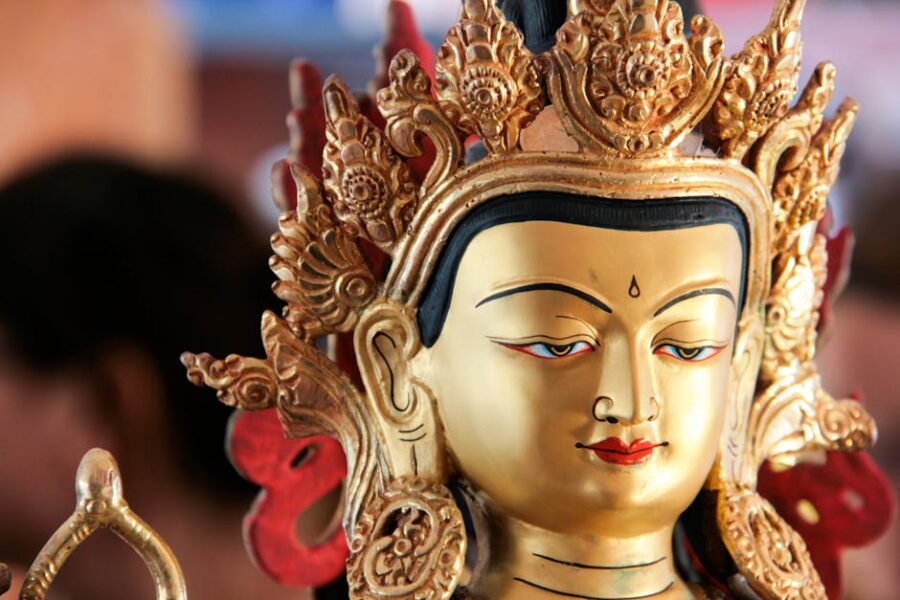
Introduction to Gold’s Significance in Ancient Egypt
Gold, often referred to as the “flesh of the gods,” held a divine and exalted status in ancient Egyptian society. This precious metal, with its unmatched luster and durability, was more than just a symbol of wealth and power; it was also a potent religious emblem, deeply intertwined with the spiritual and cultural ethos of ancient Egypt. Its remarkable properties made it a suitable representation of eternity and divinity, concepts central to the Egyptian worldview where the afterlife was not just a continuation but an eternal cycle.
In ancient Egypt, gold was celebrated not only for its physical beauty but also for its spiritual qualities. Its incorruptibility was akin to the eternal existence of the gods and the timelessness of the soul. As a non-tarnishing metal, gold perfectly symbolized the color of the sun and the eternal brilliance of the afterlife. This conceptual symbolism was so widespread that it influenced various elements of Egyptian religion, including their gods, mortuary practices, and artistic representations.
The significance of gold in ancient Egypt extended beyond religious and spiritual undertones; it played a crucial role in the economic and political landscapes of the civilization. Egypt’s plentiful gold reserves were vital in establishing long-lasting alliances and trade relations with neighboring regions. This resource ensured Egypt’s prosperity and dominance throughout different dynasties, allowing its rulers to consolidate power and influence over vast territories.
The abundant presence of gold in the archaeological remnants of ancient Egypt allows modern-day historians and archeologists to piece together the symbiotic relationship between religion, economy, and politics in the pharaonic era. Understanding how gold became a divine symbol in ancient Egypt involves examining various facets of its cultural and religious life, from mining and economy to myths, deities, and the afterlife.
Historical Overview of Gold Mining in Ancient Egypt
The history of gold mining in ancient Egypt is a testament to the remarkable technical and organizational abilities of the Egyptians. Gold mining operations were predominantly concentrated in the desert regions of the Eastern Desert and Nubian regions. These areas were rich in gold deposits, which the Egyptians skillfully exploited with methods that were advanced for their time.
The actual extraction of gold involved several labor-intensive techniques. Egyptians initially employed open-pit mining, which evolved into underground mining. Workers used simple tools such as stone hammers and chisels to break apart rocks and extract gold ore. This ore was then crushed and the gold was separated using sluice boxes or other rudimentary methods. Despite the primitive technology, the efficiency and scale of these operations were impressive.
Gold mining was not just a mere economic activity; it was a state-managed operation under the supervision of the Pharaoh. Mining expeditions were often sanctioned by royal decree. These expeditions not only required a large workforce but also precise planning and logistics. The strategic importance of gold made it a tightly controlled resource, with miners often being accompanied by military escorts to protect the operation.
The productiveness of gold mines in ancient Egypt is well-documented through various inscriptions and historical records. These sources provide fascinating insights into the scale of mining operations, which were described as employing thousands of workers at times. This mining prowess significantly contributed to Egypt’s wealth, enabling the construction of grandiose tombs and temples often lavishly adorned with gold.
The Role of Gold in Egyptian Religion and Mythology
In Egyptian religion, gold was far more than an ornamental metal; it embodyed the divine sphere itself. The gods were often depicted with golden skin, symbolizing their supernatural and untarnished nature. Gold, in this spiritual landscape, was not just a physical substance but a material imbued with life-giving and protective energies, believed to hold the power of transformation and regeneration.
Gold’s associations with the sun god Ra illustrate its profound religious significance. As Ra traversed the sky during the day, his journey symbolized the perpetual cycle of life and rebirth. Gold, reflecting the sun’s radiant light, was naturally linked to this narrative, representing eternal life and the regenerative powers of the sun. It was the very metal of creation, tied to the cosmos and the divine order.
The symbolic use of gold transcends the sun allegory; it also appears in the cosmic mythologies concerning the struggle between order and chaos. One notable myth is that of Osiris, the god of the afterlife, resurrection, and agriculture. Osiris’ death and subsequent resurrection were symbolic of nature’s cycles and the hope for eternal life. Gold, as an incorruptible material, was viewed as the divine sheath that enclosed the eternal soul, assisting its transformation in the afterlife.
Moreover, the extensive use of gold in amulets and religious artifacts served more than aesthetic purposes. These objects were thought to possess divine protection and power. Gold’s mystical associations made it the principal material for sacred statuettes and jewelry worn by priests in high religious ceremonies. This underscored the belief in gold as a divine reservoir of energy and power, inextricably linked to the immortal realms of the gods.
Gold as a Symbol of Immortality and Divine Power
The association of gold with immortality and divine power in ancient Egypt is deeply routed in its physical properties and its spiritual significance. Gold was seen as imbued with the qualities necessary for the soul’s successful journey into the afterlife, its undegrading luster making it the perfect mirror for eternal life.
The immortality conferred by gold was not only conceptual but also literal as it perpetuated the memory and divinity of the deceased. The use of gold in funerary customs was elaborate and symbolic, intended to assure the deceased a safe passage and acceptance in the afterlife. Gold’s association with eternity meant it was used extensively in funerary masks, coffins, and personal adornments buried with the dead.
This practice was manifest most famously in the burial of King Tutankhamun. His tomb, discovered nearly intact, revealed a treasure trove of gold artifacts, including a lavishly decorated solid gold mask that adorned the pharaoh’s mummy, underscoring gold as a divine instrument of immortality.
Furthermore, gold’s symbolism extended into the realm of the living. Pharaohs, seen as gods on earth, wore gold to display their divine lineage and unblemished sovereignty. The precious metal denoted the pharaoh’s absolute power and vitality, much like their role as a living god. Thus, gold was both a visual and metaphysical testament to their perceived divine qualities, ensuring their dominance over both the seen and unseen realms.
Association of Gold with Specific Egyptian Deities
In ancient Egypt, specific deities were intimately connected with gold due to its divine associations. The overlapping connections between gold, the sun, and immortality were particularly evident in the attributes ascribed to the god Ra, often depicted with a solar disk. Ra’s direct link to gold highlights the metal’s celestial nature and its role in the Egyptian creation myth.
Another deity closely associated with gold was Hathor, the goddess of love, beauty, music, and mining. Her realms extended over matters both earthly and divine, and she was often associated with gold and turquoise, revered as gifts from Hathor herself. Temples dedicated to Hathor were sometimes situated near mining areas, underlining her association with this precious resource.
The goddess Isis, wife of Osiris and mother of Horus, also had ties to gold. As a deity associated with protection, magic, and motherhood, artifacts depicting or dedicated to Isis were often crafted from gold, used in rituals to imbue them with her protective qualities. This further reinforced gold’s status as a sacred element, enabling divine connections and magical interventions.
Table: Association of Gold with Egyptian Deities
| Deity | Domain of Association | Symbolic Element | Relationship to Gold |
|---|---|---|---|
| Ra | Sun, Light, Kingship | Solar Disk | Gold as Sun, Eternal Life |
| Hathor | Love, Beauty, Music, Mining | Sistrum | Gold as Earthly and Divine Blessing |
| Osiris | Afterlife, Resurrection, Agriculture | Crook and Flail | Gold as Resurrection |
| Isis | Protection, Magic, Motherhood | Throne | Gold in Protective Artifacts |
Gold in Pharaohs’ Tombs and Burial Practices
Pharaohs’ tombs were masterpieces of gold artistry, designed to honor the deceased’s life and ensure their smooth transition into the afterlife. Elaborate burial practices were central to Egyptian belief and heavily involved the use of gold as a medium to connect this life to the next. This was elaborate, both in the wealth of objects interred and the intricacy of gold craftsmanship.
The most renowned example is the tomb of Pharaoh Tutankhamun, where the discovery of golden artifacts gave insight into the unparalleled importance of gold in burial practices. Among these was the gold funerary mask, a significant symbol intended to protect the king’s face in the afterlife, believed to serve as a talisman against evil spirits.
The inner sarcophagus of pharaohs, often lined or even made of gold, served as both protection and a spiritual vessel for the deceased. The metal’s uncorroding nature ensured that the pharaoh’s essence would remain intact, reflecting the everlasting light of their divine guardians.
Moreover, these tombs contained numerous golden amulets and jewelry, alongside inscriptions and scenes inlaid with gold, depicting the deceased’s journey through the underworld. Such deposits underscored the belief that gold continued to play a protective and guiding role even after death, affirming the pharaoh’s divine status and securing their immortality.
The Use of Gold in Religious Artifacts and Temples
Gold featured prominently in religious artifacts and temple decorations, serving as a bridge between the gods and humanity. Its application in temple iconography and ritual objects highlighted its symbolic role in the worship and ceremonies central to Egyptian religious life.
Statues of gods and goddesses were often gilded or inlaid with gold, emphasizing their divine nature and serving as focal points for worship. Gold coverings or accents on statues were believed to enhance their spiritual presence, offering a material manifestation of the divine.
Temples themselves were often adorned with gold. Pillars, doorways, and sanctuaries were inlaid with gold leaf and precious stones, creating a resplendent environment aimed at invoking divine presence. Gold’s reflective quality symbolically and physically brought light into sacred spaces, reinforcing theological concepts of purity and divinity.
Religious ceremonies often involved gold objects such as chalices, censers, and offering plates. Such iconic items made use of gold to symbolize purity and divine favor, believed to be vessels for drawing down divine energy or blessings during rituals. This continuous interaction with gold in sacred settings maintained its status as a cherished resource that elevated religious experiences.
Cultural Beliefs Surrounding Gold and the Afterlife
Gold’s divine associations were ingrained in cultural beliefs regarding the afterlife, where it was thought to embody the brilliance and immortality awaiting in the realm beyond death. The religious significance of gold extended to its portrayal in funerary texts, such as the Book of the Dead, which outlined rituals and incantations for navigating the afterlife.
The belief in gold as an agent of transformation was evident in the construction of elaborate funerary regalia designed to encase and protect the deceased. Among these were gold sandals, finger and toe coverings, and elaborate pectorals and collars, each serving symbolic functions to appeal to the gods and ensure a safe passage.
These traditions reflect the broader cultural perception of gold as a sacred element that aligned mortal existence with the eternal cycle of life, death, and rebirth. The faith invested in gold was so profound that even in the face of political turmoil, burial rites involving gold remained steadfast, underscoring its immutable cultural value.
Gold was also thought to hold metaphysical powers and connections to divine truths. Its inclusion in burial contexts exemplified an understanding of the afterlife that saw gold not just as a material offering but as a spiritual commendation that bestowed favor, guidance, and protection.
Comparison of Gold’s Role in Other Ancient Civilizations
While gold held a preeminent place in ancient Egypt, its symbolic and economic roles varied across different ancient civilizations. From Mesopotamia to South America, the use of gold reflected each society’s unique religious, cultural, and social frameworks.
In Mesopotamia, gold was largely used in a similar manner to Egypt, adorning tombs and temples and featuring prominently in religious narratives. However, Mesopotamian emphasis leaned toward detailing gold’s importance as a representation of power and wealth among the nobility, not just within divine contexts.
Conversely, in South and Central America, indigenous cultures such as the Incas also placed immense spiritual importance on gold, seeing it as the sweat of the sun. Gold held a central role in ceremonies and was used to fashion intricate offerings meant to appease their deities. These cultures shared Egypt’s conception of gold as cosmic but diverged in specific symbolic correlations.
In Greece and Rome, gold was primarily an indicator of wealth and societal status. The multiplicity of gods in both cultures meant that gold retained its divine symbolism but was more closely associated with human achievement and the power of empires rather than the eternal spiritual realm.
Despite these differences, a common thread among these ancient civilizations was the shared appreciation of gold’s unmatched beauty and durability, which elevated it beyond material value to a symbol integral to their spiritual and sociopolitical constructs.
The Influence of Gold on Ancient Egyptian Economy
Gold played a significant role in the economy of ancient Egypt, underpinning the wealth and prosperity of the nation. Its abundance in Egyptian mines made it a critical component in trade relations and enabled Egypt to exert considerable influence over neighboring regions.
The Egyptian economy benefited greatly from gold trade. Artisans crafted luxurious items that were traded with lands such as Phoenicia and Mesopotamia for wood, resins, and other materials. This trade not only promoted economic exchanges but also fostered cultural interactions and diplomatic ties.
Ownership and distribution of gold were closely controlled by the state, symbolizing the passage of divine power through the pharaoh. The Pharaoh’s control over gold, especially its extraction and distribution, reinforced political structures and demonstrated their ability to fund massive building projects like temples and pyramids.
The allure of Egyptian gold also attracted foreign merchants, increasing Egypt’s trade connections. This expansion befitted Egypt’s geopolitical interests and established it as a formidable power in the ancient world. The economic impact of gold was therefore not only measured in wealth but also in political leverage, securing Egypt’s legacy as one of the world’s most enduring ancient civilizations.
Conclusion: The Legacy of Gold in Egyptian Culture
The legacy of gold in ancient Egyptian culture is profound, transcending its economic and decorative uses to emerge as an essential religious and cultural symbol. Gold formed a connective thread within the fabric of ancient Egyptian life, linking beliefs about the divine with the physical manifestation of eternal power and beauty.
In the realms of both the sacred and the secular, gold’s influence extended from the opulent halls of pharaohs to the divine sanctuaries where gods were worshipped. This multifaceted role in ancient Egypt has fascinated historians and archaeologists, who seek to understand the civilization’s greatness and its enduring allure over time.
FAQ
What was the primary source of gold in ancient Egypt?
The primary sources of gold in ancient Egypt were the mines located in the Eastern Desert and Nubia. These areas were rich in gold deposits that were extensively mined during the pharaonic periods, contributing significantly to Egypt’s wealth and economic power.
Why was gold considered the “flesh of the gods” in Egyptian culture?
Gold was considered the “flesh of the gods” in Egyptian culture because of its brilliant luster and incorruptible nature, which symbolized eternity and divinity. This perception made gold an ideal representation of the gods’ immortal and unblemished essence, aligning with the Egyptian worldview of life and afterlife.
How was gold used in the burial practices of the Egyptian pharaohs?
Gold was extensively used in Egyptian burial practices, particularly in the tombs of pharaohs. It was used to craft funerary masks, sarcophagi, and jewelry, intended to protect the deceased and ensure their successful journey to the afterlife. The most famous example is the tomb of Tutankhamun, which contained numerous golden artifacts.
Who were some of the Egyptian deities associated with gold?
Some of the Egyptian deities associated with gold include Ra, the sun god; Hathor, the goddess of love and mining; Osiris, the god of the afterlife and resurrection; and Isis, the goddess of protection and magic. These associations highlighted gold’s role as a divine substance linked to power and immortality.
How did gold influence the Egyptian economy?
Gold significantly influenced the Egyptian economy by serving as a major trade commodity, fostering diplomatic relations and cultural exchanges with neighboring civilizations. The control over gold mining and distribution by the pharaohs facilitated the construction of monumental architecture and maintained Egypt’s status as a preeminent ancient power.
How does the use of gold in ancient Egypt compare to other ancient civilizations?
While gold was central to religious and economic systems in ancient Egypt, other civilizations, such as Mesopotamia and the Inca, also revered gold, but with differing symbolic meanings. For example, in Mesopotamia, gold was a symbol of wealth and power, whereas, in Inca culture, it represented the divine attribute of the sun. These variations highlight cultural differences in the significance of gold across civilizations.
Recap
- Gold was revered as a divine symbol in ancient Egypt, representing immortality, power, and wealth.
- It was mined extensively from the Eastern Desert and Nubia, playing a crucial role in Egypt’s economy and trade.
- Gold’s associations with the gods, particularly Ra and Hathor, established it as a potent religious symbol.
- Pharaohs used gold in their burial practices to ensure protection and immortality in the afterlife.
- The use of gold in temples and religious artifacts emphasized its importance in daily worship and sacred rituals.
- Gold’s cultural significance extended beyond Egypt, influencing its economic and political relationships with other ancient civilizations.
Conclusion
Gold’s legacy in ancient Egyptian culture is a testament to its profound spiritual and practical significance throughout history. As a material embodiment of divinity and immortality, gold influenced all aspects of Egyptian life, from religion and social structure to economy and art. Its allure and mystery continue to captivate scholars and enthusiasts today, offering a window into the splendor and complexity of ancient Egyptian civilization. The eternal brilliance of gold remains a fitting symbol of Egypt’s illustrious cultural heritage, bridging the past and present.