
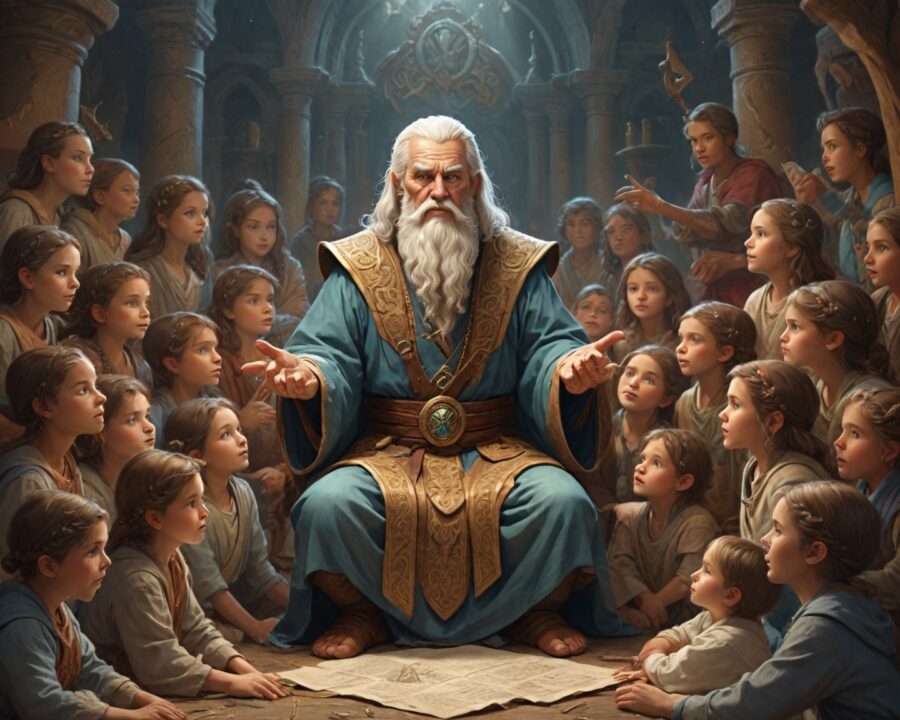
Introduction to Myths and Their Significance in Ancient Societies
In the tapestry of human civilization, myths have woven a rich and complex pattern, serving as a repository of collective wisdom and a guiding force for cultural values. These narratives, often populated with gods, heroes, and mythical creatures, are not mere tales of fantasy but reflections of ancient societies striving to understand their world and place within it. From the grand epics of Homer to the intricate tales of the Hindu Puranas, myths have transcended time and geography, offering profound insights into the human condition.
Ancient societies revered myths not only for their entertainment value but for their deeper educational and moral significance. These stories encapsulated the hopes, fears, ethics, and philosophies of their people, offering a framework through which individuals could comprehend complex social and spiritual ideas. Myths served as a bridge between the known and the unknown, explaining natural phenomena, legitimizing social structures, and conveying cultural values from generation to generation.
How Myths Were Used as Educational Tools in Ancient Cultures
Myths played a cardinal role in the education systems of ancient cultures, functioning as didactic tools to impart knowledge and wisdom. They were dynamic, multifaceted narratives that taught individuals how to navigate their world and their relationships with others. In societies where formal education was accessible only to the elite, myths democratized learning by providing a universal medium through which people could access shared truths and norms.
In Ancient Greece, for instance, the mythological curriculum included stories of gods such as Zeus, Athena, and Poseidon, which were taught to instill virtues like bravery, wisdom, and justice. Identifying with these divine figures, individuals absorbed guidelines for ethical conduct and civic responsibility. Similarly, ancient Indian texts like the Mahabharata and Ramayana used the tales of heroes and gods to illustrate ideals of dharma (duty/ethics) and karma (action/consequence), providing a moral compass for society.
In ancient Egypt, myths were integral to understanding the spiritual and cosmic order. The story of Osiris, Isis, and Horus imparted lessons on fertility, kinship, and the justice of the afterlife. These narratives underpinned religious practices and helped people make sense of life’s cycles. Thus, through the use of myths, ancient education was not merely about acquiring factual knowledge but about cultivating wisdom and ethical understanding.
The Role of Storytelling in Preserving and Teaching Myths
Storytelling was the heartbeat of mythological education, a powerful medium that ensured the transmission and preservation of cultural narratives across generations. Oral traditions were the primary vehicle for storytelling before the advent of written language, and even after, storytelling continued to hold a sacred place in the propagation of myths.
The act of storytelling involved more than just recitation; it was an immersive experience that engaged listeners emotionally and intellectually. The bard or storyteller was a custodian of cultural heritage, using gestures, voice modulation, and dramatization to bring myths to life. This oral tradition allowed for flexibility and adaptation of the stories, ensuring their relevance to the audience’s context and evolving societal norms.
Importantly, storytelling fostered a communal environment, where myths were discussed, interpreted, and questioned. This participatory aspect encouraged critical thinking and reflection, enabling individuals to internalize the lessons and values embedded within the tales. Furthermore, storytelling reinforced memory retention and understanding, as human cognition is naturally attuned to narrative structures. Through storytelling, myths continued to thrive as dynamic educational instruments.
Examples of Myths That Conveyed Moral and Ethical Lessons
Ancient myths are replete with tales that conveyed important moral and ethical lessons, offering guidance on how to lead a virtuous life. These stories often revolved around themes of hubris, loyalty, justice, love, and sacrifice, embodying timeless truths that resonated across cultures.
One illustrative example is the Greek myth of Icarus and Daedalus, which warns against the perils of excessive pride and disobedience. As Icarus flies too close to the sun despite his father’s warnings, his wings melt, leading to his untimely demise. This tale underscores the importance of heeding wise counsel and understanding one’s limitations.
In the Indian epic Ramayana, the character of Rama exemplifies virtues such as integrity, devotion, and righteousness. His unwavering adherence to his duty despite personal loss demonstrates the principle of dharma, highlighting the ethical standpoints valued in ancient Indian culture.
The Norse myth of Thor, who sacrifices himself to protect his people during Ragnarok, illustrates themes of courage and selflessness. Such stories not only entertained but instilled ethical values, serving as moral compasses for their societies.
The Connection Between Mythology and Cultural Identity
Mythology is deeply intertwined with cultural identity, providing the narratives that shape a community’s worldview and self-understanding. Myths are reflective of the unique experiences, values, and beliefs of a culture, offering insights into the psyche and ethos of a people.
In ancient Greece, myths connected citizens to their Olympian gods, fostering a sense of shared heritage and cultural pride. Each city-state had its patron deity, such as Athens’ revered association with Athena. This connection solidified civic unity and identity, as citizens saw themselves as inheritors of divine blessings and responsibilities.
In Japan, Shinto myths trace the origins of the Japanese islands to the deities Izanagi and Izanami, embedding a divine aspect to the national identity. Rituals and ceremonies rooted in these myths continue to influence modern Japanese cultural practices, underscoring the enduring power of myth to define and bind a people.
Myths also function as a cross-cultural bridge, as seen in the universal themes that run through them. Stories of creation, heroism, and the afterlife resonate beyond cultural boundaries, promoting a shared human identity while celebrating diversity. Through mythology, ancient societies crafted a collective identity that was essential for social cohesion and cultural continuity.
How Myths Influenced Ancient Philosophies and Worldviews
The philosophical landscapes of ancient societies were profoundly shaped by the myths that permeated their cultures. Myths offered an interpretative framework for understanding cosmic and natural phenomena, deeply influencing the development of ancient philosophies and worldviews.
In ancient Greece, philosophers like Plato and Aristotle engaged with myths to explore abstract concepts and ethical questions. Plato, in particular, used mythological constructs in his dialogues to illustrate his thoughts on truth, soul, and governance. The allegory of the cave, for instance, while not a traditional myth, employs a mythic structure to discuss enlightenment and reality.
Similarly, in ancient India, the Upanishads and other philosophical texts drew heavily from the rich tapestry of Hindu mythology. Concepts such as Brahman (universal soul) and Atman (individual soul) were elucidated through mythical narratives, emphasizing the interconnectedness of life and spiritual enlightenment.
Chinese philosophy also reveals mythological influences, particularly in Daoism and Confucianism. Myths concerning celestial beings and natural forces are integral to understanding the harmony and balance central to these philosophies. By embedding philosophical thought within a mythical framework, ancient thinkers provided a holistic understanding of the universe and humanity’s place within it.
Common Questions About the Educational Role of Myths
How did ancient people view myths in their education systems?
Ancient people viewed myths as foundational elements of their education systems. They were not seen as mere fables but as essential narratives that conveyed cultural, moral, and ethical values. Myths provided a framework for understanding life’s experiences, social duties, and spiritual beliefs, making them integral to both formal and informal education.
Did myths serve as historical records for ancient cultures?
While myths are not historical records in a strict sense, they often contain elements reflecting historical events or social conditions. Myths can provide insights into the historical contexts of the cultures that created them, revealing information about values, conflicts, and everyday life, even though they are embellished with fantastical elements.
Why were myths more effective than factual teaching in ancient times?
Myths were more effective than factual teaching in ancient times because they engaged the imagination and emotions, making lessons memorable and impactful. The narrative structure of myths allowed for the transmission of complex ideas in an accessible form, ensuring that moral and ethical teachings were internalized and retained.
How do myths differ across cultures?
Myths differ across cultures in terms of characters, settings, and specific lessons, reflecting each culture’s unique environment, history, and values. However, they often share universal themes such as creation, heroism, and morality, demonstrating common human concerns and aspirations.
Can modern education benefit from incorporating mythology?
Yes, modern education can benefit from incorporating mythology by fostering creativity, critical thinking, and ethical reasoning. Myths can provide diverse perspectives, enhance cultural literacy, and offer relatable narratives to discuss complex ideas, making education more engaging and holistic.
Are myths only relevant to ancient cultures?
Myths remain relevant today as they continue to inspire literature, art, and psychology, providing timeless insights into human nature and society. They serve as cultural touchstones, reflecting universal truths and challenges, and offering lessons applicable in contemporary contexts.
The Decline of Myth-Based Education in Modern Times
With the advance of scientific rationalism and industrialization during the Enlightenment, the role of myths in education began to decline. The prioritization of empirical knowledge and the rise of formal education systems sidelined mythical narratives, deemed unscientific and irrational in comparison to factual learning.
While analytical thinking and factual knowledge became the focus, myths were relegated to entertainment or literary studies. This shift reflected a broader cultural transformation where mythic thinking was overshadowed by the demands of modernity, technology, and progress. As a result, myths lost their status as authoritative sources of wisdom and ethical instruction in mainstream education.
However, this decline overlooks the richness and multifaceted value of myths, which continue to offer profound lessons in symbolic and metaphorical language. In sidelining myths, modern education risks losing an integrative approach that encompasses emotional intelligence, moral insight, and cultural literacy. With modern societies facing complex ethical dilemmas and cultural misunderstandings, revisiting the educational potential of myths is more relevant than ever.
Practical Ways to Incorporate Myths into Modern Education
Despite their diminished role, there are practical, innovative ways to reincorporate myths into modern educational contexts, enhancing learning experiences and social comprehension.
-
Integrative Curriculum Design: Educators can design curricula that integrate myths with subjects such as history, literature, and ethics, providing multidisciplinary perspectives and deepening students’ understanding of cultural narratives.
-
Storytelling Workshops: Schools can organize storytelling workshops, encouraging students to explore myths creatively through writing, dramatization, or visual arts. This approach nurtures creativity, critical thinking, and emotional engagement.
-
Ethical Debates and Discussions: Myths can serve as catalysts for ethical debates and discussions, prompting students to examine moral dilemmas and societal values. This method fosters ethical reasoning, empathy, and cultural awareness.
-
Comparative Mythology Studies: By comparing myths across cultures, students can explore similarities and differences, increasing their cultural literacy and appreciation for diverse perspectives.
-
Project-Based Learning: Engaging students in projects that involve researching, interpreting, and presenting myths allows for immersive and active learning experiences, enhancing retention and understanding.
| Tool for Incorporating Myths | Key Benefit | Example Activity |
|---|---|---|
| Integrative Curriculum Design | Multidisciplinary learning | Linking Greek myths with history lessons |
| Storytelling Workshops | Enhances creativity and engagement | Drama reenactment of Norse myths |
| Ethical Debates and Discussions | Promotes moral inquiry | Analyzing the ethics in the story of Icarus |
Transforming myths into educational opportunities enriches the learning process by bridging ancient wisdom with modern insights, cultivating well-rounded individuals capable of understanding and navigating complex socio-cultural landscapes.
Recap
- Myths in Ancient Education: Myths played a crucial role in imparting moral and ethical education through storytelling and engagement in ancient cultures.
- Mythology and Cultural Identity: Mythical narratives were instrumental in shaping cultural identities and philosophical worldviews, linking communities across time.
- Modern Implications: Despite their decline in modern education, myths offer valuable learning opportunities and insights when effectively integrated into curricula.
- Practical Integration Strategies: Employing integrative curricula, storytelling, ethical debates, comparative studies, and project-based learning can revitalize the educational role of myths.
Conclusion: The Enduring Legacy of Myths in Shaping Values
Myths have served as a guiding light across the ages, imparting wisdom and ethical guidance, fostering cultural identity, and shaping the moral fabric of societies. Even as their role in formal education has waned, their stories continue to resonate, offering profound insights into human nature and societal values.
The reclamation of myths in modern education can be a transformative journey, connecting learners with a rich tapestry of cultural narratives and promoting holistic understanding. As societies grapple with ethical challenges and cultural divides, myths provide timeless lessons on empathy, courage, and justice.
In embracing the enduring legacy of myths, modern education can forge a path that bridges the past and present, blending ancient wisdom with contemporary learning to cultivate thoughtful, informed, and ethically grounded individuals.