
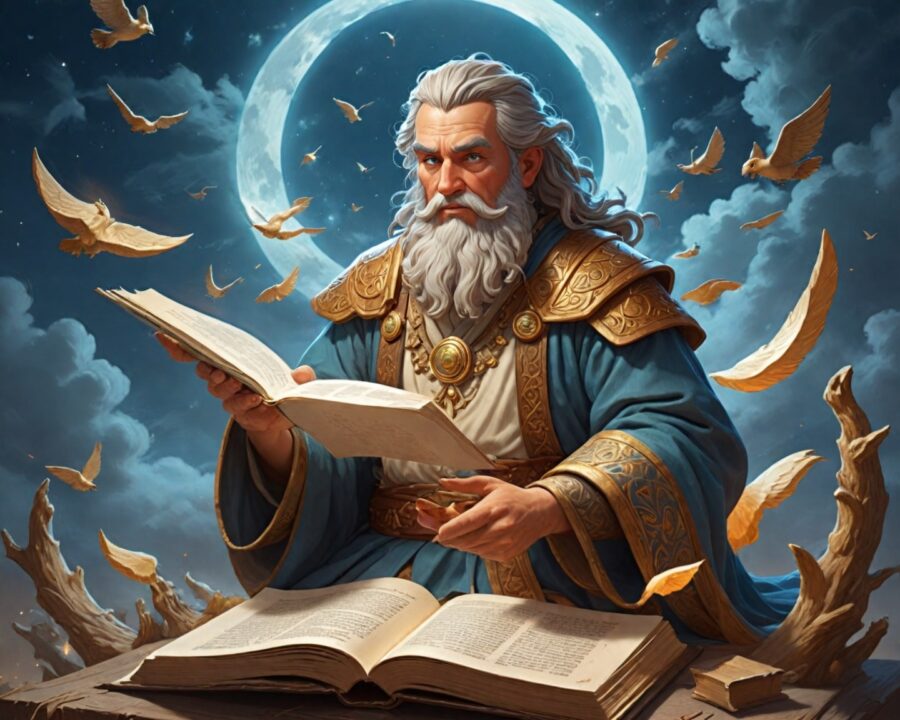
Introduction to the Concept of Immortality in Myths
The idea of living forever has fascinated humanity for millennia, rooted in our collective psyche and appearing across cultures in myriad forms. From the epic quest for perpetual youth to the profound tales of deities and heroes who defy death, immortality myths weave through the tapestry of human history. They offer insights into human desires, fears, and the eternal quest to transcend the limits of mortality. These timeless tales, passed down through generations, reflect the complexities of existence and the allure of an endless life.
Immortality myths bridge the gap between the mortal world and the divine, serving as a lens through which societies examine their values and beliefs. By exploring these legends from various cultures, we uncover not only differences but striking similarities in how different peoples grapple with their own mortality. As we delve into these stories, we will journey through ancient civilizations, each with its unique narrative of life, death, and the possibility of living forever.
Ancient Greek Legends of Eternal Life
The ancient Greeks were prolific storytellers, and many of their myths revolve around the theme of immortality. Among the pantheon of gods and goddesses, immortality was a defining trait, distinguishing the divine from mere mortals. The gods of Mount Olympus, including Zeus, Hera, and Athena, were eternal beings, their immortal nature allowing them to influence mortal affairs without succumbing to the ravages of time.
One of the most famous tales of immortality in Greek mythology is that of the hero Tithonus. Granted eternal life by the gods, Tithonus was a prince of Troy and the lover of Eos, the goddess of the dawn. However, in her eagerness, Eos forgot to ask for eternal youth for her beloved. As a result, Tithonus aged indefinitely, his body withering over centuries, illustrating the inherent curse in living forever without the gift of youth.
Another riveting story is that of the Elysian Fields. Unlike the grim underworld of Hades, the Elysian Fields were a paradisiacal realm reserved for heroes granted blessed immortality. Distinguished figures such as Achilles were believed to dwell here in eternal bliss, highlighting the Greek belief in an awarded afterlife for those of exceptional valor and virtue.
Immortality in Eastern Cultures: Chinese and Indian Myths
In Eastern cultures, the concept of immortality takes on a deeply philosophical and spiritual dimension. Chinese myths, for example, often depict immortality as a state of harmony with the universe. The legendary Eight Immortals, revered figures in Daoism, embody the quest for enlightenment and eternal life, each possessing unique powers and representing different aspects of life. These immortals serve as paragons of virtue, illustrating the belief that moral integrity and spiritual cultivation can transcend mortality.
Indian mythology offers a rich tapestry of stories where immortality intertwines with the cycle of reincarnation. The concept of “Amrita,” an elixir of life, appears in many Hindu legends, such as the “Samudra Manthan” or the churning of the ocean, wherein gods and demons seek the nectar of immortality. This tale is symbolic of the spiritual endeavor to attain eternal bliss and moksha, the liberation from the cycle of birth and death.
Yama, the Hindu god of death, also plays a crucial role in understanding immortality. While he governs the dead, Yama’s stories often explore the qualities necessary to transcend mortality, such as adherence to dharma (righteousness) and the pursuit of spiritual knowledge. These narratives emphasize that true immortality resides not in the physical body but in the soul’s evolution.
The Quest for Eternal Life in Western Folklore
Western folklore is rich with stories of individuals seeking to conquer death, driven by ambition, love, or despair. These tales, whether born from medieval legends or Renaissance texts, reveal a complex relationship with the idea of living forever.
Alchemy, often seen as a precursor to modern chemistry, was infused with the spiritual pursuit of the philosopher’s stone, a substance believed to grant eternal life. Visionaries across Europe dedicated their lives to discovering this mythical stone, reflecting the era’s blend of science, mysticism, and the human desire to overcome mortality.
Similarly, the legend of the Wandering Jew illustrates the darker side of immortality. According to the tale, a man cursed to live until the Second Coming roams the earth, burdened by his endless existence. This narrative serves as a cautionary tale about the isolation and perpetual longing inherent in an undying life.
Medieval literature also abounds with tales of enchanted beings and quests for eternal love. The story of Tristan and Isolde, wherein a love potion inadvertently ties their fates together beyond death, underscores how eternal life and undying passion often intertwine, illustrating the timeless allure of immortal narratives.
Indigenous Perspectives on Immortality and the Afterlife
Indigenous cultures around the world possess rich oral traditions that offer unique insights into the concept of immortality. These stories often integrate elements of nature, spirituality, and the interconnectedness of all living things.
In many Native American cultures, the idea of immortality is less about individual achievement and more about the continuation of life through ancestry and the natural world. For example, the Hopi believe in an afterlife where those who live in harmony with the earth move to a spiritual realm of abundance, symbolizing the eternal cycle of life and death.
Australian Aboriginal myths often emphasize the Dreamtime, an ancestral period that exists beyond the constraints of linear time. In this realm, the spirits of the deceased join their ancestors, achieving a form of immortality by returning to a timeless state of being that maintains harmony with the land and its stories.
African folklore, rich with tales of the ancestors, often portrays immortality as a state achieved through memory and influence. Spirits of the deceased remain active in the lives of their descendants, guiding them and keeping cultural traditions alive. This demonstrates how immortality is not only a personal journey but a collective legacy.
Religious Interpretations of Immortality Across the World
Religious perspectives on immortality vary widely, often reflecting the underlying theology of each belief system.
In Christianity, the concept of eternal life is central, with the promise of heaven for the faithful. The resurrection of Jesus Christ symbolizes the victory over death, offering believers hope for their own resurrection and eternal union with God. This belief underscores the transformative power of faith and divine grace.
Islam also offers a vision of eternal life through paradisiacal rewards for those who live a righteous life according to the Quran. Here, immortality is not mere existence but a state of eternal pleasure and proximity to Allah.
Buddhism presents a contrasting view, with Nirvana representing a state beyond life and death, where the cycle of rebirth ceases. Here, immortality is achieved by extinguishing desire and suffering, leading to ultimate liberation. This concept challenges the typical notion of living forever and redefines eternal life as a metaphysical state of enlightenment.
Famous Figures and Their Pursuit of Eternal Life
Throughout history, numerous figures have pursued the elusive dream of immortality, driven by various motivations, from personal ambition to the desire for legacy.
Alexander the Great, known for his vast conquests, reportedly sought out the Fountain of Youth during his campaigns, aiming to secure eternal life alongside his earthly empire. His ambitions reflect the age-old desire for power and life without limits.
The Emperor Qin Shi Huang of China famously invested in alchemy and commissioned the Great Wall, seeking to protect and perpetuate his dynasty. His quest for the elixir of life underscores the lengths to which individuals will go to defy mortality.
In literature, characters such as Frankenstein and Dorian Gray exemplify the pursuit of eternal life, though they often serve as cautionary tales about the unforeseen costs of such desires. These figures remind us that the quest for immortality is fraught with ethical and existential dilemmas.
Symbolism of Immortality in Art and Literature
Immortality has long been a fertile ground for artistic and literary exploration, serving as a metaphor for themes of rebirth, transformation, and transcending human limitations.
In art, symbols of immortality include the phoenix, capable of rising from its ashes, a powerful emblem of renewal and undying spirit found in cultures worldwide. Similarly, the Ouroboros, a snake eating its tail, represents eternal cycles and the unity of beginnings and endings.
Literature often portrays immortality as a double-edged sword, offering eternal youth and beauty at the cost of moral corruption or existential emptiness. Mary Shelley’s “Frankenstein” and Oscar Wilde’s “The Picture of Dorian Gray” explore the perilous consequences of tampering with life’s natural order, highlighting the ethical and existential concerns tied to eternal life.
Fantasy and science fiction genres frequently revisit immortality, posing questions about identity, memory, and what makes us truly human. These narratives challenge readers to contemplate the implications of immortality on personal autonomy and human nature itself.
Modern Adaptations of Immortality Myths in Media
Contemporary media continues to explore and reinvent immortality myths, reflecting society’s evolving understanding of life, death, and the human soul.
In films like “The Matrix,” immortality themes emerge through digital eternities and transcending physical limitations, offering a modern twist on ancient quests for eternal life. Characters who upload their consciousness into the virtual realm illustrate the intersection of technology and myth.
Television series such as “The Good Place” and “Doctor Who” tackle immortality with humor and philosophical insight, exploring the moral and emotional complexities of endless existence. These stories often emphasize the personal growth that comes from facing mortality.
Video games leverage interactivity to immerse players in narratives about eternal life, encouraging them to make choices that reflect ethical dilemmas surrounding immortality. Titles like “The Elder Scrolls” series and “Dark Souls” incorporate world-building rich with mythological elements, inviting players to engage with age-old questions of life and death.
| Genre | Media Example | Theme |
|---|---|---|
| Film | The Matrix | Digital immortality |
| TV | The Good Place | Ethical implications of eternity |
| Games | Dark Souls | Cycle of death and rebirth |
Lessons and Reflections from Immortality Legends
While immortality myths are as diverse as the cultures that created them, they often carry universal lessons about the human condition, underscoring desires, fears, and ethical dilemmas associated with eternal life.
-
Impermanence Embraced: Many myths teach the acceptance of mortality as a natural, even essential, part of life. These tales suggest that life’s meaning is intertwined with its transience, urging us to find purpose within finite boundaries.
-
Moral Strictures: Stories of immortals who misuse their power often serve as warnings about the corrupting nature of unchecked ambition. Such narratives emphasize virtue, wisdom, and humility as prerequisites for any meaningful concept of eternal life.
-
Spiritual Fulfillment: Rather than seeking physical immortality, many myths point toward spiritual or existential transcendence. These stories guide individuals toward inner peace and harmony, suggesting that true immortality lies within personal growth and enlightenment.
Frequently Asked Questions
What cultures emphasize spiritual rather than physical immortality?
Eastern philosophies, particularly those found in Buddhism and certain Hindu traditions, place a strong emphasis on spiritual rather than physical immortality. They often focus on achieving enlightenment or moksha, liberating oneself from the cycle of rebirth.
How do modern media portray immortality myths?
Modern media often depict immortality through the lens of technology and science fiction. Films like “The Matrix” and TV shows like “The Good Place” explore themes of digital immortality and its ethical implications, modernizing traditional myths.
Why are immortality myths important?
They provide cultural reflections on our deep-seated fears and desires, offering insights into what it means to be human. These myths encourage introspection regarding life, death, and the beyond, shaping societal values and beliefs.
Are there common symbols associated with immortality?
Yes, common symbols include the phoenix, which represents rebirth and renewal, and the Ouroboros, symbolizing endless cyclical nature. These symbols are ubiquitous across cultures, reinforcing themes of continuity and eternity.
How do indigenous myths view immortality?
Indigenous myths often perceive immortality through the continuity of life, ancestry, and harmony with nature. For example, Native American tales often incorporate the cyclical nature of life and the spiritual guidance of ancestors.
What lessons can we learn from immortality myths?
Immortality myths often teach us to embrace life’s impermanence, recognize the moral consequences of our desires, and pursue spiritual enlightenment. These lessons encourage us to live meaningful, ethical lives within the time we have.
Which Western folklore elements are involved in the quest for immortality?
Western folklore often involves alchemy, mythical artifacts like the philosopher’s stone, and legendary quests such as those seeking the Holy Grail. These elements reflect a blend of mysticism and the human desire for eternal life.
How does immortality impact moral and ethical considerations in myths?
Immortality in myths often amplifies moral and ethical conflicts, highlighting the potential for corruption, existential dilemmas, and the consequences of valuing immortality over virtues like empathy, love, and community.
Recap
Throughout this exploration of immortality myths, we have traversed diverse cultures and epochs, revealing how deeply ingrained the desire for eternal life is within the human narrative. From the timeless tales of ancient Greece to the spiritual philosophies of Eastern traditions, these myths reveal a universal human quest to transcend mortality. We discovered how legends from indigenous cultures remind us of the importance of nature and lineage, while religious teachings around the world offer varied paths to eternal life. The lives of historical figures and the artistic representations of immortality underscore the perennial fascination with a life beyond life. Modern adaptations continue these dialogues, presenting immortality through contemporary lenses, whether technological or ethical.
Conclusion
Legends of immortality continue to captivate us, offering not only stories of mythical proportions but also a mirror to our innermost aspirations and fears. In unraveling these myths, we glimpse humanity’s perpetual struggle with the unknown and our creative attempts to make sense of it through narrative and symbol.
As we ponder these legends, it is crucial to consider what immortality truly represents. Is it the defeat of death, or could it be the celebration of a life well-lived, transcending the mere physicality of existence? Perhaps the ultimate lesson from these myths is to find balance—a harmony between longing for eternity and embracing life’s fleeting beauty.
In the end, immortality myths serve not only as entertainment but as profound reflections on our existence. They challenge us to live in ways that might echo throughout eternity, not through unending years, but through the lasting impacts of love, wisdom, and virtue shared with those we encounter.