
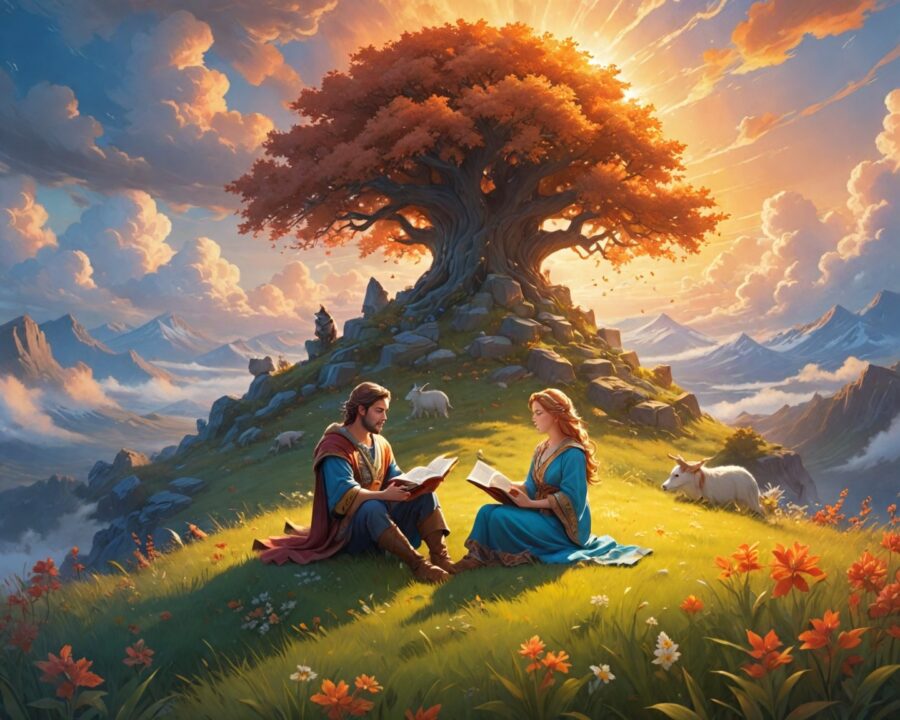
Introduction to Seasonal Myths and Their Significance
Across the globe, the changing of seasons has been a phenomenon that incites curiosity and wonder. For centuries, human cultures have crafted intricate tales to explain these natural transitions. These myths not only helped people comprehend their world but also reinforced cultural values and communal bonds. By associating changes in the environment with familiar narratives, societies were able to pass down wisdom and beliefs through generations.
Seasonal myths are more than just fanciful stories. They serve as a unique intersection between culture, nature, and language, reflecting the diverse ways humans have understood and interacted with the world. This article delves into various seasonal myths from around the world, exploring their narrative richness and the cultural principles they reveal. Through these tales, we can appreciate how ancient civilizations strove to make sense of complex natural phenomena in ways that were both practical and imaginative.
Ancient Greek Myths Explaining the Seasons
The ancient Greeks, renowned for their mythology, created intricate tales that explained many natural phenomena, including the changing seasons. One of the most famous Greek myths is the story of Demeter and Persephone, which was used to explain the cycle of growth and decay observed each year.
In this myth, Persephone, the daughter of Demeter — the goddess of agriculture — is abducted by Hades, the god of the Underworld. In her despair, Demeter causes the earth to become barren, refusing to let anything grow until her daughter is returned. This initial barrenness represents winter. Eventually, a deal is struck where Persephone spends part of the year in the Underworld and the rest with her mother. Her return signifies the rejuvenation of spring and summer, while her descent back into the Underworld marks the start of autumn and winter.
This myth is so profound because it reflects the interdependency between life and death, recognizing the cyclical nature of both. It underscores the ancient Greeks’ understanding of agriculture and the natural world, entwining religious beliefs with explanations for seasonal change. Through festivals like the Eleusinian Mysteries, these stories were celebrated and passed on, ensuring their impact lasted throughout generations.
Norse Mythology and Its Seasonal Tales
Norse mythology, with its rich tapestry of gods and mythic tales, provides compelling narratives to explain natural phenomena, including the changing of the seasons. One such myth involves the story of Skadi, a giantess whose marriage to the god Njord reflects the seasonal shifts.
According to the myth, Skadi, seeking vengeance for her father’s death, agrees to marry one of the gods if she can choose based on their feet alone. Mistakenly choosing Njord, a sea god, their union symbolizes the contrast between harsh, mountainous winters and the warmer coastal summers. Skadi’s preference for the wintery abode of her father symbolizes the cold winter, while Njord’s love for the sea signifies summer. This incompatible marital dynamic symbolizes the seasonal transitions, alternating between times of cold and warmth.
Another tale involves the Yule-Sun, where the Norse celebrated Yule, the midwinter festival, marking the winter solstice. This celebration acknowledged the return of the sun as days slowly began to lengthen, reflecting the Norse people’s understanding of annual cycles and their optimism for the returning growth and fertility of spring and summer.
These myths are engrained with cultural significance, offering insights into how Norse societies interpreted the natural world. They present the seasonality not just as environmental shifts but as narratives of conflict and harmony, reflecting deeper truths about the human condition and its relationship to nature.
How Native American Myths Interpret the Seasons
Native American cultures are incredibly diverse, each with its unique set of myths to explain seasonal changes. These stories often integrate elements of their environment, such as wildlife and natural landmarks, into grand narratives that articulate not just a change in weather, but a philosophical and spiritual understanding of the world.
In many Plains tribes, such as the Lakota, myths involving the spirit world are prevalent. One tale describes the Sun Dance, a ritual performed during the summer solstice. In this narrative, the sun’s path and its influence on growth and vitality are revered, marking a time to pray for renewal and balance. The dance symbolizes the continuance of life and the hope for a bountiful season.
The Iroquois, living in the northeastern woodlands, explain the seasons through the legend of the Three Sisters. This myth personifies corn, beans, and squash as three inseparable sisters who grow together. Their story reflects the interconnectedness of life and sustenance, embodying the cycle of planting, growth, and harvest. Through this tale, the changing seasons are seen as moments of unity and nurturing, with each sister contributing to the health and well-being of their community.
These seasonal myths are deeply rooted in the cosmologies of each culture, showcasing how nature’s rhythms are intertwined with the spiritual and social aspects of Native American life. Through storytelling, these communities conveyed the importance of ecological balance and sustainability long before such concepts became widespread in modern discourse.
Asian Cultural Myths About Seasonal Changes
Asian cultures, with their rich histories and diverse geographies, provide fascinating myths to explain seasonal changes. Chinese mythology, for example, is deeply intertwined with agricultural practices and astronomical observations, often personified by deities and legendary events.
One famous Chinese myth is that of Nüwa and Fuxi. These siblings, credited with repopulating the earth after a great flood, are responsible for creating the cycle of life. The myth signifies renewal and prosperity, symbolized by the seasonal shifts essential for agriculture. Their presence in myths indicates both protection and the cyclical nature of life and death, crucial to understanding the seasons.
In Japan, the goddess Amaterasu is central to seasonal myths. Her story involves retreats into a cave, causing darkness and cold, reflecting the death and dormancy of winter. The myths explain that her eventual emergence heralds the return of light and warmth, akin to the spring’s rejuvenation. The celebrations surrounding Amaterasu’s return, symbolizing the sun, illustrate the cultural appreciation for the balance between light and dark, warmth and cold.
Throughout Asia, these myths are not just narratives to explain away natural phenomena; they are integral parts of cultural rituals and festivals, from the Chinese New Year to Japan’s Hanami (cherry blossom festival). They manifest in traditions that respect the environment and highlight a symbiotic relationship between humanity and nature.
The Role of Mythology in Understanding Nature
Mythology serves as an early science, a way for ancient peoples to explain the unexplainable. Long before the advent of meteorology and astronomy, myths provided a framework for understanding nature and its seasonal rhythms. These narratives imbued natural phenomena with meaning, projecting human emotions and societal values onto the environment.
The role of mythology was multifaceted. It functioned as a record of environmental changes, teaching each generation to predict and prepare for the seasonal shifts. Myths about the seasons contained practical knowledge, such as when to plant crops or predict weather changes, essential for survival in ancient agricultural societies. Furthermore, they reinforced cultural values and ethical codes, often using the behaviors of gods or animals within the myths as examples or cautionary tales.
Another important function of mythology was its ability to foster cohesion within communities. Seasonal myths often featured shared rituals and festivals that brought people together, reinforcing social ties and cultural identity. Through storytelling, myths prompted reflection on humanity’s place within nature’s hierarchy, promoting respect and gratitude for the land’s fertility and abundance.
In essence, mythology transformed the mysteries of the natural world into narratives that were understandable and relatable. These stories bridged the gap between observation and understanding, providing early humans with a framework through which they could interact with and appreciate their environment.
Common Themes in Seasonal Myths Across Cultures
Despite their cultural diversity, many seasonal myths share common themes that speak to universal human experiences and concerns. One prevalent theme is rebirth and renewal, which is naturally linked to spring. Stories that narrate a cycle of death and rebirth, such as Persephone’s return, exemplify this theme, focusing on hope, growth, and the enduring spirit of life through the coldest, darkest times.
Another theme found in seasonal myths is balance, often represented by contrasting elements, such as light and darkness or warmth and cold. The Norse myths of Skadi and Njord illustrate this, as do the Chinese tales of Yin and Yang, which are often associated with the changing seasons. Such narratives reflect the human quest for equilibrium in the face of life’s inherent challenges.
Finally, many seasonal myths involve a journey or quest, often symbolizing the passage of time and life’s cycles. These narratives, like the Japanese myth of Amaterasu, depict not just physical journeys but spiritual and emotional ones, emphasizing transformation and enlightenment as part of the natural order.
| Theme | Description |
|---|---|
| Rebirth and Renewal | Focuses on hope, growth, and the endurance of life |
| Balance | Represents harmony between contrasting elements |
These themes, woven into the fabric of cultures across the world, highlight shared human concerns and insights. They underscore the ways in which people have used storytelling to navigate and make sense of the changing world around them.
How Myths About Seasons Influence Modern Traditions
The influence of seasonal myths extends beyond historical tales and into modern traditions, where they continue to shape festivals, rituals, and even modern storytelling. Many contemporary celebrations have their roots in these ancient narratives, subtly weaving them into the fabric of modern life.
Festivals such as Christmas, originally tied to pagan midwinter celebrations like Yule, incorporate elements from myths about the return of the sun and the rebirth of light. Similarly, the rites of Easter echo themes of rebirth and renewal found in many spring myths, such as those concerning Demeter and Persephone. These traditions, though now mixed with religious overtones, retain the core themes of ancient myths.
Moreover, modern literature and cinema frequently draw upon mythological motifs and archetypes, reinterpreting seasonal myths in new contexts. Movies, books, and TV shows often incorporate these timeless narratives, using them to frame contemporary issues and emotions in ways that resonate with audiences across the globe.
In addition to influencing entertainment and holidays, seasonal myths also impact environmental consciousness. By instilling respect for nature through storytelling, they nurture a cultural awareness of ecological cycles and sustainability. This ancient wisdom, when revisited in modern contexts, can offer valuable insights for addressing contemporary environmental challenges.
Debunking Misconceptions About Seasonal Myths
Despite their age, seasonal myths are sometimes subject to misconceptions that can obscure their true value and intent. A common misconception is that these myths are purely fantastical, bearing no resemblance to reality. However, while these stories contain supernatural elements, they often hold kernels of truth about human nature and the natural world.
Another misunderstanding is that seasonal myths were simply relics of primitive cultures with no scientific understanding. This underestimates the sophistication and accuracy with which ancient peoples could observe and interpret environmental changes. Although myth narratives are symbolic, they were rooted in keen observations of nature, serving as a proto-science for early societies.
There is also a tendency to view these myths as static, unchangeable tales lost to the mists of time. In reality, myths are living stories, often adapted over centuries to reflect changing cultural landscapes and understandings. As such, they continue to evolve, maintaining their relevance in modern storytelling.
While these misconceptions can diminish the perceived value of seasonal myths, understanding these narratives’ true cultural and historical contexts can restore their significance and relevance in the modern world.
Practical Ways to Explore Seasonal Myths in Storytelling
Contemporary storytellers can draw inspiration from seasonal myths to create engaging narratives that resonate with modern audiences. There are several practical ways to integrate these ancient tales into new storytelling projects.
-
Adaptation: Retell ancient myths in a modern setting, preserving core themes while updating characters and contexts. This can breathe new life into the narratives, making them relatable to contemporary audiences.
-
Symbolism: Use symbols from seasonal myths, such as elements or characters associated with specific seasons, to add depth and layers to storytelling. Symbolism can convey themes of change, growth, and renewal in impactful ways.
-
Thematic Exploration: Focus on universal themes like rebirth, balance, and transformation. These themes are timeless and resonate across different genres and mediums.
-
Cultural Fusion: Blend elements of seasonal myths from various cultures into a single narrative to create a rich and diverse story tapestry. This approach can highlight the universality of human experiences across the globe.
-
Interactive Storytelling: Engage audiences by incorporating seasonal myths into interactive mediums, such as video games or virtual reality experiences. These platforms allow audiences to explore narratives dynamically and immersively.
By weaving seasonal myths into new storytelling, creatives can continue the tradition of these ancient narratives, simultaneously preserving and evolving them for future generations.
FAQs
What are seasonal myths?
Seasonal myths are traditional narratives that cultures around the world have used to explain the changes in seasons. These myths often feature gods, spirits, or natural elements that symbolize the transitions between seasons and articulate deeper cultural values and beliefs.
Why are seasonal myths important?
Seasonal myths play a crucial role in cultural history by providing explanations for natural phenomena before the advent of modern science. They offer insights into how ancient peoples viewed the world, imparting practical and ethical lessons that have shaped cultural traditions and worldviews.
How do seasonal myths differ across cultures?
While the specific characters and stories vary, many seasonal myths share common themes, such as rebirth or balance. Differences arise from each culture’s unique environment and societal values, influencing how they interpret and narrate the world around them.
Can seasonal myths impact modern environmental views?
Yes, seasonal myths can shape modern perspectives on the environment by emphasizing the cyclical nature of life and the importance of harmony with nature. These narratives can inspire environmental stewardship and sustainability efforts by drawing on ancient wisdom about ecological balance.
How do modern storytellers use seasonal myths?
Modern storytellers often adapt seasonal myths into contemporary settings, using them as frameworks or allegories in movies, books, and other media. These stories’ timeless themes offer versatile material for exploring human experiences and societal issues.
Are seasonal myths purely fictional?
While they can feature fantastical elements, seasonal myths are not purely fictional. They contain observational wisdom about environmental and human cycles, serving both to explain natural phenomena and to convey moral or cultural lessons.
What is the significance of shared themes in seasonal myths?
Shared themes across seasonal myths highlight universal human experiences, reflecting common challenges and aspirations. These recurring motifs underscore the interconnectedness of human cultures and reinforce storytelling’s role in uniting people through shared narratives.
Recap
In exploring the myths that explain the seasons, we have uncovered various narratives from the Greeks, Norse, Native Americans, and Asian cultures, each highlighting how humanity has historically related to the natural world. From the story of Demeter and Persephone to Japanese tales of Amaterasu, these myths emphasize themes like rebirth, balance, and transformation. Their influence extends into our modern lives, manifesting in cultural traditions, environmental consciousness, and contemporary storytelling. By debunking misconceptions, we continue to appreciate the cultural richness and enduring relevance of these ancient narratives.
Conclusion
Seasonal myths are a testament to humanity’s eternal gaze toward the phenomena around them, crafting stories that explain, comfort, and inspire. As windows into ancient societies, they reveal how our ancestors navigated the complexities of existence, blending observation with imagination.
These myths still resonate today, shaping cultural traditions and modern narratives. They provide a vital link to our past, offering lessons that remain relevant in contemporary contexts, encouraging us to consider our relationship with nature. By revisiting these stories, we connect with the collective human past, learning to honor the cycles of life and the planet.
Ultimately, the enduring power of seasonal myths lies in their ability to unify – binding cultures across time and space through shared experiences and collective wisdom. As we continue to tell these stories in new forms, we ensure that their legacy endures, reminding us of the universal truths they embody.