
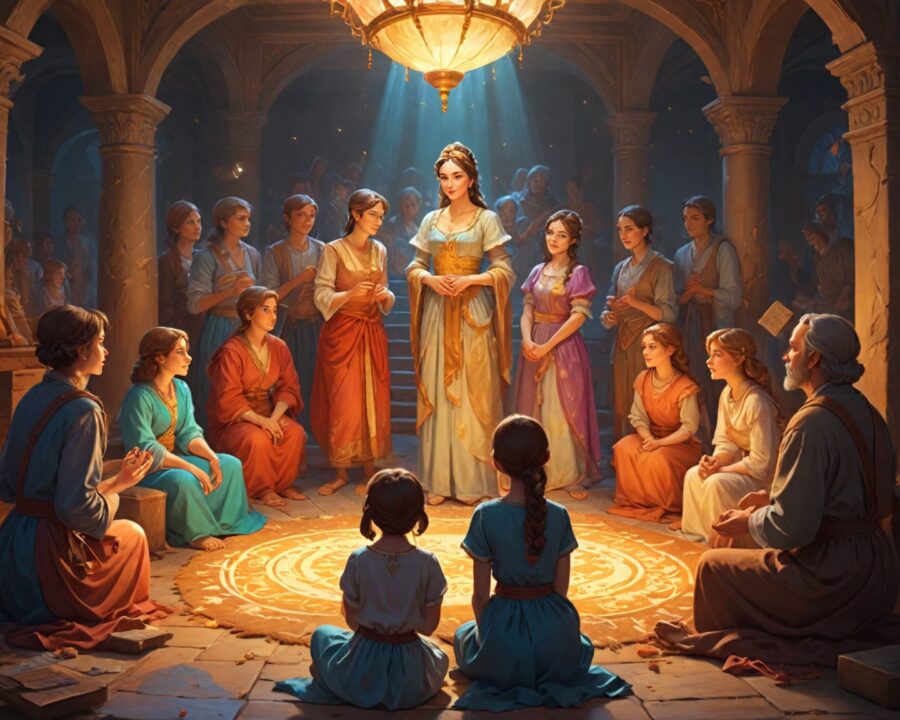
Introduction to Indian Mythology and Its Significance
Indian mythology is a treasure trove of stories that have been passed down through generations, offering a glimpse into the rich cultural and philosophical heritage of India. Unlike the mythologies of ancient Greece or the Norse sagas, Indian mythology is uniquely expansive and enriched with complex characters, divine interventions, and profound moral lessons. These narratives not only possess immense literary value but also hold spiritual significance for millions of people worldwide.
The significance of Indian mythology extends beyond religious texts and rituals; it provides philosophical insights that can guide individuals in their daily lives. These stories often embody human values, moral dilemmas, and the eternal struggle between good and evil. They capture the imagination while also offering lessons in ethics and dharma (righteousness). Today, as people seek meaning and guidance, these timeless stories become relevant once more, weaving themselves into the fabric of modern life and culture.
Overview of Popular Indian Mythological Stories
Indian mythology is home to a plethora of fascinating stories, each with its own set of characters, themes, and moral teachings. At the heart of these tales are two great epics: the Ramayana and the Mahabharata. These epics form the cornerstone of Indian literature, providing narrative and philosophical foundations that have influenced countless other works.
Apart from the epics, there are a multitude of Puranas, which are ancient texts that narrate the history of the universe from creation to destruction. They describe the genealogy of gods, sages, and kings, interwoven with rich tales of divine exploits. For instance, the story of Lord Krishna in the “Bhagavata Purana” is celebrated as a tale of divine playfulness and profound wisdom.
In addition to the stories of gods and goddesses, there exist various folktales and moral stories, such as the Panchatantra and Jataka tales, which are designed to teach life’s lessons through simple narratives and animal characters. These stories have not only entertained but also educated children across India and beyond, instilling values like wisdom, courage, and kindness.
Simplified Retelling of the Ramayana
The Ramayana is one of the great Indian epics, traditionally attributed to the sage Valmiki. This epic narrates the life of Prince Rama, considered an incarnation of the god Vishnu. The tale unfolds with the birth of Rama, his exile into the forest, the abduction of his wife Sita by the demon king Ravana, and the eventual battle to rescue her.
The story begins with Rama’s early life in the kingdom of Ayodhya, where he grows up loved by all. His serene life takes a pivotal turn when political intrigues lead to his fourteen-year exile in the forest. Accompanied by his wife Sita and loyal brother Lakshmana, Rama faces numerous challenges and adventures during this period.
The climax of the Ramayana revolves around the heroic rescue of Sita from Lanka, the kingdom of Ravana. With the help of an army of monkeys led by the devoted Hanuman, Rama builds a bridge to Lanka and defeats Ravana in a spectacular battle. The story concludes with Rama’s triumphant return to Ayodhya and his coronation as king, symbolizing the victory of good over evil.
Simplified Retelling of the Mahabharata
The Mahabharata is another great epic of Indian mythology, composed by the sage Vyasa. It is not merely a story, but a vast text encompassing philosophy, spirituality, and a compendium of human experiences. Central to the Mahabharata is the Kurukshetra War, a grand battle between two factions of the same royal family—the Pandavas and the Kauravas.
The story follows the five Pandava brothers, rightful heirs to the throne, and their quest for justice after being unfairly deprived of their kingdom. The epic details their trials, sufferings, and triumphs, along with the deceit and ambition of their cousins, the Kauravas. At its heart is the moral struggle of Prince Arjuna, one of the Pandavas, whose doubts are dispelled by Lord Krishna in the form of the Bhagavad Gita.
As the war ensues, strategic alliances, powerful divine weapons, and sacred vows make the battle both epic in scale and tragic in its implications. The Mahabharata teaches the futility of war, the complexities of human nature, and the importance of dharma—the right path, which remains a guiding light through moral ambiguity.
Stories of Indian Gods and Goddesses
Indian mythology is rich with tales of its pantheon of gods and goddesses, each representing different aspects of the divine. These deities are often at the center of stories that illustrate their virtues, adventures, and interactions with humans and demons alike. Gods like Brahma, Vishnu, and Shiva form the principal trinity, while goddesses like Lakshmi, Saraswati, and Durga symbolize wealth, wisdom, and strength.
One popular story is that of Goddess Durga, who was created by the combined energies of the gods to defeat the shape-shifting demon Mahishasura. After a divine battle showcasing her formidable strength and divine weapons, Durga triumphs and restores peace to the world.
Another enchanting narrative is that of Krishna’s divine play, or leela, encapsulated in stories of his childhood and youth. From his naughty escapades with the milkmaids (gopis) to his miraculous acts of saving villagers, Krishna captivates and teaches profound truths about love, duty, and joy.
Moral Lessons from Indian Mythology
Indian mythological stories are renowned for their moral lessons and philosophical insights, providing guidance on how to lead a virtuous life. The epics and Puranas are suffused with teachings that emphasize values like truth, righteousness, compassion, and patience.
For example, the Ramayana teaches the ideals of dharma through Rama’s unwavering adherence to truth and duty, even in the face of personal suffering. His life embodies the virtues of sacrifice, honor, and the importance of fulfilling one’s responsibilities.
The Mahabharata, on the other hand, delves into complex moral dilemmas through its myriad characters. It illustrates that life is not always black and white and that one must strive to do the right thing, even when faced with difficult choices. The Bhagavad Gita, a part of the Mahabharata, offers profound spiritual insights, emphasizing inner peace and duty without attachment to results.
How Indian Mythology Influences Modern Culture
The impact of Indian mythology on modern culture is profound, extending beyond religious practices to influence art, literature, cinema, and even politics. Mythological themes and characters often find expression in contemporary dance, theater, and visual arts, serving as sources of inspiration and cultural identity.
In literature, mythological retellings by authors like Amish Tripathi and Devdutt Pattanaik have captivated modern readers by reimagining timeless tales with fresh perspectives. These stories continue to resonate, exploring human experiences and ethical questions through mythic narratives.
Indian cinema and television have also drawn heavily from mythology, with blockbuster films and series depicting the epics and divine stories. Characters like Rama, Krishna, and Mahabharata’s Arjuna are immortalized in these modern retellings, keeping the rich tradition alive and relevant to today’s audience.
Common Questions About Indian Myths Answered
What is the purpose of Indian mythology?
Indian mythology serves multiple purposes: it preserves cultural heritage, offers moral and ethical guidance, provides spiritual insights, and offers a narrative of divine and human interactions that inspire and educate individuals across generations.
Are Indian mythological characters considered gods?
Many characters in Indian mythology are indeed considered gods, while others are divine incarnations or revered figures. Gods like Vishnu, Shiva, and Durga play central roles, but human characters like Rama and Krishna are also worshipped as forms of the divine.
Why are there multiple versions of the same Indian mythological stories?
Indian mythology has evolved over centuries, with oral traditions contributing to regional variations and adaptations. Different cultural contexts and languages have resulted in numerous versions, enhancing its richness and accessibility.
How do mythological stories explain natural phenomena?
Like many ancient cultures, Indian mythology employs stories to explain natural phenomena. For example, the story of how Lord Indra, the rain god, controls the monsoon, or how eclipses occur with the cosmic tale of the demon Rahu swallowing the sun or moon.
Can Indian mythology be relevant to non-Hindus?
Absolutely! Indian mythology is not only a religious artifact but a source of universal wisdom and storytelling. Its themes of morality, human struggle, and divine intervention can resonate with people regardless of their religious beliefs.
What is the best way to start exploring Indian mythology?
Begin with the Ramayana and Mahabharata for comprehensive exposure to Indian mythology. Supplement with modern retellings and resources like illustrated books, documentaries, or academic reviews to gain a deeper understanding.
Practical Ways to Introduce Indian Mythology to Kids
Introducing Indian mythology to kids can be an exciting and educational experience. Here are some practical ways to engage children with these timeless tales:
-
Storybooks and Comics: Illustrated books and graphic novels provide an engaging way for children to learn about the characters and adventures within Indian mythology.
-
Storytelling Sessions: Organize interactive storytelling sessions where children can hear tales from epics and Puranas. Encourage them to dress as characters or act out stories to make the experience memorable.
-
Animated Films and Shows: Utilize animated adaptations of mythological tales, which are both entertaining and educational, to introduce children to the rich pantheon of deities and heroes.
A Table of Recommended Resources
| Type of Resource | Recommended Titles and Platforms |
|---|---|
| Storybooks | Amar Chitra Katha series |
| Comics | Tinkle, Mythology series |
| TV Shows | Little Krishna, Ramayana (Animated) |
| Films | Baahubali, Ramayana: The Legend of Prince Rama |
Resources for Exploring Indian Mythology Further
For those interested in delving deeper into Indian mythology, a wealth of resources is available:
-
Books: Start with comprehensive works like “The Complete Mahabharata” or “The Essential Ramayana.” Authors like Devdutt Pattanaik provide insightful interpretations that demystify these ancient tales.
-
Online Courses and Lectures: Platforms like Coursera and YouTube offer lectures on Indian mythology, exploring its historical and philosophical dimensions.
-
Cultural Institutes and Libraries: Visiting cultural centers or libraries with a focus on Indian studies can offer access to rare resources and knowledgeable experts.
Recap
This article explored the profound world of Indian mythology, highlighting its cultural significance, popular stories, and its influence on modern culture. We delved into the simplified narratives of the Ramayana and Mahabharata, discussed the intriguing tales of gods and goddesses, and extracted moral lessons from these narratives. We also addressed common questions about Indian myths and offered practical ways to introduce these enchanting stories to children.
Conclusion
The mythology of India stands as a testament to the imaginative and philosophical prowess of ancient storytellers. These tales have shaped the cultural, ethical, and spiritual landscapes of not only India but also influenced audiences worldwide. As they continue to find relevance today, Indian mythology offers a bridge between the past and present, providing opportunities for contemplation and inspiration.
As we embrace these timeless narratives and pass them on to the next generation, we contribute to the preservation and appreciation of a cultural heritage that remains as vibrant and instructive today as it was thousands of years ago.