
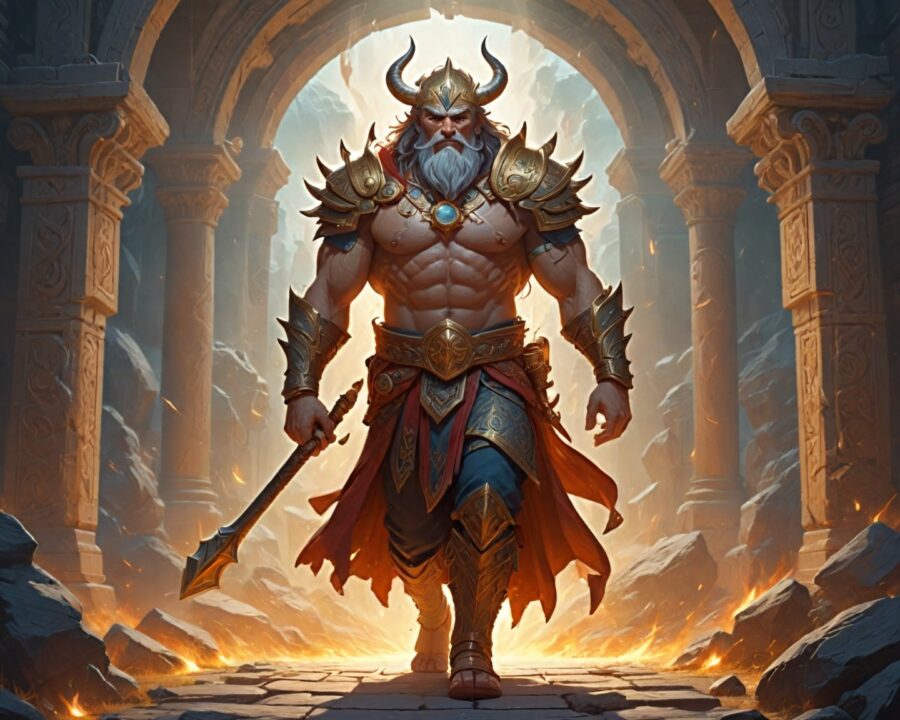
Introduction to the Hero’s Journey Concept
The hero’s journey is a timeless narrative template that describes the typical adventure of the archetypal hero. Coined by Joseph Campbell in his seminal work, “The Hero with a Thousand Faces,” this narrative pattern outlines a universal structure for storytelling, spanning literature, mythology, and film. It represents a series of stages that a hero undergoes, often beginning in an ordinary world, called to adventure, facing trials, and culminating in a dramatic transformation.
By understanding the hero’s journey, storytellers can craft narratives that resonate deeply with audiences, tapping into ancient structures and psychological motifs. This framework provides a lens through which we can view many of the world’s greatest stories, both ancient and modern. As we delve deeper into this concept, we begin to see its pervasive influence and continued relevance in contemporary storytelling.
Origins and History of Hero’s Journey Myths
The roots of the hero’s journey can be traced back to ancient oral traditions, long before stories were recorded in writing. These myths often portrayed heroic figures who embodied the values and ideals of their respective cultures. From Gilgamesh in Mesopotamian epics to Heracles in Greek legends, heroes have always served as symbols of courage, determination, and moral fortitude.
Joseph Campbell, a profound figure in comparative mythology, synthesized these mythological narratives into a coherent structure known as the monomyth in the mid-20th century. His work identified commonalities among the world’s mythologies, demonstrating how diverse cultures shared a similar narrative pattern. This archetypal journey, Campbell argued, taps into the collective unconscious, a term initially coined by psychologist Carl Jung.
The hero’s journey framework has influenced multiple fields, including psychology, literature, and film studies, due to its universality and psychological depth. Its enduring presence within academic and popular discussions speaks to its broad applicability and intrinsic connection to human nature.
Key Stages of the Hero’s Journey Explained
The hero’s journey is typically divided into several key stages, each essential to the protagonist’s adventure and personal transformation. Understanding these stages allows us to dissect and appreciate the intricate framework of countless stories.
-
The Ordinary World: Here, the hero exists in a mundane or typical setting, often unaware of their potential. This stage sets the context and provides a stark contrast to the adventures that follow.
-
Call to Adventure: The hero is presented with a challenge or quest that pulls them from their ordinary world. This call can be sudden or gradual, but it’s always transformative, provoking feelings of uncertainty or intrigue.
-
Refusal of the Call: Often, heroes hesitate to accept the challenge. This refusal can stem from fear, self-doubt, or a desire to maintain the status quo. It highlights the hero’s vulnerabilities and the necessity of personal growth.
-
Crossing the Threshold: By accepting the quest, the hero leaves the ordinary world and enters a realm of adventure and challenges. This crossing marks a point of no return, where the hero must confront the unknown.
-
Trials and Tribulations: Throughout the journey, the hero faces a series of tests, allies, and enemies. These trials are crucial for character development, shaping the hero’s skills, resolve, and values.
-
The Ordeal: This pivotal stage is characterized by a significant challenge or conflict, often involving life-or-death stakes. Surviving the ordeal usually requires the ultimate demonstration of bravery and wisdom.
-
The Return: Having transformed through their experiences, the hero returns to the ordinary world, often bringing newfound insights or boons that benefit others. This return is symbolic of the hero’s personal growth and contribution to their community.
Understanding these stages enables us to identify the hero’s journey framework within varied narratives. While individual stories may emphasize different stages, the overarching pattern remains consistent.
Examples of Hero’s Journey in Ancient Mythology
Numerous ancient myths exemplify the hero’s journey, each with unique cultural nuances and interpretations. Let’s explore a few significant examples that highlight the universality of Campbell’s framework.
The Epic of Gilgamesh, one of the earliest known works of literary writing, follows the adventures of King Gilgamesh of Uruk. Initially portrayed as a tyrant, Gilgamesh embarks on a transformative journey after the death of his friend Enkidu. His quest for immortality forces him to confront his own humanity and limitations, culminating in a return to Uruk with a newfound understanding of life and legacy.
In Greek mythology, the story of Heracles (Hercules) embodies the hero’s journey through the Twelve Labors. As punishment for past transgressions and as a path to redemption, Heracles undertakes tasks that test his strength and resolve. Through cunning and endurance, Heracles overcomes countless challenges, epitomizing the hero archetype in Western culture.
The tale of Siddhartha Gautama, known as the Buddha, also aligns with the hero’s journey. Born into luxury, Siddhartha leaves his palace in search of spiritual awakening, encountering trials and temptations along the way. Through meditation and enlightenment, he achieves nirvana and returns with teachings that profoundly influence the world, exemplifying the transformative power of the hero’s journey.
Modern Stories Influenced by the Hero’s Journey
The influence of the hero’s journey extends beyond ancient myths, permeating modern storytelling in various media. Many contemporary narratives draw upon this framework to craft compelling tales that resonate with global audiences.
In literature, J.R.R. Tolkien’s “The Lord of the Rings” mirrors the hero’s journey through the character of Frodo Baggins. Frodo’s quest to destroy the One Ring takes him from the peaceful Shire into a realm of danger and temptation. His journey is marked by trials, allies, and the ultimate challenge of overcoming the ring’s corrupting power, echoing the monomyth’s stages.
In film, George Lucas’s “Star Wars” saga explicitly draws from the hero’s journey, a connection Lucas himself acknowledged after studying Campbell’s work. Luke Skywalker’s character arc, from a farm boy on Tatooine to a Jedi Knight, embodies the classic hero narrative. His trials, mentors, and the battle against evil align perfectly with Campbell’s stages.
In recent years, films like “The Matrix” and “The Lion King” continue this tradition, embedding hero’s journey elements in their narratives. Neo’s awakening to his destiny and Simba’s reclaiming of Pride Rock exemplify modern adaptations of the hero’s journey, appealing to diverse audiences through familiar yet innovative storytelling techniques.
Why the Hero’s Journey Resonates Across Cultures
The universal appeal of the hero’s journey can be attributed to its deep psychological and cultural roots. It reflects inherent aspects of the human experience, creating a narrative that transcends cultural boundaries and resonates on a personal level.
This narrative archetype taps into the collective unconscious, highlighting themes such as personal growth, self-discovery, and the battle between good and evil. These themes are relevant across cultures, offering insights into the human condition that resonate because they mirror our own life journeys.
The hero’s journey also provides a framework for exploring societal values and ideals, reflecting each culture’s unique perspective while maintaining universal motifs. As such, it becomes a tool for exploring individual identity, communal responsibility, and the broader human experience, which explains its pervasive influence and adaptability across global narratives.
Common Questions About the Hero’s Journey Myths
What is the hero’s journey?
The hero’s journey is a narrative framework that outlines the typical adventure of an archetypal hero. It includes stages such as the call to adventure, the ordeal, and the return, capturing the hero’s transformation and reflecting universal themes of personal growth and self-discovery.
Who developed the hero’s journey concept?
The hero’s journey concept was popularized by Joseph Campbell in his work “The Hero with a Thousand Faces.” Campbell identified a common narrative pattern among the world’s mythologies, coining the term “monomyth” to describe this archetype.
How does the hero’s journey differ from other storytelling frameworks?
The hero’s journey is distinct in its focus on the transformative adventure of the protagonist. While other storytelling frameworks may concentrate on plot structure or character development, the hero’s journey emphasizes the cyclical narrative of departure, initiation, and return.
Can the hero’s journey be applied to non-traditional storytelling?
Yes, the hero’s journey is highly adaptable and can be applied to various forms of storytelling, including films, books, video games, and personal narratives. Its universal themes and flexible structure make it a valuable tool for both traditional and non-traditional stories.
Are all modern stories based on the hero’s journey?
Not all modern stories follow the hero’s journey framework, but many do incorporate its elements due to its popularity and effectiveness. Some narratives may choose alternate structures to explore different themes or character arcs, providing diverse storytelling approaches.
Practical Applications of the Hero’s Journey in Storytelling
Understanding and utilizing the hero’s journey offers practical benefits for storytellers across mediums. This framework helps create engaging and emotionally resonant narratives by emphasizing character development and universal themes.
-
Character Development: The hero’s journey provides a clear path for character growth, allowing writers to craft complex and relatable protagonists. By navigating the journey’s stages, characters undergo transformation, endearing them to audiences.
-
Plot Structuring: The framework offers a ready-made blueprint for structuring plots, ensuring a balanced blend of action, tension, and resolution. Writers can use the journey’s stages as guideposts to maintain narrative momentum and engage readers or viewers consistently.
-
Theme Exploration: The hero’s journey facilitates the exploration of profound themes such as identity, redemption, and the human condition. By incorporating these motifs, storytellers can craft narratives with depth and timeless appeal.
By leveraging these applications, creators can produce stories that captivate and resonate, appealing to both emotional and intellectual facets of audiences worldwide.
Criticisms and Limitations of the Hero’s Journey Framework
Despite its popularity, the hero’s journey is not without criticisms and limitations. Some argue that its structure is overly prescriptive, potentially stifling creativity by adhering too closely to predefined stages and themes.
-
Cultural Bias: Critics note that the hero’s journey is primarily derived from Western mythologies, potentially excluding or misrepresenting non-Western narratives. While intended as a universal model, its application can sometimes lack sensitivity toward diverse cultural storytelling traditions.
-
Simplicity: By distilling stories into a predefined framework, the hero’s journey risks oversimplifying complex narratives. Not all stories fit neatly within this structure, and adhering too rigidly can lead to formulaic and predictable storytelling.
-
Exclusivity: The focus on a singular hero may overlook collective or ensemble narratives where multiple characters share the spotlight. Stories emphasizing community or collaborative efforts may find limited expression within the hero’s journey template.
While acknowledging these critiques, it’s important to recognize the framework’s value as a tool rather than a mandate, allowing for flexible and innovative adaptations in storytelling approaches.
Recap
- The hero’s journey is a narrative framework popularized by Joseph Campbell that outlines an archetypal hero’s adventure.
- Ancient myths from diverse cultures, like those of Gilgamesh and Heracles, illustrate this universal structure.
- Modern narratives, including “Star Wars” and “The Lord of the Rings,” continue to draw from the hero’s journey framework.
- The appeal of the hero’s journey lies in its exploration of universal themes and archetypal characters, resonating with audiences globally.
- While the framework is valuable, it faces criticisms regarding cultural bias, simplicity, and exclusivity, suggesting the need for flexible adaptation.
Conclusion: Enduring Relevance of Hero’s Journey Myths
The hero’s journey remains a cornerstone of storytelling, bridging ancient mythologies with contemporary narratives. Its universal structure and motifs continue to inspire writers, filmmakers, and creators, offering a framework that resonates deeply with audiences across cultures and generations.
While criticisms highlight areas for consideration, the framework’s adaptability ensures its continued relevance. By recognizing the value and limitations of the hero’s journey, storytellers can harness its power to craft meaningful and impactful narratives that echo the timeless experiences of heroism, transformation, and self-discovery.
As we continue to create and consume stories in an ever-changing world, the enduring power of the hero’s journey reminds us of the shared threads that bind human experiences. This connection enhances our understanding of ourselves and others, underscoring the intrinsic value of storytelling in bridging cultural divides and fostering empathy.
In the spirit of collaboration and innovation, the hero’s journey invites us to reimagine and reinterpret its stages, ensuring that its relevance and influence endure for future generations of storytellers and audiences alike.