
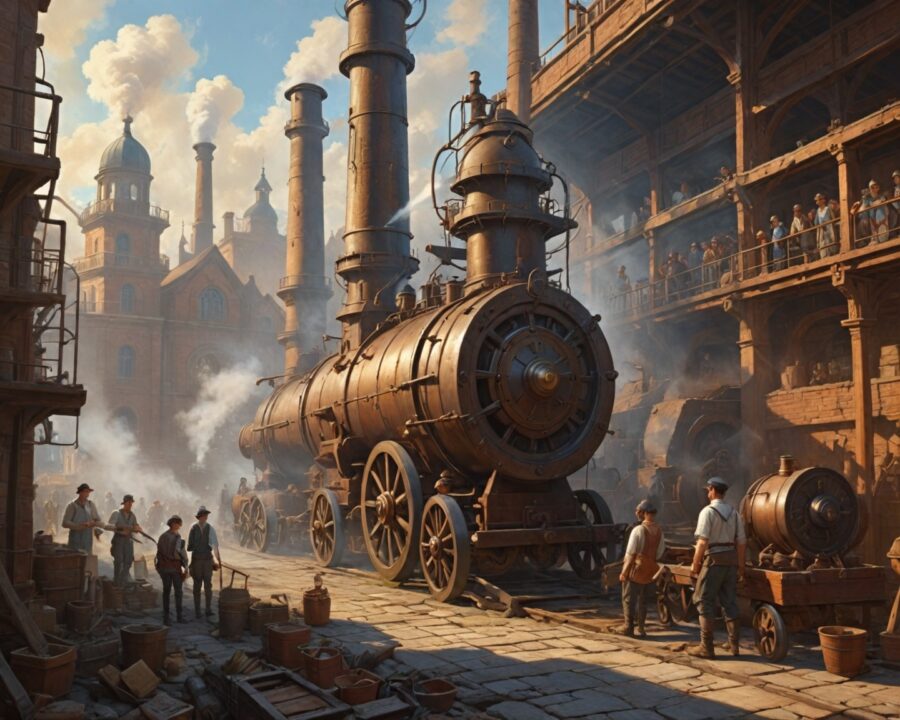
Introduction to the Industrial Revolution
The Industrial Revolution stands as one of the most significant periods in human history, marking the transition from agrarian economies to industrialized and urbanized societies. It not only transformed economies around the world but also reshaped the social fabric and altered how humans interacted with their environment. This period of rapid change, roughly spanning from the late 18th century through the 19th century, introduced technological advancements that spurred productivity and growth, setting the stage for the modern world in which we live today.
For those venturing into the expansive subject of the Industrial Revolution, understanding its origins, impacts, and legacy is crucial. This guide aims to provide a comprehensive introduction to the Industrial Revolution, highlighting its historical timeline, causes, major technological developments, and the profound effects it had on society, economy, and the environment. As we delve deeper, we’ll explore common misconceptions, lessons learned, and its enduring influence on contemporary life.
Key Historical Timeline of the Industrial Revolution
The Industrial Revolution began in Great Britain in the latter half of the 18th century, and historians often cite the 1760s as its starting point. Britain’s economic maturity, colonial resources, and innovations in agriculture set a fertile stage for industrialization. As textile production moved from manual labor to mechanized manufacturing, industries surrounding coal, iron, and steam emerged, driving further advancements.
Some key milestones of the Industrial Revolution include:
- 1765: James Watt improves the steam engine, revolutionizing transportation and machinery.
- 1793: Eli Whitney invents the cotton gin, accelerating cotton processing and revolutionizing the textile industry.
- 1825: The first public railway, the Stockton and Darlington Railway, opens in northeastern England.
- 1870-1900: The Second Industrial Revolution, marked by steel production, electricity, and chemical advancements.
By the mid-19th century, the movement had spread across Europe and North America, leading to rapid urbanization and the emergence of new industrial hubs. Each region adopted and adapted Industrial Revolution principles differently, but the overarching result was a worldwide shift towards industrial economies.
Major Causes of the Industrial Revolution
The factors that ignited the Industrial Revolution are manifold, intertwining social, economic, and technological threads. Perhaps the most pivotal contributor was the Agricultural Revolution, which increased food production due to new farming techniques such as crop rotation and selective breeding. This agricultural surplus supported population growth and provided labor for burgeoning factories.
Another critical factor was Britain’s vast colonial empire, which supplied raw materials and served as a market for finished goods. Additionally, the country’s wealth of natural resources, including coal and iron, provided the necessary inputs for industrial machinery and buildings.
A series of socioeconomic conditions also fueled industrialization. The rise of banking and investment, along with an entrepreneurial spirit and a culture of innovation, encouraged the pursuit of new technologies and business models. In summary, the Industrial Revolution was driven by an intricate blend of agrarian change, resource availability, and human ingenuity.
Technological Advancements during the Industrial Revolution
Innovations of the Industrial Revolution were transformative, affecting industries and lifestyles. The period saw a remarkable number of advancements, with several standouts that facilitated the shift from manual to mechanized manufacturing.
Key Technological Innovations:
- Steam Engine: The refinement of the steam engine by James Watt played a crucial role in industrial transportation and machinery, enabling factories to operate away from waterways.
- Spinning Jenny and Power Loom: Revolutionizing the textile industry, these machines increased yarn and cloth production, making textiles more affordable and accessible.
- Railway Locomotives: Rail transport not only streamlined the movement of goods but also expanded geographic markets for industrial products.
- Bessemer Process: This method of steel production allowed for the mass production of steel, which was stronger and more malleable than iron.
The cumulative impact of these technologies was a significant increase in productivity and economic growth. Factories grew, economies expanded, and the world seemed smaller as transportation and communication networks broadened their reach.
Impact of the Industrial Revolution on Society and Economy
The societal and economic impacts of the Industrial Revolution were profound and far-reaching. Economically, the period marked the shift from agrarian economies to industrial powerhouses. Mass production reduced the cost of goods, increased efficiency, and raised the standard of living for many, although it also led to stark economic disparities.
On a societal scale, the Industrial Revolution prompted urbanization, as factories generally required centralized locations. Many individuals moved from rural areas to cities in search of work. This urban migration resulted in the rapid growth of cities, albeit often with inadequate housing and poor living conditions.
Furthermore, the labor landscape transformed. The introduction of factories created new job opportunities, but it also brought challenges, such as worker exploitation, including long hours in unsafe conditions. These issues eventually sparkled social reform and labor rights movements.
Role of the Industrial Revolution in Shaping Modern Industries
Modern industries owe much of their foundational structures to the principles and practices that emerged during the Industrial Revolution. The advent of mass production, for instance, laid the groundwork for the modern assembly line, most famously utilized by Ford in the automotive industry.
The transformation also paved the way for today’s globalized economy. Supply chains began to emerge during the Industrial Revolution, linking raw materials, production, and distribution channels in a system that resembles current logistics networks.
Additionally, the division of labor became more pronounced, allowing for specialization and increased efficiency that are hallmarks of today’s economic systems. Industries continue to grapple with balancing automation, human labor, and technological advancements, a dynamic first ignited during this transformative era.
Environmental Consequences of the Industrial Revolution
While the Industrial Revolution led to unprecedented economic growth and societal advancements, it also introduced significant environmental challenges. The heavy reliance on coal and the progression of industrial activities resulted in substantial air and water pollution.
Environmental impacts included:
- Air Pollution: Factories emitting soot and noxious gases contributed to air quality deterioration, affecting health and visibility.
- Deforestation: The need for more land for factories and urban expansion resulted in widespread deforestation.
- Water Pollution: Industrial waste often ended up in rivers and streams, leading to contamination of water sources.
The legacy of the Industrial Revolution’s environmental impact is still evident today, as nations continue to deal with pollution, strive for sustainable development, and address the long-term effects of industrialization.
Common Misconceptions About the Industrial Revolution
Understanding the Industrial Revolution requires dispelling certain myths and misconceptions that have persisted over time. Often romanticized, this era was not solely marked by progress and prosperity for all involved.
Common Misconceptions:
- It Only Benefited the Wealthy: Although it led to increased wealth and a rise in living standards, the Industrial Revolution initially exacerbated income disparities and harsh working conditions for laborers.
- It Was a Singular Event: The Industrial Revolution was not an isolated occurrence but a gradual process that spanned decades and varied across regions.
- Innovation Was Limited to England: While the Industrial Revolution began in Great Britain, other regions quickly adopted and adapted its innovations, contributing to a worldwide transformation.
Recognizing these misconceptions allows for a more nuanced appreciation of the period and its complexities.
Lessons Learned from the Industrial Revolution
The Industrial Revolution offers several lessons that remain relevant as society continues to advance technologically and economically. These lessons can inform future developments and ensure that progress benefits society as a whole.
Key Lessons Include:
- Balanced Growth: Economic growth should be balanced with considerations for worker welfare and environmental sustainability.
- Regulation and Oversight: The exploitation seen during the Industrial Revolution underscores the need for regulation and worker protection.
- Adaptability: Just as societies adapted to technological advancements in the past, ongoing flexibility will be necessary to navigate future changes and challenges.
Learning from history enables society to move forward with greater awareness and preparedness for potential consequences.
How the Industrial Revolution Influences Today’s World
The influence of the Industrial Revolution is deep-rooted in the fabric of today’s global society. From work cultures to city planning, many aspects of modern life echo back to advancements made during this pivotal period.
Contemporary Influences:
- Work Environment: The structure of work, including the standardization of hours and factory-like environments, began during this era.
- Technological Innovation: The spirit of innovation and relentless pursuit of improvement continues to drive technological advancement.
- Global Economic Structures: Today’s global trade networks have their foundations in the interconnected markets that started to form during the Industrial Revolution.
There’s no denying that the Industrial Revolution paved the way for the modern industrialized world and continues to shape the path of future advancements.
FAQ
What exactly was the Industrial Revolution?
The Industrial Revolution was a period of major industrialization and innovation from the late 18th to the 19th centuries, which led to the transition from agrarian societies to industrialized, urban economies.
Did the Industrial Revolution only happen in the UK?
No, while it began in Great Britain, the Industrial Revolution eventually spread globally, influencing industrial practices in Europe, North America, and beyond.
What were some key technological advances of the Industrial Revolution?
Key advancements include the steam engine, textile machines like the spinning jenny and power loom, railway locomotives, and the Bessemer steel production process.
How did the Industrial Revolution affect workers’ lives?
Though it created job opportunities, workers faced harsh conditions, long hours, and minimal rights until labor reforms gradually improved their situation over time.
Are there any positive environmental outcomes from the Industrial Revolution?
While primarily associated with environmental damage, the era also prompted innovations that eventually led to advancements in energy efficiency and conservation technologies.
Recap
Throughout the Industrial Revolution, society experienced monumental shifts, driven by several factors such as technological innovation and increased productivity. It not only redefined economic and social structures but also set the stage for today’s globalized economy. The era illuminated the importance of balancing progress with environmental and social considerations, a lesson that continues to accord significance in today’s world. By understanding the nuances, challenges, and successes of the Industrial Revolution, modern societies can better navigate ongoing industrial growth with a focus on sustainable development.
Conclusion
The Industrial Revolution stands as a cornerstone of modern industrial history, a period marked by dramatic shifts that reshaped nearly every aspect of society. From the steam engine to mechanized manufacturing, the inventions of this era laid the groundwork for ongoing technological innovation and industrial expansion. At the same time, it brought to light critical issues, such as worker rights and environmental sustainability, which persist in contemporary discussions.
The lessons of the Industrial Revolution remind us of the importance of responsible growth and adaptation in an ever-changing world. As nations continue to innovate and industrialize, maintaining a balance between economic development and environmental stewardship will be critical. By examining the past, we can gain valuable insights into creating a future that harnesses the benefits of industrial power while minimizing its drawbacks.
In essence, the Industrial Revolution was more than just a historical event; it was a transformation that permeated the social, economic, and ecological landscapes. Its enduring legacy serves as a testament to human ingenuity and the capacity for change, urging modern societies to embrace progress with care and foresight. Through this understanding, we’re better equipped to tackle present challenges and seize future opportunities in a world that continues to evolve at an unprecedented pace.