
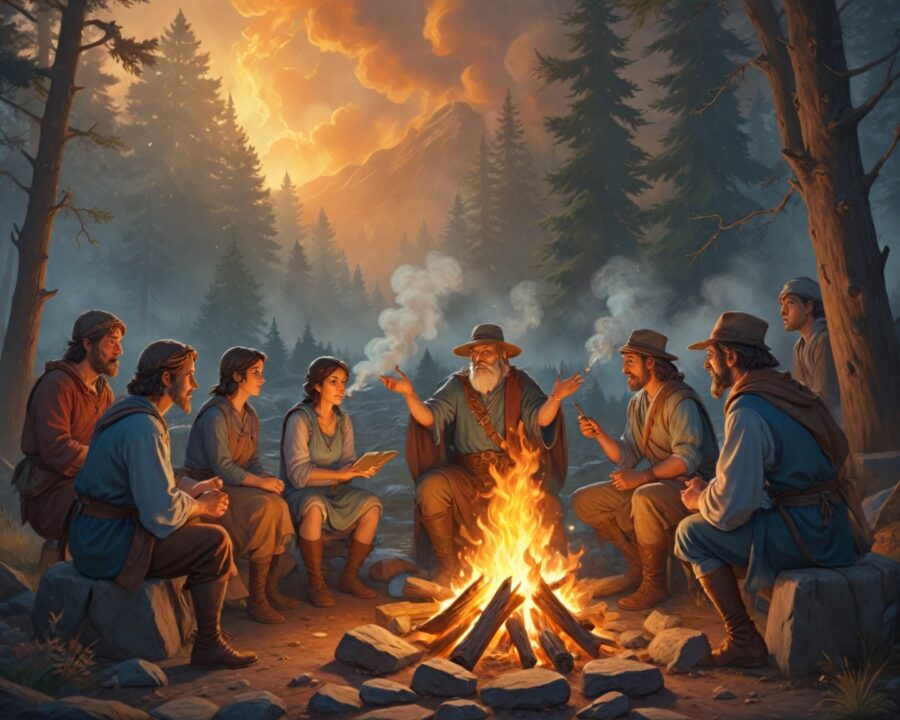
Historical myths are the compelling stories that have traveled through time, influencing cultures and human behavior. While often rooted in ancient folklore, these myths offer insights far beyond their narrative charm, reflecting the collective imagination and values of early societies. As we dive into these tales, we uncover not just entertainment from bygone eras, but lessons and moral guidance that resonate even today.
Understanding historical myths is more crucial now than ever. These legends, embedded within different cultures, illuminate how ancient communities perceived the world around them. They reveal a great deal about the moral frameworks, societal norms, and psychological mindsets of our ancestors. By examining these myths, we can gain a broader perspective on modern human behavior and societal structures, as well as recognize the timeless lessons that continue to influence our world.
Introduction to Historical Myths and Their Significance
Historical myths serve as vibrant tapestries woven from the beliefs, fears, and hopes of ancient cultures. These stories, brimming with gods, heroes, and mythical creatures, encapsulate the complexities of human existence and provide frameworks for understanding life’s mysteries. In essence, they are the narratives through which civilizations have articulated their ideals and fears.
The significance of myths lies in their ability to transcend historical and cultural boundaries, offering timeless narratives that continue to hold relevance. These stories are not merely relics of a bygone era; they function as living texts that encapsulate age-old wisdom and philosophical insights, providing blueprints for ethical and moral conduct.
Moreover, historical myths are profound because they provide an understanding of how societies interpret their surroundings. As these stories were passed down from generation to generation, they were adapted to meet the needs of the times, reflecting societal changes and technological advancements. Thus, they serve as cultural artifacts that tell the history of human thought and civilization.
How Myths Shaped Ancient Cultures and Societies
In ancient cultures, myths were the primary vehicle for conveying cultural norms and societal values. Societies used these narratives to articulate complex ideas and principles in a form that was accessible and engaging, allowing them to be embedded into the cultural consciousness.
Myths served as educational frameworks, especially in societies where literacy was not widespread. Through storytelling, communities could impart crucial survival skills, historical knowledge, and societal roles. The moral and ethical lessons contained within these tales helped define acceptable behavior, teaching individuals the importance of community, justice, and honor.
Moreover, myths fostered a sense of identity among members of a community. These narratives provided a shared history and a common set of beliefs, strengthening social cohesion. For example, the Greek myth of the Trojan War not only served to entertain but also unified the Greek states under a shared legendary past. In this way, myths were essential in constructing and preserving the cultural and historical legacy of ancient societies.
Common Themes Found in Myths Across Different Civilizations
Despite geographical and cultural divides, many myths across civilizations share remarkable similarities in themes and narratives. These commonalities suggest a shared human experience and a universal quest for meaning.
One prevalent theme is the journey or quest, often undertaken by a hero who faces various trials and challenges. This motif, as seen in the epic of Gilgamesh or the voyages of Odysseus, symbolizes the pursuit of knowledge, self-discovery, and the human struggle against chaos. These stories emphasize resilience, courage, and transformation as central virtues.
Another recurring theme is the flood myth, present in cultures from the Mesopotamian to the Mayan civilizations. These myths often reflect societal concerns about natural catastrophes, conveying messages about human hubris, divine retribution, and rebirth. They also express the fragility of human life in the face of overwhelming natural forces.
Finally, the theme of creation and cosmology can be found in many myths. These tales attempt to explain the origins of the world and humanity, often featuring powerful deities who shape reality. Such myths unravel the ancient quest to understand existence and humanity’s place within it, offering explanations that blend theology, philosophy, and science.
Lessons on Morality and Ethics Derived from Myths
One of the most enduring legacies of historical myths is their impact on contemporary ethics and morality. These stories often serve as cautionary tales, highlighting virtues such as honesty, bravery, and loyalty, while warning against vices like hubris, deceit, and greed.
For instance, the tale of King Midas from Greek mythology teaches profound lessons about the dangers of greed. Midas wished that anything he touched would turn to gold, only to find this gift became a curse, leading to immense personal loss. This myth warns of the dangers of materialism and the importance of valuing what truly matters.
Similarly, the story of Anansi, a trickster from West African folklore, often embodies the ethics of intelligence and cunning over brute strength, emphasizing the importance of wit and wisdom in navigating life’s challenges. Anansi’s tales often conclude with a moral lesson that stresses community and cooperation over individualism and selfish gains.
In examining these narratives, one realizes myths offer timeless insights into human nature and the social contracts that bind us, suggesting ethical codes that encourage harmony and balance within societies.
The Role of Myths in Preserving Cultural Identity
Myths are intrinsically tied to the identity of a culture, acting as a repository of collective memory and cultural values. They preserve the essence of a people, capturing their spirit and worldview, and passing it on to future generations.
These narratives offer a sense of continuity, linking past traditions with the present. For indigenous cultures around the world, myths are a vital aspect of oral tradition, safeguarding languages, rituals, and cultural practices from extinction. They provide cultural resilience against external influences and colonization, allowing communities to maintain a sense of identity and place.
Moreover, myths serve as a cultural touchstone in periods of upheaval or change. They offer comfort and guidance, reminding people of their shared heritage. This role is critical, especially in multicultural societies or diasporas, where myths can unify disparate communities and reinforce a collective heritage, providing a foundation for cultural pride and solidarity.
How Myths Explain Natural Phenomena and Human Behavior
Historical myths are often constructed as explanations for the mysteries of the natural world and human behavior. Before the advent of scientific understanding, myths provided answers to questions about the universe and humanity’s place within it.
For instance, the Norse myth of Thor’s hammer explains thunder and lightning, attributing these natural phenomena to the wrath of gods. Similarly, the Hindu story of Indra’s battle with the serpent Vritra explains the monsoon season. These myths personify natural forces, offering narratives that comfort and guide human interaction with nature.
Human behavior and psychology are also illuminated through myth. The Greek myth of Narcissus, a beautiful youth who fell in love with his reflection, provides a cautionary tale about vanity and self-obsession. Such stories help cultures articulate complex human emotions and behaviors, offering reflections on personality traits and societal norms.
In this way, myths serve as proto-science and proto-psychology, shaping early human understanding of both the cosmos and the self, laying foundational narratives for future intellectual exploration.
Debunking Common Misconceptions About Historical Myths
There are several misconceptions surrounding historical myths that warrant clarification to fully appreciate their depth and significance. One false assumption is that myths are purely fictional and contribute little to truth or reality. However, myths, while not always factual, offer metaphorical truths that capture the complexities of human experience and articulate essential themes about life’s moral and ethical dimensions.
Another misconception is that myths are only relics of the past with no relevance to the present day. On the contrary, the themes and lessons from these narratives continue to shape modern thinking, influencing contemporary philosophy, psychology, and even political theory.
Lastly, some view myths as static stories that do not evolve over time. In reality, myths are dynamic, adapting to reflect changing cultural contexts and current events. As living narratives, they continue to be re-interpreted and re-imagined, providing a mirror in which each generation can see its values reflected.
Practical Applications of Mythological Lessons in Modern Life
The lessons from historical myths can be effectively applied to modern life, offering wisdom and insight into today’s complex societal challenges. Myths often underscore the importance of virtues such as resilience, empathy, and community, which are crucial in navigating the modern world.
For instance, the concept of the hero’s journey, popularized by mythologist Joseph Campbell, is frequently applied in personal development. It encourages individuals to embrace challenges as opportunities for growth, embodying courage and persistence in the face of adversity.
Additionally, exploring myths can enhance cultural empathy, broadening perspectives and fostering a greater appreciation for diverse worldviews. By understanding the narratives that shape other cultures, individuals can engage more meaningfully in a multicultural world, bridging divides and fostering dialogue.
Moreover, myths can provide guidance in ethical decision-making. As moral compasses, they prompt reflection on human values and the consequences of actions, offering frameworks that support ethical leadership and communal harmony.
The Influence of Myths on Art, Literature, and Media
The pervasive influence of historical myths is evident in art, literature, and media, where these narratives continue to inspire and inform creative expression. Myths provide a rich tapestry of images and themes that artists draw upon to explore and communicate human experience.
In literature, the impact of myths is profound. Writers such as J.R.R. Tolkien and C.S. Lewis have woven mythological elements into their works, creating new mythical landscapes that resonate with readers. Similarly, modern filmmakers continue to draw inspiration from mythological narratives, as seen in the superhero genre, where characters echo ancient archetypes.
In visual arts, myths have inspired painters and sculptors through the ages, inspiring works that capture the grandeur and drama of mythical tales. From the Renaissance art of Botticelli to contemporary graphic novels, these stories have provided artists with a lens to explore symbolism, emotion, and human psychology.
In contemporary media, myths underpin many popular narratives, providing frameworks for storytelling that captivate audiences. The enduring nature of these stories in various art forms highlights their universal appeal and their ability to communicate profound truths about the human condition.
Conclusion: Why Understanding Myths is Essential for Today
In conclusion, the study of historical myths offers invaluable insights into both the past and present. These narratives highlight the continuity of human thought, revealing timeless themes that continue to resonate across cultures and epochs. By engaging with myths, we access a rich repertoire of collective wisdom that speaks to the humanity within us all.
Understanding historical myths is essential in today’s interconnected world, where cultural empathy and dialogue are increasingly vital. These narratives illuminate shared human experiences and values, fostering cross-cultural understanding and solidarity. In an era marked by rapid change and uncertainty, myths offer stability and guidance, reminding us of the enduring principles that bind us.
Ultimately, the lessons found within these ancient tales help cultivate moral and ethical development, offering blueprints for living lives of authenticity, courage, and humility. As living repositories of cultural wisdom, myths continue to provide essential insights that enrich our understanding of the world and ourselves, ensuring that their legacy endures for generations to come.
FAQ
What is the primary purpose of historical myths?
The primary purpose of historical myths is to convey cultural values, societal norms, and existential truths in a narrative form. They explain natural phenomena, reinforce moral and ethical codes, and unite communities through shared stories and ideologies.
How do myths shape modern society?
Myths shape modern society by influencing cultural narratives, ethical values, and individual behavior. They provide frameworks for understanding the world and oneself, shaping art, literature, and media, and guiding personal and collective identities.
Can myths still provide value in scientific contexts?
Yes, myths can provide value in scientific contexts by fostering creativity and innovation. While not literal scientific explanations, they offer symbolic interpretations that prompt curiosity and exploration, encouraging imaginative thinking in scientific inquiry.
What role do myths play in education?
In education, myths serve as tools for teaching critical thinking, ethical reasoning, and cultural literacy. They engage students with timeless narratives that highlight human values, encourage empathy, and broaden perspectives on societal and historical contexts.
How are myths relevant in leadership and decision-making?
Myths are relevant in leadership and decision-making by offering narratives that illustrate virtues such as wisdom, integrity, and resilience. Leaders can draw upon mythological lessons to inspire and guide ethical practices and create cohesive, values-driven organizations.
What common misconceptions about myths should be addressed?
Common misconceptions about myths include the belief that they are purely fictional, irrelevant to modernity, and static. Understanding that myths offer metaphorical truths, have contemporary relevance, and adapt over time can enhance appreciation for their enduring insights.
Recap
- Introduction: Historical myths offer profound narratives that mirror human values and challenges across civilizations.
- Cultural Impact: Myths have shaped ancient societies, imparting lessons in morality, identity, and cosmology.
- Modern Relevance: They continue to influence art and ethics, offering frameworks for understanding human behavior and decision-making.
- Misconceptions: Clarifying myths’ metaphorical truths and contemporary significance enhances their appreciation and application.
- Practical Use: Mythological lessons support personal development, cultural empathy, and ethical leadership.
By exploring historical myths, we unearth valuable insights into our cultural and moral landscapes, ensuring these enduring narratives continue to enrich human understanding and creativity.